 MapUrbex
A responsible guide to Cold War bunkers in France, including key regions, bunker types, legal checks, and how to use verified urbex maps.
Cold War Bunkers in France: Where to Find Them Responsibly
Cold War bunkers in France are scattered across former defense corridors, coastal zones, air-base networks, and civil-protection systems. For most researchers, the real challenge is not whether they exist. It is knowing where the strongest concentrations are and which sites are abandoned, sealed, repurposed, or still sensitive.
France kept a wide range of military and emergency infrastructure during the Cold War. As a result, the country still contains command bunkers, radar installations, hardened shelters, ammunition structures, and underground refuges that matter to urbex researchers.
MapUrbex focuses on verified locations, responsible urbex, and preservation-first exploration. The goal is to help users research sites with better context, not to promote trespassing or unsafe entry.
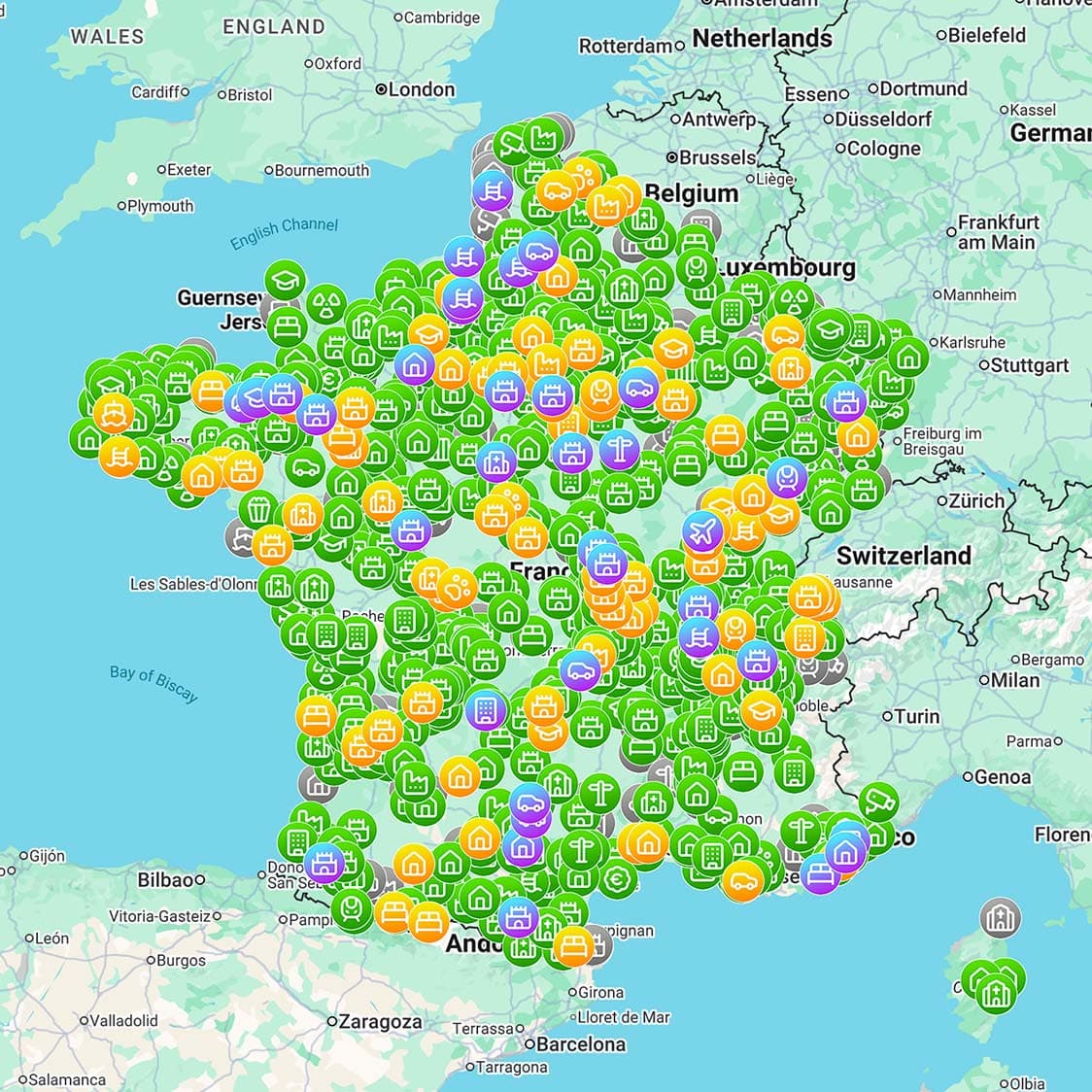
Where can you find Cold War bunkers in France?
Cold War bunkers in France are mainly found along former strategic coastlines, near old air bases and radar sites, in border defense areas, and around civil-defense infrastructure linked to major cities. The most useful search zones are usually northern France, the Atlantic coast, Alpine sectors, and decommissioned military belts. Verified maps are the safest way to narrow the search.
Quick summary
- France has Cold War bunkers in coastal, border, air-defense, and civil-protection zones.
- Not every bunker is abandoned; some are reused, sealed, or still restricted.
- The best urbex method combines regional history, verified mapping, and on-site legality checks.
- Common targets include command bunkers, radar sites, storage shelters, and hardened aircraft structures.
- Main risks include flooding, unstable concrete, darkness, debris, and poor air quality.
- MapUrbex helps filter research-worthy places with a preservation-first approach.
Quick facts
| Point | Answer |
|---|---|
| Country scope | France |
| Main site families | Military bunkers, civil-defense shelters, radar sites, storage structures |
| Strongest location patterns | Coasts, former bases, border belts, strategic infrastructure corridors |
| Main urbex risks | Water, collapse, debris, contaminated air, legal restrictions |
| Best research method | Verified maps, historical context, local access checks |
| Responsible rule | Never force entry, never bypass barriers, never damage a site |
Why are Cold War bunkers in France such a strong urbex topic?
Because France built layered military and civil-defense infrastructure during the Cold War, the country now has a broad range of surviving bunker types. These are not all identical concrete blocks. Some were built for command and communications, others for aircraft protection, storage, radar support, or emergency continuity.
That diversity matters for search intent. People looking for urbex bunkers in France usually want more than one famous location. They want a way to identify clusters, understand what type of site they may find, and avoid wasting time on demolished or active compounds.
For a wider military overview, see Abandoned Bunkers and Military Sites to Explore in France. You can also Browse all urbex maps to compare regions.
Which regions have the highest concentration of abandoned bunkers in France?
The strongest concentration patterns usually follow strategy, not tourism. Coastal defense sectors, former air-defense networks, and border regions tend to produce the best leads.
| Region pattern | Why bunkers appear there | What researchers may find |
|---|---|---|
| Northern and Channel areas | Air-defense and coastal strategy | Shelters, command points, radar-related remains |
| Atlantic coast | Strategic coastline and naval relevance | Reinforced positions, storage structures, underground rooms |
| Eastern and Alpine zones | Border defense logic | Hardened posts, support bunkers, mountain-linked shelters |
| Around former air bases | Aircraft protection and logistics | Hardened aircraft shelters, blast walls, technical bunkers |
| Near major urban centers | Civil-defense planning | Public or administrative shelters, emergency infrastructure |
A practical rule is simple: follow former military systems. Bunkers usually appear as parts of networks, not isolated curiosities. When you research a base, radar line, or strategic corridor, nearby secondary structures often appear as well.
What types of Cold War shelters and military structures exist in France?
Cold War-era sites in France fall into several recurring categories. Knowing the category helps you search more accurately.
- Command bunkers: protected spaces for communications, coordination, or crisis management.
- Air-defense and radar sites: technical compounds tied to elevated terrain, antenna fields, and service bunkers.
- Ammunition or logistics shelters: reinforced storage buildings, berm-covered depots, or protected cells.
- Aircraft protection structures: hardened aircraft shelters and support rooms near former air bases.
- Civil-defense shelters: urban or peri-urban spaces built for emergency continuity.
- Support infrastructure: power rooms, ventilation blocks, tunnels, garages, and guard posts.
This is why abandoned bunkers in France are not one single architectural type. The same area may contain military bunkers and civil shelters with very different layouts, ownership situations, and safety conditions.
How can you find Cold War bunkers in France without relying on random coordinates?
The most reliable method is layered research: historical context first, verified mapping second, and on-site legality checks last. That is more effective than relying on rumors, vague lists, or outdated forum posts.
Start with regional logic. Former air bases, radar networks, coastal defense zones, and civil-protection hubs create predictable search corridors. Then compare those corridors with a curated tool such as MapUrbex, which helps filter locations that are abandoned and relevant for responsible urbex research.
Verified mapping also saves time. Many supposed bunker locations are demolished, flooded, converted, or actively monitored. A curated map reduces that noise. If you are starting your search, Access the free urbex map.
What legal and safety rules matter before visiting bunkers in France?
The key rule is direct: an abandoned look does not create a right of entry. Some bunkers are on private land, inside restricted compounds, or still linked to military or industrial ownership.
Use these checks before any trip:
- Confirm whether the site is publicly accessible or clearly prohibited.
- Do not climb fences, remove barriers, or force doors.
- Avoid places showing active use, surveillance, or current storage.
- Treat shafts, tunnels, flooded chambers, and bad air as serious hazards.
- Leave nothing behind and take nothing away.
Preservation-first urbex is also practical. Damaged sites close faster, attract enforcement attention, and lose research value. Responsible behavior protects both heritage and future access.
What should you expect when you reach an abandoned bunker site?
Expect variation, not a cinematic ruin. Some Cold War bunkers in France are now little more than sealed concrete shells. Others still retain blast doors, cable routes, painted markings, ventilation systems, or room divisions that explain their former role.
Lighting is usually poor. Ground conditions may include standing water, mud, rusted metal, broken glass, and unstable coverings. GPS reception can also be weak around underground or forested structures, which is one reason pre-trip planning matters.
Photographically, bunker sites often reward detail more than scale. Corridor geometry, ventilation layouts, technical signage, and camouflage logic usually tell the clearest story.
Which related urbex guides help expand a France bunker trip?
If you are planning a broader France itinerary, bunker research pairs well with other infrastructure-based guides. Military remains, rail sites, and abandoned settlements often overlap geographically.
Useful follow-up reading includes:
- Abandoned Trains, Railway Stations and Metro Stations in France: A Responsible Urbex Guide
- Ghost Villages in France: 8 Places Frozen in Time
- Abandoned Bunkers and Military Sites to Explore in France
If you want a wider country view, Browse all urbex maps.
FAQ
Are Cold War bunkers in France legal to enter?
Not automatically. Legality depends on ownership, access status, local restrictions, and site condition. If a place is fenced, signed, locked, or clearly restricted, do not enter.
Are all abandoned bunkers in France military sites?
No. Some are military, some are civil-defense structures, and some are technical shelters tied to transport or communications infrastructure. The word bunker covers several functions.
What is the safest way to search for urbex bunkers in France?
Use verified maps, identify the site type before visiting, and check access rules on arrival. Avoid rumor-based coordinates and never treat forced entry as an option.
When is the best season to research bunker sites?
Cool, dry months are usually easier for visibility and safer ground conditions. After heavy rain, underground and semi-buried structures can become far more dangerous.
How does MapUrbex help with bunker research in France?
MapUrbex focuses on curated, verified locations and responsible exploration. It helps users compare regions, site categories, and practical research leads without encouraging trespass or damage.
Conclusion
Cold War bunkers in France are not limited to one famous coastline or one military story. They form a wider national landscape of shelters, command sites, radar infrastructure, and civil-defense remains.
The most reliable way to find them is to think in networks: coasts, bases, borders, and emergency systems. Then narrow the search with verified mapping and a preservation-first mindset. That is where MapUrbex is most useful.
Access the free urbex map
