 MapUrbex
Understand Chicago urbex, the main types of abandoned places in Chicago, legal and safety issues, and how to research verified locations responsibly.
Chicago Urbex: A Clear Guide to Abandoned Places in Chicago
Chicago urbex draws attention because the city combines industrial history, rail infrastructure, dense neighborhoods, and long cycles of vacancy and redevelopment. That mix creates a wider range of abandoned places than many cities in the United States.
But "hidden" does not mean safe or legal. Many abandoned places in Chicago are on private property, are structurally unstable, or are already under redevelopment. A useful guide should explain the landscape clearly without encouraging trespassing or risky behavior.
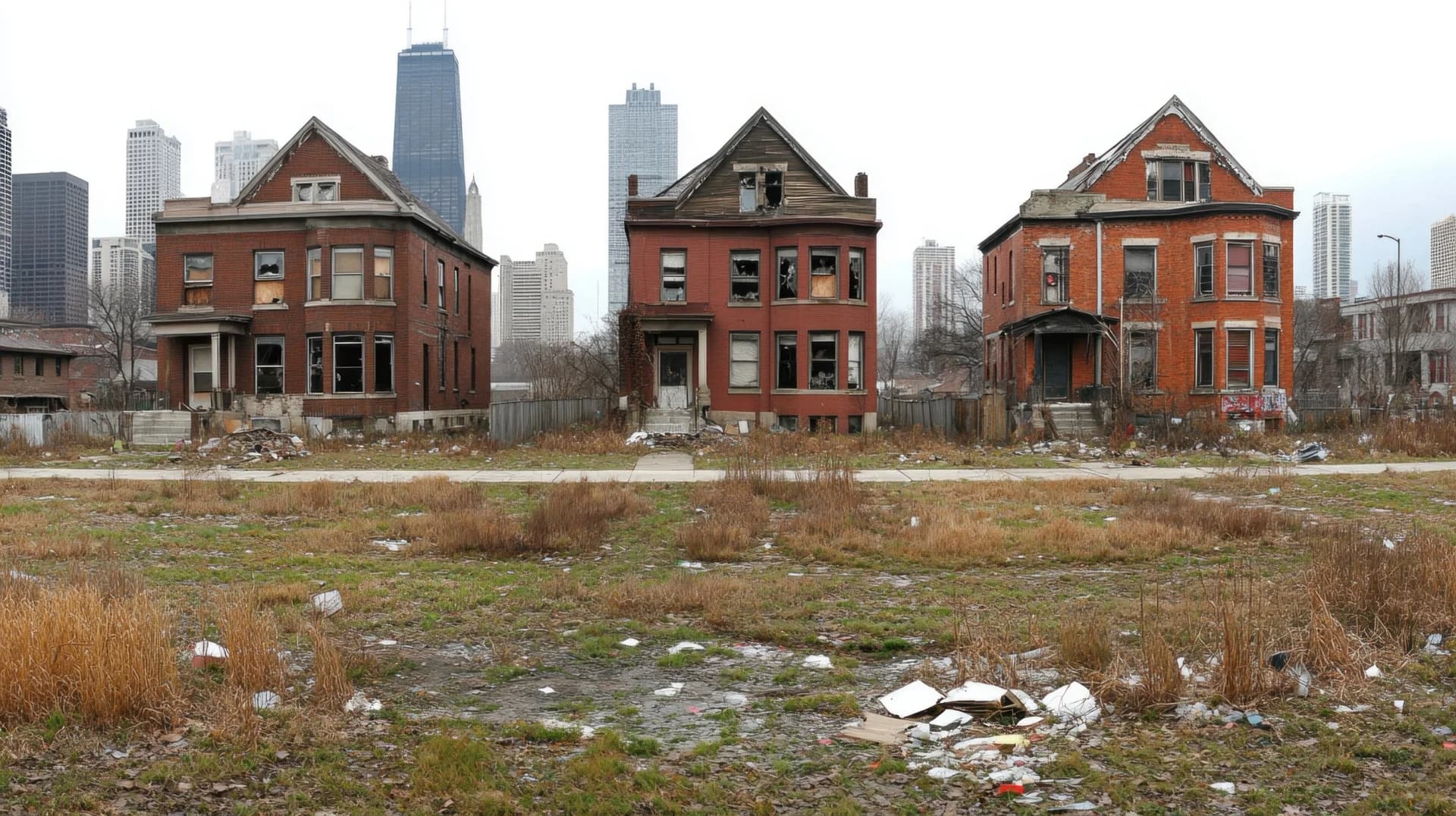
What is Chicago urbex and what kinds of abandoned places exist in the city?
Chicago urbex is the research and, where legal, documentation of Chicago's abandoned or disused built environments. In practice, that usually includes former factories, schools, churches, hospitals, theaters, rail structures, and vacant residential blocks. The city offers unusual variety, but the key filters are always legal access, current ownership, structural safety, and respect for preservation.
Quick summary
- Chicago has a large urbex landscape because industrial change, institutional closures, and redevelopment left many kinds of vacant structures.
- The most common abandoned places in Chicago are industrial buildings, schools, churches, hospitals, transit infrastructure, and long-vacant housing.
- Good research starts with ownership, legal status, current site activity, and whether demolition or renovation is already planned.
- Many well-known Chicago urbex spots disappear quickly because of redevelopment, fire, weather damage, security upgrades, or reuse.
- Responsible urban exploration means no trespassing, no forced entry, no vandalism, and no public oversharing of fragile sites.
- Verified maps are more useful than rumor-based lists because they reduce outdated pins, duplicates, and unsafe assumptions.
Quick facts
| Topic | Chicago context |
|---|---|
| Primary keyword | Chicago urbex |
| Common site types | Factories, schools, churches, hospitals, theaters, rail infrastructure, vacant homes |
| Why the city matters | Industrial legacy, population shifts, disinvestment, and constant redevelopment |
| Main research tasks | Check ownership, access rules, structural condition, and project status |
| Main risks | Trespass, unstable floors, broken glass, water damage, fire damage, hazardous materials |
| Best approach | Use verified location tools and a preservation-first mindset |
Why is Chicago such a strong city for urbex?
Chicago is a strong city for urbex because its built history is unusually layered. Heavy industry, warehousing, shipping, rail, public institutions, and neighborhood commerce all left physical traces across the city.
That matters because abandonment in Chicago does not come from one cause. Some sites reflect deindustrialization. Others come from school closures, parish mergers, hospital relocation, ownership disputes, fire damage, or delayed redevelopment. This is why searches for abandoned places in Chicago can return everything from giant industrial shells to small forgotten storefronts.
It also explains why old lists become inaccurate so quickly. A place that looked empty a year ago may now be fenced, demolished, converted, or active again. Chicago urbex research works best when every location is treated as time-sensitive.
Which abandoned places are most common in Chicago?
The most common abandoned places in Chicago are former industrial buildings and institutional properties. Those categories match the city's history and create the widest range of structure sizes, conditions, and legal situations.
Typical categories include:
- Former factories, warehouses, and machine shops
- Closed schools, training centers, and campuses
- Churches, rectories, convents, and parish buildings
- Hospitals, clinics, and care facilities
- Theaters, social halls, and old commercial buildings
- Rail-adjacent service buildings and utility remnants
- Vacant homes, apartment blocks, and storefront rows in long-disinvested areas
For search intent, this means "spots urbex Chicago" is too broad on its own. It is more useful to think by building type, age, ownership, and redevelopment risk.
Where are abandoned places in Chicago usually concentrated?
Abandoned places in Chicago are usually concentrated where older industry, transport infrastructure, or long-term disinvestment overlaps with slow redevelopment. The pattern is structural rather than random.
In practical terms, that often means former industrial corridors, rail-adjacent zones, river-linked warehouse areas, and neighborhoods where vacant housing or institutional closures accumulated over time. It can also include commercial strips or stand-alone buildings caught in legal or financial limbo.
The key point is that "hidden abandoned places" are often simply under-documented or overlooked, not secret. They may be visible from public streets yet still be private, dangerous, or actively monitored. Context matters more than viral photos.
How should you research Chicago urbex spots responsibly?
You should research Chicago urbex spots by verifying ownership, present use, and legal access before you ever think about visiting. Responsible research is slower, but it avoids bad information and unsafe assumptions.
A practical process looks like this:
- Identify the building type and whether it appears truly disused.
- Check whether the property is private, public, fenced, posted, or under redevelopment.
- Confirm whether the structure still shows signs of active maintenance, utilities, or security.
- Review recent local reporting or preservation discussion to see whether the site changed status.
- Avoid sharing exact vulnerable locations publicly if exposure could lead to damage.
Map-based tools are most useful when they prioritize verification over hype. You can Browse all urbex maps to compare coverage, or read Best Urbex Maps in the World: Where to Find Verified Locations for a broader overview.
What legal and safety issues matter most in Chicago?
The most important legal and safety issues in Chicago are trespass risk, unstable structures, and the false assumption that a vacant building is unmonitored. A building can look abandoned and still be privately owned, alarmed, or part of an active work site.
From a legal perspective, urban exploration rules depend on property status, permission, and local enforcement. Entering without permission can still be trespassing even if the place appears unused. For a general framework, see Is Urbex Legal? A Clear Guide to Urban Exploration Laws.
From a safety perspective, Chicago adds weather exposure, water intrusion, fire damage, roof failure, shattered glass, exposed shafts, contaminated dust, and compromised stairs. Former industrial and institutional sites may also contain hazardous materials. Preservation-first practice means no forced access, no tampering, and leaving immediately if conditions are unclear.
Ethics matter too. Publicly exposing fragile sites can accelerate theft, arson, and demolition pressure. That is why Urbex Ethics: Rules for Responsible Urban Exploration is as important as any location guide.
How does MapUrbex help with Chicago urbex research?
MapUrbex helps with Chicago urbex research by focusing on verified locations, curated maps, and a preservation-first approach. That makes it more useful than random lists built from old forum posts or recycled social media threads.
For a city like Chicago, verification matters because status changes quickly. A map that was accurate once can become misleading after demolition, renovation, security upgrades, or legal changes. Curated research saves time and helps reduce irresponsible sharing.
If you want a broader starting point, you can Browse all urbex maps and compare how verified mapping works before relying on any single source.
FAQ
Is urbex legal in Chicago?
Urbex in Chicago is not automatically legal just because a building looks abandoned. Access depends on ownership, permission, and site status. If entry would require trespassing or bypassing barriers, it is not a responsible option.
Are there really hidden abandoned places in Chicago?
Yes, but "hidden" usually means under-documented rather than secret. Many abandoned places in Chicago are simply outside popular photo circuits, overshadowed by larger ruins, or changing too quickly to stay well known.
What are the best Chicago urbex spots?
The best Chicago urbex spots are the ones that can be researched accurately and approached responsibly. In category terms, industrial sites, closed institutions, and disused commercial buildings are the most characteristic. Specific sites change too fast for static "best of" lists to stay reliable.
Why do Chicago abandoned places disappear so quickly?
Chicago abandoned places disappear quickly because redevelopment pressure is constant. Demolition, fire, metal theft, weather exposure, code action, and adaptive reuse can change a site's condition within months.
Should beginners start with urban exploration in Chicago?
Beginners should be cautious with urban exploration in Chicago. The city offers variety, but many sites are large, fragile, legally sensitive, or located in active areas. Learning legality, ethics, and research methods first is safer than chasing famous ruins.
Conclusion
Chicago urbex is best understood as a research problem before it is a photography topic. The city has real depth for abandoned places, but its locations are dynamic, often private, and sometimes unsafe.
If you want reliable Chicago urbex information, focus on verified data, responsible ethics, and preservation-first decisions rather than rumor and exposure.
Access the free urbex map
