 MapUrbex
A clear guide to whether you can enter an abandoned building without permission, including trespassing law, urbex risks, and safer legal alternatives.
Can You Enter an Abandoned Building Without Permission? Legal and Safety Guide
In most cases, entering an abandoned building without permission is not lawful. A place can look empty, derelict, or forgotten and still remain private property.
That point matters for urban exploration. Many people assume that no occupants means no rules. In practice, trespassing law usually focuses on ownership and consent, not on whether a building is in use.
This guide explains the legal reality, the main risks of urbex without permission, and the safer alternatives that fit MapUrbex's preservation-first approach.
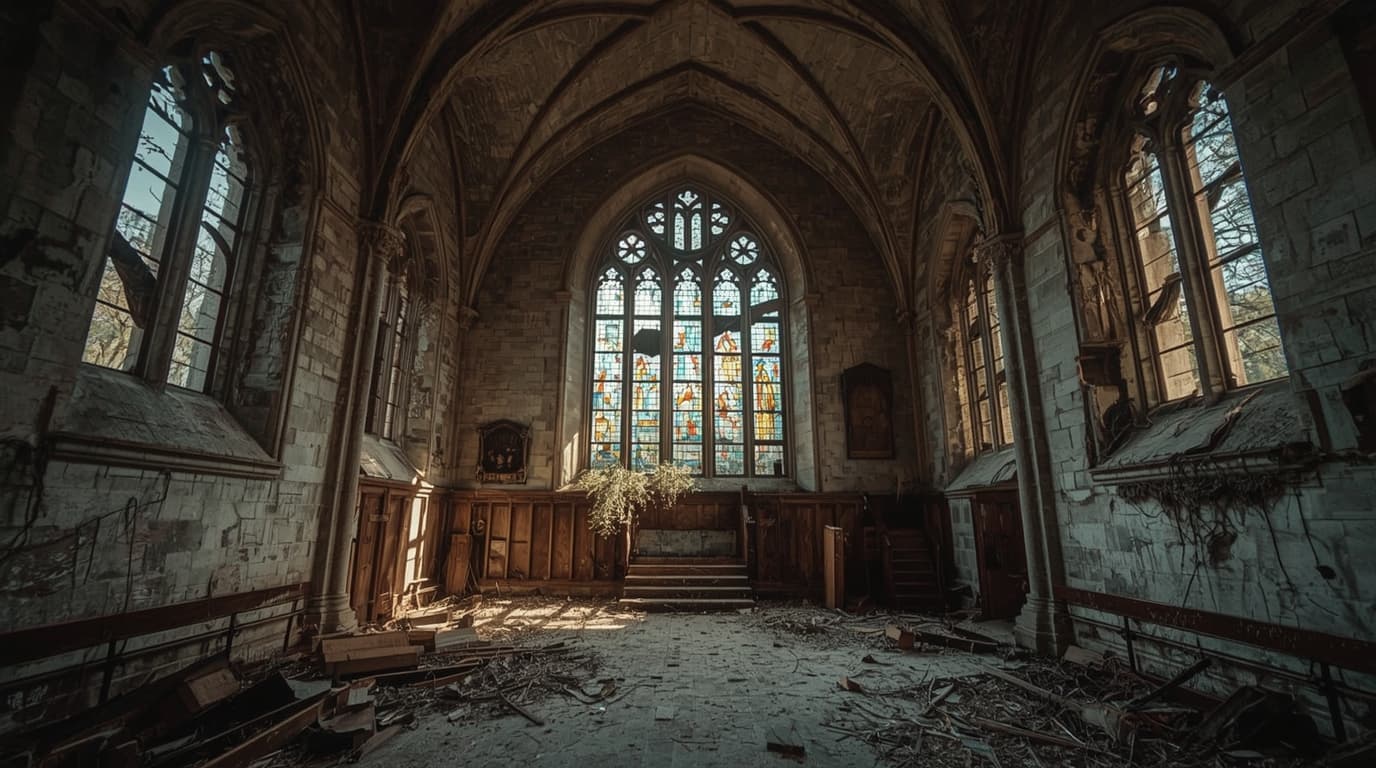
Can you enter an abandoned building without permission?
Usually, no. In most jurisdictions, entering an abandoned building without the owner's consent can still count as trespassing. A building being empty, unsecured, or visibly neglected does not usually make it public or ownerless. If you do not have clear authorization, the legally safer assumption is that you should not enter.
Quick summary
- An abandoned building is usually still private property.
- Urbex without permission can create trespassing, civil, and liability issues.
- An open door, broken window, or missing fence does not equal consent.
- Legal risk is only part of the problem; structural and environmental hazards are common.
- The safest route is to get permission, use official access, or choose verified legal options.
- Responsible urbex means no forced entry, no damage, and no disturbance.
What are the key facts to know?
| Issue | Short answer | Why it matters |
|---|---|---|
| Abandoned private property | Usually still protected by law | Ownership normally remains even if the site is unused |
| Entry without authorization | Often treated as trespassing | You can be removed, fined, or charged depending on local law |
| Open access point | Not permission | A broken gate or unlocked door does not grant legal entry |
| Taking photos only | Not a legal exception | Photography does not cancel property rights |
| Safety conditions | Often poor or unpredictable | Floors, roofs, glass, mold, and shafts can create serious danger |
| Best alternative | Permission or verified legal access | This reduces legal and safety risk |
Why is an abandoned building still usually private property?
Yes, an abandoned building is usually still private property because abandonment in everyday language is not the same as loss of legal ownership.
A site may belong to a private owner, a company, a municipality, a bank, an estate, or a receiver. Even if the property is neglected, boarded up, or empty for years, legal rights often remain in place until ownership is formally transferred or the site is legally opened to the public.
This is the core point behind the question entrer dans un bâtiment abandonné sans autorisation. The appearance of abandonment does not create a free right of access.
For a broader overview, see Is Urbex Legal? A Clear Guide to Urban Exploration Laws.
Does an open door or broken fence make entry legal?
No. An open door, damaged fence, or missing lock does not usually make entry legal.
Consent must come from a person or entity with authority over the site. Physical access is not the same as legal access. If someone else already broke in, that does not reduce your own responsibility.
This is where many urbex legal misunderstandings start. Explorers sometimes read the condition of the site as implied permission. That is not a reliable legal standard.
A good rule is simple: if you cannot clearly identify lawful permission, do not enter.
What legal risks does urbex without permission create?
Urbex without permission can create both criminal and civil risk, and the exact consequences depend on local law.
Common legal issues include:
- trespassing allegations
- refusal to leave when asked
- entry into restricted or unsafe premises
- liability for emergency response or site damage
- problems if tools, lights, or climbing gear are interpreted as intent to bypass security
In some places, signage matters. In others, unauthorized entry alone is enough. Some jurisdictions distinguish between open land and enclosed buildings. Others treat rail, industrial, military, or utility sites much more strictly.
The key practical lesson is that legality urbex is highly context-specific, but the risk is rarely zero. If you want a safer approach, start with verified information instead of assumptions.
What safety risks make abandoned private property especially dangerous?
The legal issue is serious, but the safety issue is often worse.
Abandoned buildings can contain hidden structural failure, rotten floors, unstable stairs, exposed wiring, contaminated dust, asbestos, mold, sharp glass, shafts, standing water, and poor air quality. Even experienced explorers cannot reliably assess all of those risks from the entrance.
Private abandoned property also creates response delays. If the site is isolated, locked down, or hard to describe to emergency services, a small incident can become a major one.
This is one reason to avoid high-risk locations entirely. See Top 5 Most Dangerous Urbex Places and Why You Should Avoid Them.
If you do explore lawful sites, think about planning and company as well. Solo Urbex or Group Urbex: Pros and Cons for Safer Exploration explains that tradeoff clearly.
How can you explore responsibly without trespassing?
The best way to explore responsibly is to choose access that is clearly authorized and to avoid any site where consent is uncertain.
Practical options include:
- asking the owner or manager for written permission
- attending an official open day, heritage visit, or guided tour
- choosing locations that are legally accessible
- using verified location resources that prioritize responsible urbex
- skipping any place that requires climbing, cutting, forcing, or bypassing barriers
This is where curated tools help. Instead of chasing rumors about abandoned private property, use better screening and clearer access information. You can Browse all urbex maps to focus on research first.
When is entry more likely to be lawful?
Entry is more likely to be lawful when you have explicit permission or when the site is officially open to the public under stated conditions.
Examples include:
- written consent from the owner
- a ticketed event or approved tour
- a public heritage site with posted visiting rules
- an active venue that allows photography or exploration in defined areas
Even then, lawful access has limits. Permission for the courtyard does not mean permission for the roof. A tour pass does not authorize off-route wandering. Always follow the exact scope of access granted.
What should you do before visiting any location?
Before visiting, verify ownership, access status, and safety conditions as far as possible.
Use this simple checklist:
- Identify who controls the site.
- Check whether public access is officially stated.
- Look for restrictions on hours, photography, or specific zones.
- Do not rely on social media claims alone.
- Avoid any plan that involves stealth, evasion, or forced entry.
- Leave immediately if access is disputed or conditions feel unsafe.
For MapUrbex, preservation comes first. That means no trespassing, no vandalism, no theft, and no publication that increases damage to fragile places.
FAQ
Is an abandoned building legal to enter if nobody uses it?
No, not necessarily. Lack of occupancy does not usually remove ownership rights or access restrictions.
Can police remove you even if you caused no damage?
Yes. In many places, unauthorized presence alone can justify removal, identification checks, or further action.
Is urban exploration legal if you only take photos?
No. Taking photos does not create permission to enter private property.
What if the place has no warning signs?
No sign does not automatically mean no restriction. Local law may still treat unauthorized entry as trespassing.
Can a friend's invitation count as permission?
Only if that friend actually has authority over the property. A casual invitation from someone without control of the site may not protect you.
Conclusion
The short answer is clear: you usually should not enter an abandoned building without permission. A neglected site can still be protected private property, and the legal and physical risks are often underestimated.
A better urbex approach is simple: verify access, respect boundaries, and choose locations through responsible research. That is safer for you and better for the places themselves.
Explore safer options with MapUrbex
Use verified research tools and start with access-first planning instead of guesswork.
Access the free urbex map
