 MapUrbex
Most urbex lists become unreliable fast. Learn why fake urbex spots spread, how to judge list quality, and what to use instead of random directories.
Why Urbex Lists Are Often Wrong: How to Find Reliable Abandoned Places
Why urbex lists are often wrong is a common question for beginners and experienced explorers alike. The short answer is simple: abandoned places change quickly, while copied lists do not.
A location that was accessible last year may now be secured, redeveloped, demolished, occupied, or legally sensitive. When a list keeps circulating without verification, it stops being useful and can become misleading.
For responsible urbex, the goal is not to collect the biggest list. The goal is to find reliable information, respect property and safety limits, and avoid spreading bad data.
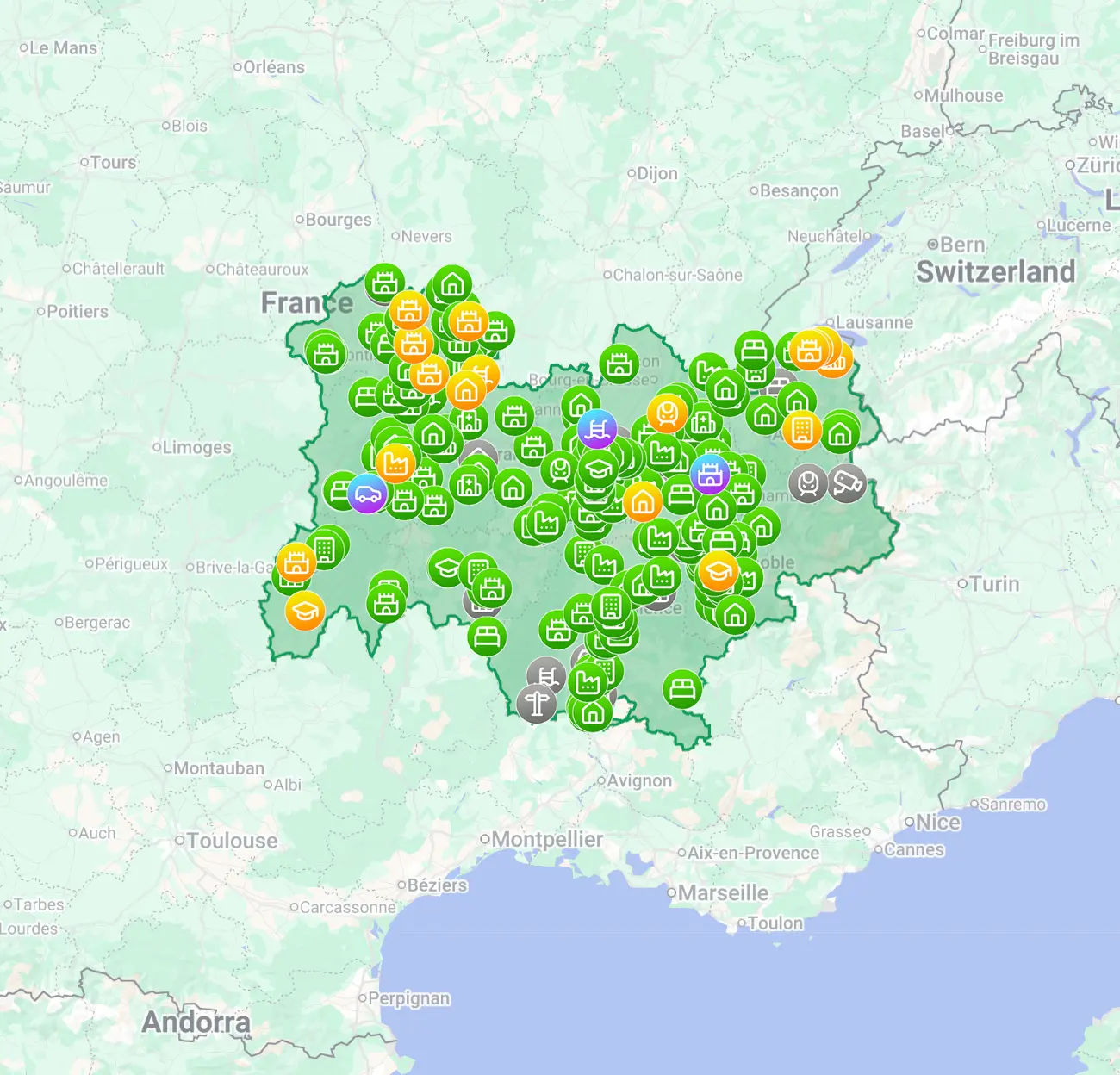
Why are urbex lists often false?
Urbex lists are often false because abandoned places change status quickly, while many lists are copied, outdated, or intentionally vague. Some include fake urbex spots to protect real places, others recycle old coordinates without checks. A reliable source verifies locations, updates them, and presents them with a responsible, preservation-first approach.
Quick summary
- Most fake urbex lists fail because they are copied from older sources without new verification.
- A real abandoned place can become inaccessible, renovated, monitored, or demolished in a short time.
- Social media posts often favor attention over accuracy, which reduces the reliability of urbex lists.
- Verified maps and curated guides are usually more useful than large anonymous directories.
- Responsible urbex means no forced entry, no trespassing, no vandalism, and no location dumping.
- The best starting point is a source that checks places regularly and explains context, not just coordinates.
Quick facts
| Topic | Key point |
|---|---|
| Main problem | Lists age faster than most people expect |
| Common cause | Copy-paste directories and reposted coordinates |
| Biggest risk | Wasted trips, unsafe sites, or legal problems |
| Better option | Verified locations on curated maps |
| Responsible method | Research first, respect access rules, preserve sites |
What makes a list of urbex spots unreliable?
An urbex list becomes unreliable when it prioritizes volume over verification. A long list looks impressive, but size is not proof of quality.
Several patterns usually indicate weak data:
- locations copied from forum posts that are many years old
- coordinates repeated across multiple sites with no original source
- vague descriptions such as old factory near the river
- no mention of recent status changes
- no local context about security, redevelopment, or risks
- sensational titles designed for clicks rather than accuracy
This is why lists of abandoned places often disappoint. The internet preserves old information well, but it does not automatically remove bad information.
Why do fake urbex spots spread so quickly?
Fake urbex spots spread quickly because they are easy to repost and difficult to verify from a distance. Once one list is copied into videos, blogs, forums, and map pins, it starts to look trustworthy even when it is not.
There are also different kinds of false data:
- fully invented locations
- real places with wrong coordinates
- places that were abandoned once but are no longer abandoned
- spots shared with intentionally misleading details
- sites described as easy access when they are not legally or safely accessible
This explains why the reliability of urbex lists is usually lower than people expect. Repetition is not verification.
How can you judge the reliability of an urbex list?
You can judge an urbex list by looking for evidence of verification, recency, and responsible presentation. If a source never explains when or how a place was checked, treat it carefully.
Use this simple framework:
| Sign | Likely meaning | Better alternative |
|---|---|---|
| Huge list with no dates | Mostly copied or outdated data | Sources with recent updates |
| Exact coordinates for everything | Often dumped without context | Curated entries with notes |
| No safety or legal reminder | Low responsibility standard | Guides that emphasize preservation |
| Same description repeated | Weak original research | Specific site-by-site details |
| Anonymous reposts | Hard to audit | Verified maps and editorial guides |
A useful list usually answers practical questions. Is the place still standing? Is the information recent? Is the source transparent about uncertainty? Does it avoid encouraging illegal entry?
What should you use instead of random urbex lists?
Instead of random urbex lists, use curated maps, responsible local guides, and sources that focus on verified locations. Quality beats quantity.
If you want a structured starting point, Browse all urbex maps to compare curated regions and categories. For a broader overview, read Best Urbex Maps in the World: Where to Find Verified Locations.
Map-based research is more useful when it includes editorial review, regional context, and clear expectations. That is especially true for global urbex research, where copied lists often mix several countries, old data, and rumors.
How can you find abandoned places responsibly?
You can find abandoned places responsibly by combining map research, historical context, local observation from public space, and legal caution. Responsible urbex never means forcing access or ignoring property rights.
A better process looks like this:
- Start with a curated or verified source.
- Cross-check whether the site still exists.
- Research recent redevelopment or demolition.
- Never assume permission because a place looks empty.
- Do not break locks, fences, windows, or barriers.
- Leave the site exactly as you found it.
For a more complete method, read How to Find Abandoned Places Responsibly. If you want an example of a region-specific guide that keeps a preservation-first tone, see Urbex Tokyo: A Responsible Guide to Haikyo and Abandoned Places in Japan.
Are social media lists and copied directories trustworthy?
Social media lists and copied directories can be useful for inspiration, but they are weak sources for verification. They reward novelty and reach, not accuracy.
A viral post may show a real site, but it rarely answers the questions that matter later: is the place still abandoned, is access lawful, has security changed, and is the information current?
This is where many beginners get stuck. They search for urbex tips, find a flashy list, and assume visibility means reliability. In practice, the opposite is often true. The more a location is copied without context, the less useful the information becomes.
FAQ
How do I know whether an urbex list is outdated?
An urbex list is probably outdated if it has no update dates, repeats old descriptions, or references sites that have already been demolished or renovated. Missing timestamps are a major warning sign.
Are paid urbex lists more reliable?
Not automatically. A paid list can still be copied, vague, or old. Reliability depends on verification standards, not on price.
Why do some creators hide exact locations?
Some creators hide exact locations to reduce vandalism, theft, overexposure, and unsafe traffic. In many cases, limited disclosure is part of preservation-first urbex ethics.
What is the safest way to start in urbex?
The safest way to start is to use responsible guides, verified maps, and basic legal caution. Stay outside restricted areas unless you have permission, and never treat an online list as proof that entry is allowed or safe.
Conclusion
Why urbex lists are often wrong comes down to one issue: abandoned places change faster than low-quality data can keep up. Lists become false when they are copied without checks, stripped of context, or shared for clicks.
If you want dependable results, focus on verification, recency, and responsible research. A smaller set of checked locations is far more useful than a huge list of uncertain spots.
Access the free urbex map
