 MapUrbex
A practical guide to urbex in the United States: laws, safety, common site types, planning advice, and how to explore abandoned places responsibly.
Urbex in the United States: Responsible Guide to Urban Exploration USA
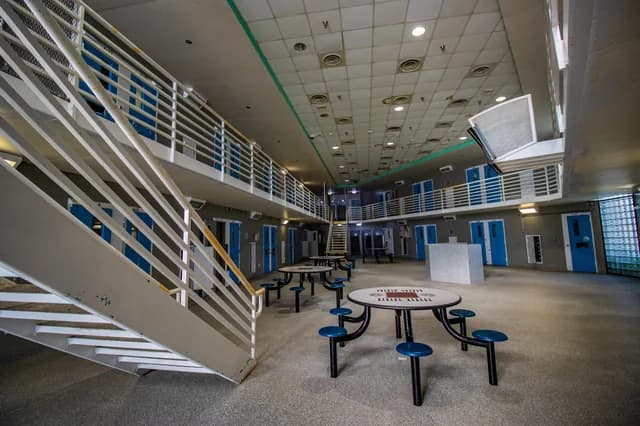
Urbex in the United States covers a huge range of abandoned places, from factories and schools to prisons, hospitals, motels, and industrial sites. The country is one of the best-known destinations for urban exploration because of its scale, regional variety, and long industrial history.
That said, exploration urbaine in the United States is not a free-for-all. Ownership, access, safety, and local law always matter. A useful guide to urbex USA should start with one rule: look first, verify access, and never force entry.
MapUrbex approaches the subject with a preservation-first mindset. The goal is to help people understand abandoned places in the United States, not to encourage trespassing, damage, or risky behavior.
What is urbex in the United States, and how should you approach it?
Urbex in the United States is the practice of documenting and studying abandoned or disused places with a strong focus on legality, safety, and preservation. The right approach is simple: verify ownership, respect closures, avoid forced access, leave nothing behind, and treat each site as historically valuable rather than as a playground.
Quick summary
- The United States is a major urbex destination because it has many industrial, military, medical, and commercial ruins.
- Laws vary by state, city, and property owner, so access rules must be checked case by case.
- The most common site categories are factories, hospitals, schools, prisons, hotels, and transport infrastructure.
- The biggest risks are unstable structures, asbestos, contamination, falls, security issues, and isolated locations.
- Responsible urban exploration in the United States means no trespassing, no vandalism, and no location abuse.
- Verified maps save time by helping researchers focus on documented places instead of random pins.
Quick facts
- Country scope: United States
- Search intent: Informational guide
- Best for: Beginners building a responsible planning process
- Typical site types: Industrial ruins, civic buildings, medical facilities, leisure sites, transport sites
- Main planning priority: Legal access and structural safety
- MapUrbex position: Verified locations, curated maps, preservation-first
Why is the United States such a major destination for urban exploration?
The United States is a major destination for urban exploration because it combines scale, age, industrial change, and regional diversity. Few countries offer so many abandoned places across so many different landscapes.
In the Northeast and Midwest, explorers often associate urbex with factories, mills, rail infrastructure, and depopulated industrial districts. In the South and Southwest, abandoned motels, schools, hospitals, military remnants, and commercial properties are also common. In the West, distance and climate create a different exploration pattern, with larger travel gaps between sites.
This variety is why searches such as "abandoned places in the United States" and "urbex USA guide" remain popular. The subject is not one niche. It is a national patchwork of local histories.
Which abandoned places in the United States are most common?
The most common abandoned places in the United States are industrial buildings, institutional buildings, and leisure sites. These categories appear repeatedly because they reflect long-term economic and demographic shifts.
Typical site types include:
- factories and warehouses
- hospitals and care facilities
- schools and colleges
- prisons and detention buildings
- churches and civic halls
- hotels, motels, and resorts
- amusement parks and leisure sites
- train depots and transport infrastructure
Some categories attract more public interest because they combine architecture and social history. For example, hospitals and theme parks are among the most searched abandoned places in the country. For focused reading, see 20 Abandoned Hospitals in the United States: A Responsible Urbex Reference and 20 Abandoned Theme Parks in the United States Worth Knowing.
What laws and access rules matter most for urbex in the USA?
The most important rule is that abandoned does not mean public. In the United States, many disused sites remain privately owned, monitored, fenced, or covered by local trespass law.
A responsible urbex USA plan should check legal status before any visit. That includes posted signs, ownership records when available, redevelopment status, and whether a place is actively patrolled or sealed for safety reasons.
| Issue | Why it matters in the United States |
|---|---|
| Private property | Many abandoned sites are still owned and entering without permission can be trespass. |
| State and local rules | Enforcement differs by jurisdiction, so one assumption does not fit every state. |
| Safety closures | Buildings may be closed because of collapse risk, asbestos, fire damage, or contamination. |
| Photography and drones | Separate rules may apply, especially near infrastructure or sensitive properties. |
| Redevelopment zones | A site may look empty while still being part of an active project area. |
For that reason, responsible explorers do not climb fences, bypass locks, or enter sealed buildings. Documentation should never come before legality and safety.
How should you prepare a responsible urbex trip across US regions?
A responsible urbex trip in the United States starts with research, not travel. Good planning reduces wasted time and lowers risk.
Start with the region. Distances in the United States are often much larger than new explorers expect. A map point in the same state can still mean several hours on the road. Weather also changes fast by region, and rural sites may have weak phone coverage.
A practical planning checklist includes:
- verify whether access is legal or restricted
- study recent information, not only old photos
- check daylight, weather, and road conditions
- avoid solo entry in unstable or remote places
- carry basic protective gear appropriate to the situation
- respect nearby residents and do not disclose sensitive details publicly
If you want a structured starting point, Browse all urbex maps or use the free planning layer below.
Which risks are most important in American abandoned sites?
The main risks in American abandoned sites are structural instability, environmental hazards, isolation, and security-related problems. These risks matter more than aesthetics.
Common hazards include rotten floors, collapsing stairs, broken glass, exposed shafts, mold, asbestos, chemical residues, and water damage. In very large industrial sites, navigation itself can become a problem. In remote areas, help may be far away.
Security is another issue. Some well-known locations attract patrols, cameras, or neighborhood attention. Others are dangerous because of open pits, fire damage, or criminal activity nearby. For a risk-focused overview, read 20 Dangerous Urbex Places in the United States: New York, Detroit, and Other High-Risk Sites.
A useful safety reminder is simple: if access is unclear or conditions look unstable, do not enter.
How does MapUrbex help with urban exploration in the United States?
MapUrbex helps by organizing verified locations into curated maps designed for responsible research. That is useful in a country where abandoned places are abundant but information quality is uneven.
Instead of relying on random coordinates, outdated forum posts, or vague social media hints, explorers can compare documented entries, filter by area, and plan with more context. This supports a preservation-first approach and reduces impulsive behavior.
If you want to explore the catalog in more depth, Access the free urbex map is the easiest starting point.
FAQ
Is urbex legal in the United States?
Urbex is not automatically legal in the United States. Legality depends on ownership, permission, local trespass law, and safety restrictions. An abandoned building can still be private property.
What parts of the United States are best known for abandoned places?
The Northeast and Midwest are especially known for industrial ruins, hospitals, schools, and transport sites. However, abandoned places exist in every region, including the South, Southwest, and West.
Can beginners do urban exploration in the United States safely?
Beginners should start with research-based, low-risk planning and avoid unstable or restricted sites. Responsible exploration means prioritizing legality, structure condition, and daylight access over dramatic imagery.
What equipment is useful for a responsible visit?
Useful basics can include sturdy boots, gloves, a charged phone, water, a flashlight, and simple first-aid supplies. Specialized gear does not make an illegal or unsafe site acceptable.
Why are hospitals, prisons, and factories so popular in urbex USA?
These places combine architectural scale, visible decay, and strong historical narratives. They also reflect major changes in public health, industry, incarceration, and regional economics.
Conclusion
Urbex in the United States is compelling because the country contains an exceptional range of abandoned environments. But the best urban exploration USA guide is not a list of reckless shortcuts. It is a framework for lawful research, careful planning, and preservation.
For most people, the smartest first step is not chasing the hardest site. It is learning how to identify verified locations, understand access, and avoid unnecessary risk.
Access the free urbex map
