 MapUrbex
A practical guide to urbex in Marseille: port wastelands, hillside ruins, Calanques-edge sites, and key safety rules for responsible exploration.
Urbex in Marseille: Abandoned Places to Discover in Marseille
Marseille is one of the most varied cities in France for urbex. The landscape mixes old port infrastructure, industrial leftovers, isolated healthcare buildings, and structures scattered between the coast and the hills.
That variety is exactly why urbex in Marseille needs more than a simple list of names. The city combines private property, active logistics areas, unstable seaside buildings, and remote terrain near the Calanques.
This guide focuses on the main types of abandoned places in Marseille, what makes them interesting, and how to approach them responsibly with a preservation-first mindset.
What are the best abandoned places to discover for urbex in Marseille?
The best options for urbex in Marseille are usually former port and warehouse zones, disused industrial buildings, isolated medical facilities often described as abandoned sanatorium sites, and a small number of ruined structures near the Calanques. The most useful approach is not chasing viral coordinates but identifying verified, lower-risk locations and checking legal access conditions before any visit.
Quick summary
- Marseille urbex is defined by port wastelands, industrial ruins, old care facilities, and coastal-edge structures.
- Searches for abandoned places in Marseille often mix real disused sites with active restricted zones, so verification matters.
- Port areas can look accessible from afar but often carry the highest legal and physical risk.
- The phrase abandoned sanatorium Marseille usually refers to hillside medical ruins outside the dense city center.
- Urbex near the Calanques is visually striking but adds terrain, weather, and rescue-access risks.
- MapUrbex favors verified locations, responsible planning, and preservation over viral spot sharing.
Quick facts
| Item | Detail |
|---|---|
| City profile | Major Mediterranean port with layered industrial, military, medical, and coastal history |
| Common urbex categories | Port wastelands, warehouses, factories, clinics, hillside ruins, small coastal structures |
| Main risks | Trespassing, corrosion, unstable floors, asbestos, exposed drops, isolation |
| Best planning method | Use verified location data, daylight scouting, and legal access checks |
| Best season | Cooler months are usually easier for walking and safer than peak summer heat |
| Best mindset | Observe, document, leave no trace, and never force entry |
Which types of abandoned places define urbex in Marseille?
Marseille stands out because its abandoned places are unusually diverse for one city. The strongest categories are maritime-industrial sites, healthcare ruins, and buildings stranded between urban growth and rugged terrain.
In practice, most searches for abandoned places in Marseille point to five recurring groups:
- former port warehouses and logistics buildings
- industrial wastelands on the northern and waterfront edges
- disused clinics, convalescent homes, or sanatorium-like structures
- small military or technical remnants near the coast
- neglected villas, depots, or service buildings on the outskirts
This matters because each category implies a different risk pattern. Coastal steel decays faster. Remote hillside buildings complicate evacuation. Former medical sites often contain hazardous materials and broken interior layouts.
Where are Marseille's port wastelands most relevant for urbex?
Marseille's port wastelands are most relevant in the broad industrial waterfront and logistics belt rather than in the tourist center. They attract urbex interest because they combine scale, machinery remains, and strong visual contrast between decay and active maritime life.
They also require the most caution. A disused warehouse can sit next to a functioning zone, a fenced perimeter, or a surveillance corridor. That is why many "friches portuaires Marseille" searches lead people into legally sensitive areas.
For responsible exploration, treat port wastelands as high-verification locations. Do not assume that silence means abandonment. Check ownership, current use, and whether the surrounding access roads are still operational industrial routes.
Legal reminder: many abandoned-looking sites in Marseille remain private property or sit beside active infrastructure. MapUrbex does not support trespassing, forced access, or entry into restricted areas.
Why do people search for an abandoned sanatorium in Marseille?
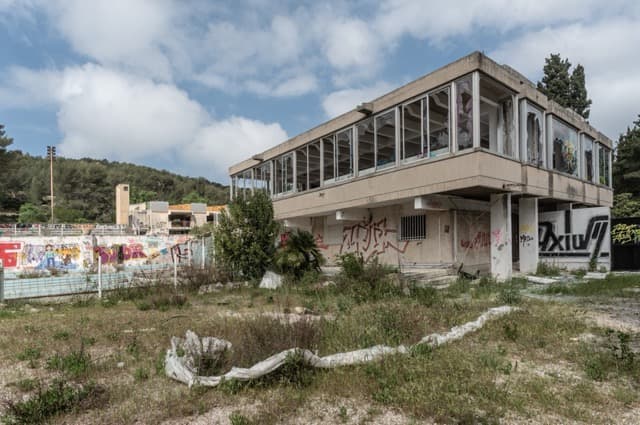
People search for an abandoned sanatorium in Marseille because these sites combine architecture, isolation, and local legend. They are often associated with hillside settings, large window lines, long corridors, and a stronger atmosphere than ordinary industrial shells.
In reality, the label can cover different building types: former sanatoriums, care homes, rehabilitation centers, or medical annexes. Online discussions often merge them into one story, which creates confusion.
From a research point of view, these places deserve extra caution for three reasons:
- medical ruins are often structurally degraded inside even when facades still look solid
- they may contain hazardous debris, old insulation, or contaminated rooms
- access routes can be isolated, steep, or poorly marked
If your goal is photography, planning matters more than secrecy. A verified record, a clear weather window, and a daylight approach are more useful than a last-minute coordinate drop.
Can you do urbex near the Calanques around Marseille?
Yes, urbex near the Calanques exists, but it is usually less about large interiors and more about isolated ruins, small technical structures, former shelters, and scattered remnants on the edge of the massif. The appeal is the setting rather than the volume of architecture.
That setting changes the risk profile. In the Calanques zone, heat, wind, cliffs, loose ground, and wildfire restrictions can matter more than the building itself. A modest ruin can become dangerous simply because it is remote.
If you are looking for "urbex calanques," keep these limits in mind:
- check seasonal access restrictions and fire-risk rules
- avoid solo visits in isolated terrain
- carry water, light, and offline navigation
- do not enter unstable coastal cavities or cliff-edge structures
- leave immediately if weather or footing deteriorates
The best Calanques-adjacent urbex visits are usually short, legal, and planned around hiking reality rather than internet hype.
How should you approach urbex safety in Marseille?
Urbex safety in Marseille starts with accepting that the city's beauty can hide serious hazards. Salt air, steep terrain, summer heat, and mixed active-abandoned zones make careful screening essential.
The following table summarizes the main safety issues.
| Risk area | Why it matters in Marseille | Safer approach |
|---|---|---|
| Coastal corrosion | Metal stairs, railings, and roofs weaken quickly near sea air | Never trust exposed steel or upper platforms |
| Port adjacency | Some ruins border active logistics or restricted property | Verify status before going and avoid perimeter breaches |
| Heat and dehydration | Summer visits can become unsafe fast | Prefer cooler hours and carry enough water |
| Hill access | Outskirt ruins may require long approaches | Share your plan and avoid isolated solo entries |
| Interior instability | Floors and stairwells fail without warning | Stay on obvious load paths and turn back early |
| Air quality | Dust, mold, and fibers can be present | Limit exposure and avoid enclosed degraded rooms |
A simple rule works well: if a site requires rushing, climbing improvised access points, or ignoring warning signs, it is not a responsible urbex visit.
How can you find abandoned places in Marseille responsibly?
The responsible way to find abandoned places in Marseille is to use verified mapping, cross-check current status, and avoid public coordinate dumping. That reduces legal risk, protects sites from damage, and saves time.
Start with Browse all urbex maps if you want a broader view of regions and categories. If you want a lighter entry point, Access the free urbex map first.
For Marseille-specific reading, see Urbex Marseille: Guide to Abandoned Places in Marseille and Nearby, Urbex Marseille: Abandoned Places and Hidden Spots in Marseille, and How to Find Secret Urbex Spots Responsibly.
MapUrbex is built around a simple principle: verified locations are more useful than exaggerated rumors. A curated map helps you compare site type, context, and likely risk before you travel.
FAQ
Is urbex legal in Marseille?
Urbex itself is not a legal exception. Many abandoned places in Marseille are on private land or inside restricted zones, so entering without permission can still be trespassing. Always check the site's status and local restrictions.
What should you bring for urbex in Marseille?
Bring water, charged phone, backup light, sturdy shoes, and basic protective clothing. In hotter months, sun protection matters as much as indoor safety gear.
Are port wastelands more dangerous than inland ruins?
Often yes. Port wastelands combine legal sensitivity, hidden surveillance, unstable metal, and nearby active traffic. Inland ruins can also be dangerous, but the risk pattern is usually easier to read.
Should you share exact coordinates of abandoned places in Marseille?
In most cases, no. Publicly sharing exact coordinates can accelerate vandalism, theft, and unsafe visits. Responsible urbex communities usually share selectively and with context.
Is an abandoned sanatorium in Marseille a good beginner site?
Usually not. Medical ruins often create a false sense of accessibility because the building shape looks familiar. Inside, they can be among the least predictable environments.
Conclusion
Urbex in Marseille is compelling because the city brings together sea-facing decay, industrial history, medical ruins, and rugged peripheral landscapes. It is also one of the French cities where verification matters most.
If you want to explore abandoned places in Marseille intelligently, focus on site type, legal status, and safety conditions before aesthetic appeal. Responsible planning protects both you and the locations.
Access the free urbex map
