 MapUrbex
Is urbex legal in France? A clear guide to property rights, unauthorized entry, risks, fines, and responsible exploration.
Urbex Legality in France: Risks, Fines, and What the Law Says
Urbex legality in France is widely misunderstood. Many people assume that an abandoned place is free to enter. French law does not work that way.
There is no single statute called an urbex law. The legal outcome depends on ownership, permission, how access was gained, and whether the site is private, occupied, protected, or dangerous.
This guide explains the main rules in plain language. It is general information, not personal legal advice.
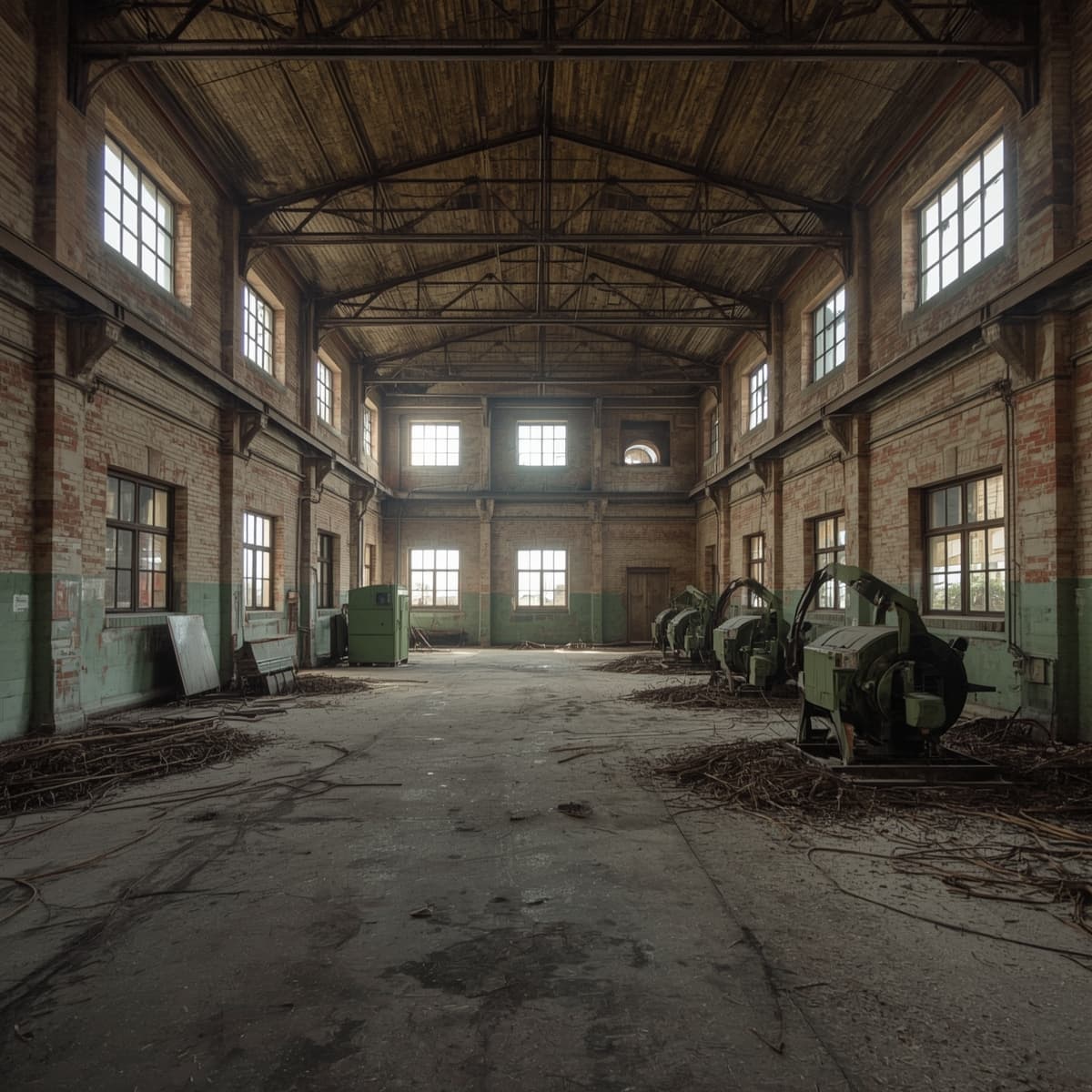
Is urbex legal in France?
Urbex is not automatically legal or illegal in France. Exploring with the owner's permission can be lawful, but entering a site without authorization can expose you to removal, an owner complaint, civil liability, and sometimes criminal charges. The key issue is not whether a place looks abandoned. The key issue is whether you had the legal right to be there.
Quick summary
- France has no special rule that makes abandoned buildings free to explore.
- Permission from the owner or lawful occupier is the safest basis for legal urbex in France.
- An open door, damaged fence, or missing lock does not equal consent.
- Legal exposure rises sharply if there is forced entry, damage, theft, or access to restricted infrastructure.
- Police intervention can lead to identity checks, removal from the site, and formal reporting.
- Responsible explorers reduce risk by using verified information, avoiding sensitive sites, and never forcing access.
Quick facts
The short version is simple: access rights matter more than the abandoned appearance of a place.
| Point | Practical meaning in France |
|---|---|
| No dedicated urbex law | Cases are assessed through property, criminal, civil, and safety rules |
| Permission matters | Clear owner consent is the safest legal basis |
| Abandoned does not mean public | Most sites still belong to someone |
| Forced entry changes everything | Breaking locks, fences, windows, or seals greatly increases legal risk |
| Sensitive sites are high risk | Rail, military, utility, medical, and active industrial sites can trigger additional offenses |
| Damage creates major exposure | Even minor vandalism or removal of objects can lead to serious claims or charges |
Why is there no single urbex law in France?
There is no single urbex law in France because urban exploration is not a separate legal category. Authorities evaluate conduct through existing rules on private property, unlawful entry, damage, theft, safety, and protected areas.
That is why two visits that look similar online can be legally very different. A documented visit with permission is one situation. Climbing over a barrier into a disused industrial site without consent is another.
This also explains why advice such as a place being empty is enough is unreliable. Emptiness does not cancel ownership. A deserted factory, château, warehouse, clinic, or school can still be private, monitored, insured, or scheduled for redevelopment.
When does urban exploration become illegal in France?
Urban exploration in France becomes illegal when you enter or remain on a site without authorization, especially if access involves private property, an occupied place, a restricted zone, or any form of forced entry.
Common risk situations include:
- entering private land or buildings without consent
- crossing fences, gates, walls, or posted no-entry zones
- using a broken window, open door, or existing hole as a way in
- staying after security, staff, or the owner asks you to leave
- accessing transport, utility, military, or active industrial infrastructure
- taking objects, moving equipment, or causing any damage
In practice, the legal analysis often turns on simple facts. Was the site enclosed? Were there warning signs? Did you bypass a barrier? Was someone still using the premises? Did you alter anything? Those details matter more than the label urbex.
What legal risks and fines can explorers face?
Explorers in France can face several layers of risk: police intervention, owner complaints, civil liability, and criminal penalties if the facts are serious enough. There is no standard urbex fine. Fines usually come from the specific offense that authorities or the owner rely on.
| Situation | Main legal risk | Likely consequence |
|---|---|---|
| Unauthorized entry onto private property | Complaint by owner, removal, possible proceedings | Identity check, report, possible fine depending on the offense |
| Forced entry or bypassing security | Aggravated criminal exposure | Higher risk of prosecution, criminal fine, possible prison |
| Entry into an occupied dwelling or protected place | More serious criminal qualification | Significantly higher penalties |
| Damage, graffiti, or breaking objects | Property damage offense | Repair costs, civil damages, criminal fine |
| Taking souvenirs, archives, or metal | Theft-related offense | Seizure, complaint, prosecution |
| Injury on site | Civil and insurance issues | Medical risk, possible lack of coverage, dispute over liability |
The practical lesson is clear. The legal risk is usually not because it was urbex. The risk comes from how the site was entered, what kind of site it was, and what happened once inside.
Is an abandoned building automatically free to enter?
No. An abandoned building is not automatically free to enter in France because abandonment in everyday language is not the same thing as absence of legal rights.
A site can look ruined and still have an owner, an insurer, a caretaker, redevelopment plans, restricted access, or severe hazards such as asbestos and structural instability.
This is why the argument nobody uses it is not a legal defense. If you do not have authorization, the fact that a place is empty does not create a right of entry.
Which places are especially sensitive under French law?
Some places are especially sensitive because access can trigger more than ordinary property issues. In France, the highest-risk sites usually include rail property, tunnels, active industrial plants, military zones, utilities, hospitals, and technical infrastructure.
These locations matter for two reasons. First, they often have explicit restrictions, surveillance, or sector-specific security rules. Second, the safety risk is much higher because of electricity, unstable floors, shafts, chemicals, moving equipment, or live lines.
Even if the intention is only photography, intent does not erase the security context. A quiet visit to the wrong place can still be treated seriously.
How can you practice legal urbex in France more responsibly?
The most responsible way to practice legal urbex in France is simple: go only where you have a lawful basis to be, and walk away when that basis is unclear.
A preservation-first approach usually means:
- get owner or manager permission whenever possible
- prefer guided access, heritage open days, or clearly authorized sites
- do not force locks, doors, windows, fences, or shutters
- do not enter active, occupied, or critical infrastructure
- do not publish precise access points that encourage trespass
- do not touch machinery, documents, or personal belongings
- leave immediately if asked
- verify current status because site conditions change quickly
This is also the MapUrbex position: verified locations, responsible urbex, curated maps, and preservation before spectacle.
Does photographing a place from public space change the legal analysis?
Yes, often. Photographing a site from public space is usually less legally sensitive than entering it, because you are not automatically crossing into private access.
That said, photography can still create issues if it involves obstruction, drones, harassment, or restricted views around sensitive installations. The safer rule is simple: public vantage points are one thing, entry onto the property is another.
FAQ
Does abandoned mean public in France?
No. Abandoned describes appearance, not legal status. Most abandoned places still belong to a private owner, a company, a municipality, or another public body that controls access.
Can police fine you on the spot for urbex?
Police may stop you, check your identity, remove you from the site, and document the situation. Whether there is an immediate fine or later proceedings depends on the facts and on the offense used, not on a generic urbex rule.
If a door is already open, is entry legal?
No. An open door is not the same as permission. French law focuses on authorization, not only on whether you had to break something to get in.
Is owner permission enough to make urbex legal?
Permission is the safest starting point, but it does not solve everything. You still need to respect site-specific rules, safety limits, and any restrictions that apply to protected or hazardous locations.
What happens if nothing is damaged and nothing is taken?
That reduces risk, but it does not automatically make the visit lawful. Unauthorized access can still create legal exposure, especially on enclosed, occupied, or restricted sites.
Conclusion
The legality of urbex in France depends less on the word urbex than on access rights, consent, and site type. There is no special exception for abandoned places. If you enter without authorization, especially through barriers or into sensitive infrastructure, the legal and safety risks rise quickly.
For most explorers, the safest rule is also the clearest one: no forced entry, no guessing, no assuming that empty means allowed, and no sharing of access methods. Responsible exploration starts with verified information and respect for property.
Access the free urbex map
