 MapUrbex
A practical MapUrbex guide to urbex in Poland, with responsible research tips for abandoned factories, palaces, and forgotten sites.
Urbex in Poland: Factories, Palaces and Forgotten Sites to Research Responsibly
Poland is one of the most varied countries in Europe for industrial and architectural urbex research. Former mills, mines, rail infrastructure, manor houses, palaces, and rural institutions create a wide mix of abandoned places to study.
The key difference is not quantity alone. Good urbex in Poland depends on legal access checks, reliable research, and realistic risk assessment. MapUrbex focuses on verified locations and preservation-first planning rather than viral coordinates.
Where can you do urbex in Poland responsibly?
Responsible urbex in Poland is usually found through verified research, not open spot dumping. The strongest categories are former industrial sites, rural estates, transport infrastructure, and other forgotten places, but every visit still requires an ownership check, a legal access check, and a careful on-site safety decision. A curated map is more useful than random social posts.
Quick summary
- Poland offers strong variety for urbex, especially in industrial ruins, palaces, manor houses, rail sites, and other forgotten places.
- The best urbex spots in Poland are not defined by hype. They are defined by research quality, access reality, and structural safety.
- Abandoned factories in Poland often provide the most scale, while abandoned palaces in Poland usually offer the strongest architectural detail.
- Rural and semi-rural locations may look easier to reach, but they often involve private land, unstable floors, and low emergency access.
- MapUrbex is built for responsible exploration: verified locations, curated maps, and preservation-first planning.
- Never force entry, ignore signage, or treat abandoned places as public access areas.
Quick facts
| Topic | Answer |
|---|---|
| Main site types | Factories, mills, mines, depots, manor houses, palaces, schools, hotels, sanatoriums, and religious ruins |
| Best use of a Poland urbex map | Pre-screening locations by type, condition, and research value |
| Main legal issue | Abandonment does not mean legal access |
| Main safety issue | Structural instability, broken flooring, water damage, and hidden shafts or basements |
| Best research approach | Use verified mapping, cross-check access, and plan daylight visits |
| Best fit for travelers | Explorers building a multi-stop road trip across Europe |
Why is Poland a strong destination for urbex?
Poland is a strong urbex destination because it combines industrial history, large-scale postwar infrastructure, and a wide rural heritage of estates and institutions. Few countries offer such a broad mix of factory ruins and decaying aristocratic architecture within the same travel plan.
That variety matters. Someone focused on texture and machinery may prefer mills, power sites, or workshops. Someone interested in atmosphere and design may focus on staircases, salons, chapels, courtyards, and overgrown palace grounds.
Poland also works well for route-based exploration. If you are planning a broader trip, How to Plan an Urbex Road Trip in Europe explains how to build a safer and more efficient itinerary.
Which abandoned factories in Poland are usually worth researching?
The most research-worthy abandoned factories in Poland are usually sites with clear industrial identity, visible exterior scale, and documented closure history. In practice, that often means textile complexes, mining infrastructure, rail workshops, warehouses, food-processing plants, and utility buildings.
These sites are attractive for three reasons:
- They often preserve large volumes, machinery remains, or strong exterior forms.
- They can show several historical phases in one place, from early brick construction to later concrete extensions.
- They often anchor wider industrial districts, which makes route planning easier.
However, factories also create the most serious risk profile. Roof failure, floor voids, exposed metal, chemical residue, flooded basements, and unsecured shafts are common. A large site is not automatically a better site.
If you want starting points for research rather than leaked coordinates, Poland Urbex Map: 5 Best Abandoned Places to Research is a useful next step.
Which abandoned palaces in Poland attract urbex researchers?
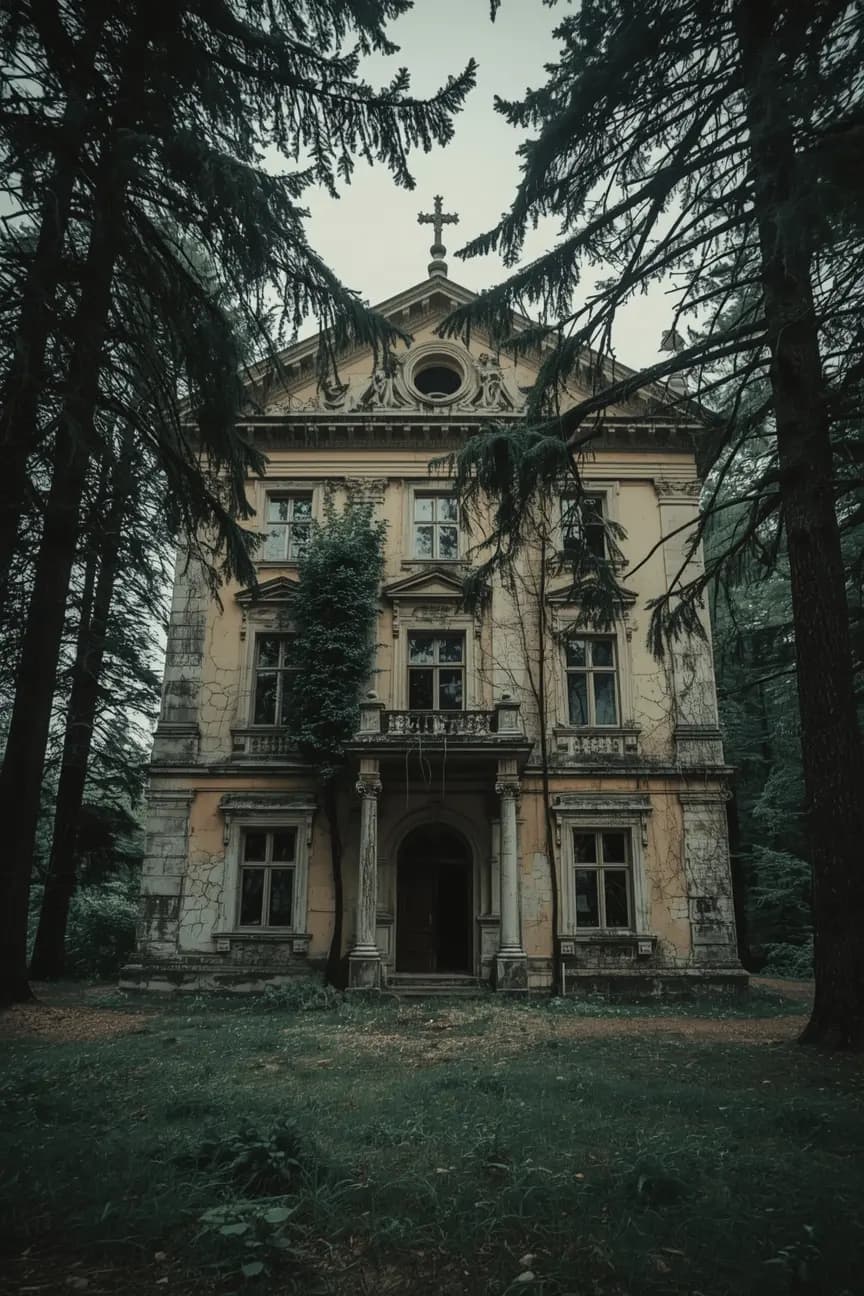
The abandoned palaces in Poland that attract the most interest are usually former aristocratic residences, manor estates, and partially ruined country houses with visible decorative features. These places stand out because they offer architectural detail that industrial sites usually do not.
Researchers often look for:
- facades with towers, columns, or formal symmetry
- stair halls, ballrooms, or reception rooms
- attached parks, chapels, coach houses, or farm wings
- signs of layered history, including postwar reuse and later neglect
Palaces and manor houses can seem calmer than factories, but they are not low-risk. Water damage, collapsed stairs, rotten wood, and hidden cellars are common. Many are also on private estates or near occupied buildings.
For responsible urbex, architecture should never override access rules. A photogenic ruin is still off-limits if entry is not legal.
How should you search for forgotten places in Poland without crossing legal lines?
The safest way to search for forgotten places in Poland is to start with verified data, then filter by legal uncertainty, structural condition, and travel practicality. Responsible research removes bad options before you ever arrive.
A simple workflow looks like this:
- Identify the site category you want to research.
- Check whether the location is known to be fenced, occupied, redeveloped, or monitored.
- Review ownership signals and visible access conditions.
- Prioritize daylight visits and skip any site that requires forced entry.
- Avoid publishing sensitive access details after your trip.
Legal and safety reminder: abandonment is not permission. Do not trespass, break locks, climb unstable structures, or enter sealed industrial areas.
For curated discovery, Browse all urbex maps gives you the broader MapUrbex network. For country-specific guidance, read Poland Urbex Map: How to Find Abandoned Places in Poland Responsibly.
What makes a Poland urbex map more useful than random spot lists?
A Poland urbex map is more useful than a random spot list because it helps you compare places before you travel. That means less wasted driving, fewer dead locations, and fewer risky last-minute decisions.
A curated map helps with:
- filtering by site type
- planning realistic travel loops
- reducing reliance on outdated forum posts
- finding balanced options between industrial ruins and palaces
- focusing on research value instead of social-media hype
This is especially useful in a country where site conditions can change quickly. A place that looked accessible in an old video may now be sealed, restored, or under active redevelopment.
What risks should explorers expect at urbex spots in Poland?
The main risks at urbex spots in Poland are structural instability, access conflict, weather exposure, and remote-site logistics. Industrial and rural locations create different problems, but both require caution.
Common risks include:
- collapsing floors or roofs
- unsecured wells, shafts, or basements
- broken glass and exposed metal
- hidden occupation or nearby residents
- poor phone signal in remote areas
- difficult winter conditions and slippery surfaces
The best rule is simple: if a site feels unclear, active, or unstable, leave it. Responsible urbex is not about completing an entry at all costs.
FAQ
Is urbex legal in Poland?
Urbex in Poland is not automatically legal just because a place is abandoned. Ownership still applies, and many sites are fenced, monitored, or explicitly closed. Always assume that legal access must be confirmed.
Are abandoned factories or palaces easier to research?
Factories are often easier to identify from public records and satellite imagery. Palaces can be harder to assess because they may sit on private land or within partly occupied estates. In both cases, access reality matters more than aesthetics.
Can you trust old coordinates from forums or videos?
Not fully. Many old coordinates lead to sealed sites, demolitions, active properties, or heavily exposed places. Verified maps are more useful because they reduce reliance on outdated or viral information.
What should you bring for a responsible urbex day in Poland?
Bring sturdy boots, weather-appropriate clothing, a charged phone, offline navigation, water, and a basic first-aid kit. Do not bring tools for entry. If legal access is unclear, do not proceed.
Is Poland better for a single stop or a longer urbex road trip?
For most travelers, Poland works best as part of a longer route because the country offers several different site types. Mixing industrial ruins, estates, and forgotten public buildings usually creates a better research itinerary.
Conclusion
Urbex in Poland stands out because it combines abandoned factories, abandoned palaces, and many other forgotten places within one country. The best results come from verification, route planning, and preservation-first decisions, not from chasing exposed coordinates.
If you want to explore Poland more efficiently, use curated research tools and keep legal access at the center of every plan.
Access the free urbex map
