 MapUrbex
Planning urbex in Greece? This guide explains where abandoned hotels, villages and industrial sites are most common, and how to find them responsibly.
Urbex in Greece: Abandoned Hotels, Villages and Industrial Sites
Greece is known for islands, ports, mountain roads, and resort coastlines. For urbex, that mix creates a wide range of subjects, from abandoned hotels to fading villages and heavy industrial remnants.
That said, urbex in Greece is not a free-entry activity. Ownership, fencing, structural decay, wildfire risk, and seasonal conditions vary a lot. The best approach is to use verified information, stay preservation-first, and never force access.
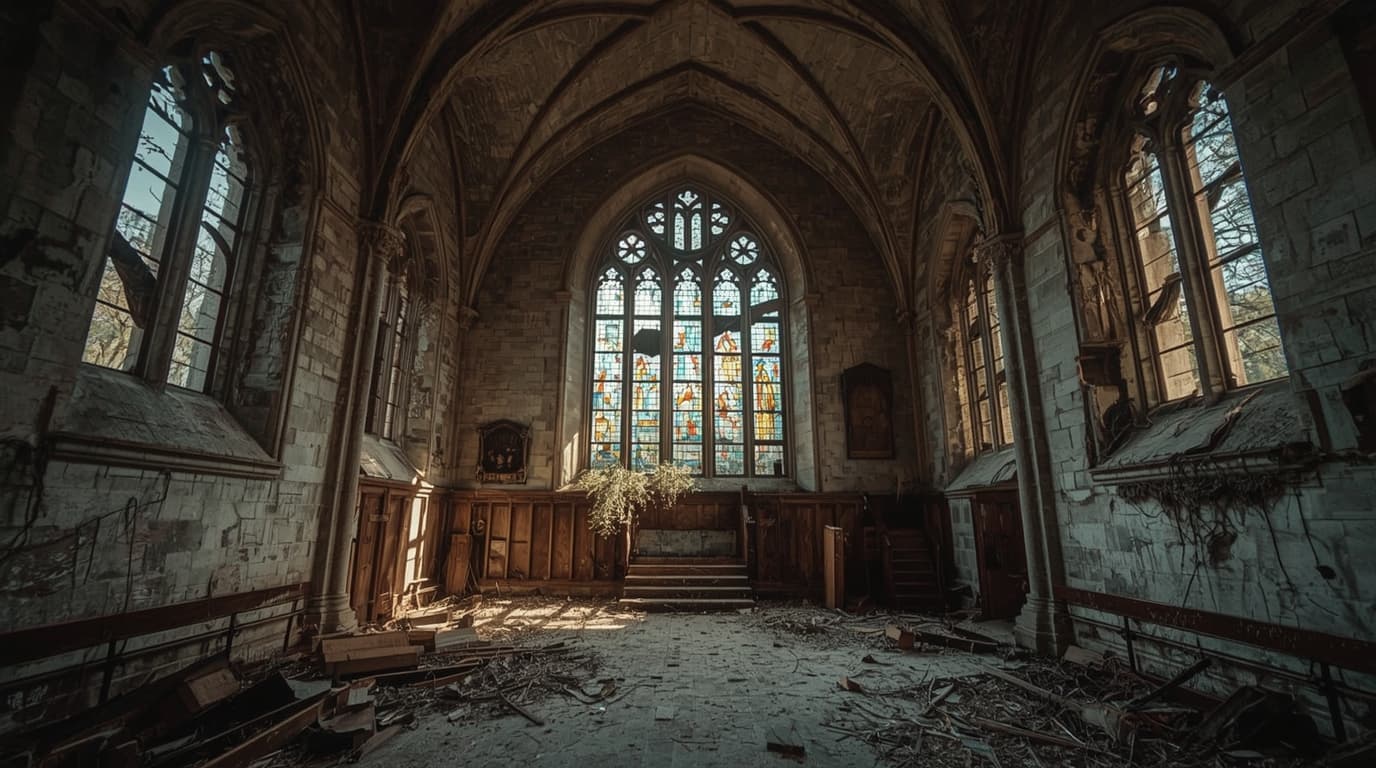
Where can you do urbex in Greece?
In Greece, urbex is most commonly found in three categories: abandoned hotels in coastal tourism zones, abandoned villages in depopulated inland areas, and abandoned industrial sites near former production or transport corridors. The best results usually come from planning by site type, checking legal status in advance, and focusing on verified locations rather than random viral coordinates.
Quick summary
- Urbex in Greece usually means abandoned hotels, abandoned villages, and industrial ruins.
- Coastal resort belts often produce the most photogenic hotel locations.
- Inland and mountain regions are more likely to contain partially deserted settlements.
- Industrial sites can be visually striking, but they usually carry the highest safety risk.
- Private ownership and restricted access are common, even when a place looks unused.
- MapUrbex helps you sort verified locations with a responsible, preservation-first approach.
Quick facts
- Primary urbex categories: hotels, villages, factories, depots, mines, public buildings.
- Best planning method: search by region and category, not by rumor.
- Best conditions for photography: spring and autumn usually offer softer light and lower heat.
- Main risks: unstable floors, broken glass, heat, dust, asbestos, remote terrain, and legal restrictions.
- Best beginner focus: exterior photography and clearly accessible, lower-risk sites.
- Best tool for trip planning: curated maps with verified data and category filters.
Why is Greece attractive for abandoned-place photography?
Greece is attractive for urbex because the country combines tourism infrastructure, rural depopulation, and industrial change in a compact geography. That creates strong visual contrast between sea-facing resorts, silent stone settlements, and rusting industrial shells.
Photographically, Greece also offers hard light, dry textures, weathered concrete, faded paint, and dramatic topography. Even modest ruins can look distinctive when they sit above a bay, inside a valley, or next to an old transport route.
A practical advantage is variety. A single trip can combine seaside hotel decay, village documentation, and industrial exploration planning without crossing a very large country.
Which types of abandoned places are most common in Greece?
The most common abandoned places in Greece are former hotels, depopulated villages, and industrial sites linked to regional economic change. Each category has a different visual style, access pattern, and risk level.
| Site type | Typical setting | What attracts explorers | Main caution |
|---|---|---|---|
| Abandoned hotels | Coastal towns, resort strips, islands, former holiday complexes | Lobbies, pools, façades, sea views, luxury decay | Private property, security, unstable interiors |
| Abandoned villages | Mountain areas, inland regions, isolated roads | Stone houses, churches, schools, strong atmosphere | Remaining residents, fragile buildings, remote access |
| Industrial sites | Factory zones, depots, mining areas, port corridors | Large scale, machinery, textures, history | Contamination, asbestos, falls, fenced perimeters |
| Public or service buildings | Old stations, clinics, schools, municipal sites | Documentary value, layered interiors | Active ownership, alarm systems, hidden hazards |
What should you expect from abandoned hotels in Greece?
Abandoned hotels in Greece are often the most searched urbex category because they combine scale, atmosphere, and recognizable architecture. They can include empty reception halls, exposed corridors, ruined guest rooms, pools, terraces, and sea-facing façades.
Many of these sites are tied to older resort development, stalled redevelopment, ownership disputes, or long-term maintenance decline. That does not make them open for entry. A closed hotel is still usually private property.
From a photography perspective, hotels often work best in daylight and from the exterior first. They also change quickly. A location that was open-looking one season may be fenced, renovated, or monitored the next.
If this category interests you most, see Abandoned Hotels and Casinos: The Most Beautiful Luxury Urbex Spots.
Why do abandoned villages in Greece feel different from urban ruins?
Abandoned villages in Greece feel different because they are less about single buildings and more about landscape, memory, and gradual depopulation. The subject is often a whole settlement pattern rather than one dramatic structure.
In practical terms, these places may include locked homes, roofless houses, old schools, chapels, fountains, terraces, and overgrown lanes. Some are fully deserted. Others are only partially abandoned and still have seasonal residents or nearby families.
That distinction matters. Responsible urbex in villages means avoiding intrusive behavior, respecting religious spaces and cemeteries, and treating the area as part of local heritage rather than as a prop.
Where do industrial ruins fit into urbex in Greece?
Industrial ruins are one of the most visually powerful parts of urbex in Greece, but they are also the highest-risk category. Former factories, warehouses, depots, power-related sites, and mining infrastructure can offer scale that hotels and villages do not.
They also demand more caution. Floors may be cut away, roofs may be failing, shafts or pits may be hidden, and hazardous dust may be present. Many industrial sites remain monitored, fenced, or environmentally sensitive.
For most visitors, industrial urbex is best approached as documentation, not thrill-seeking. Exteriors, legal viewpoints, and verified low-risk access conditions are usually the smart choice.
How should you plan urbex in Greece responsibly?
Responsible urbex in Greece starts with legal clarity, daylight timing, and realistic risk assessment. The safest trip is usually the one planned around verified locations, exterior-first photography, and a willingness to leave when access is unclear.
- Check whether the place is private, active, fenced, or under redevelopment.
- Prefer early morning or late afternoon light over night visits.
- Bring water, sun protection, proper shoes, and a dust mask when appropriate.
- Do not enter unstable upper floors, shafts, or collapsed service areas.
- Never force doors, cut fences, move barriers, or break windows.
- Do not publish sensitive entry methods that increase damage or trespassing.
Legal and safety reminder: MapUrbex supports responsible exploration only. Do not trespass, force entry, vandalize, steal objects, or take avoidable risks.
If you want context on globally famous sites, read Top 10 Most Famous Abandoned Places in the World. If you want a reminder of how serious hazards can become, see 10 Most Dangerous Abandoned Places in the World.
How can MapUrbex help you find better urbex spots in Greece?
MapUrbex helps by turning broad interest into usable planning. Instead of chasing scattered forum tips, you can use curated maps, verified locations, and category-based browsing to focus on places that actually match your trip and risk tolerance.
That matters in Greece because site conditions change fast. A good planning tool helps you compare hotels, villages, and industrial sites without relying on outdated rumors.
Start with Browse all urbex maps if you want the full catalog, or use Access the free urbex map if you want a lighter starting point.
FAQ
Is urbex legal in Greece?
Urbex is not automatically legal in Greece. Legality depends on ownership, access restrictions, local enforcement, and whether the site is protected or active. If entry is not clearly authorized, you should assume access is restricted.
Are abandoned hotels in Greece a good choice for beginners?
They can be visually rewarding, but they are not automatically safe or accessible. Many are private property, and interior decay can be severe. Beginners should prioritize exterior photography and verified low-risk locations.
What is the best season for urbex in Greece?
Spring and autumn are usually the most practical seasons. Heat is lower, light is often better for photography, and walking remote terrain is easier than in peak summer.
Should you visit abandoned villages at night?
No. Villages are better documented in daylight, both for safety and for respect. Uneven ground, animals, open wells, and fragile structures are harder to detect after dark.
Are industrial sites worth visiting if I mainly want photos?
Only if the access conditions are clear and the risk level is acceptable. Industrial sites can be spectacular, but they are also the least forgiving category for mistakes.
Conclusion
Urbex in Greece is strongest when you approach it by category. Abandoned hotels offer dramatic tourism decay, abandoned villages reveal slow social change, and industrial sites show the scale of economic history.
The key difference between a productive trip and a risky one is preparation. Use verified locations, respect closures, and treat every site as heritage first and content second.
Access the free urbex map
