 MapUrbex
Discover the best urbex spots in Canada, from Montreal and Quebec to iconic industrial ruins, mining remains, and remote ghost towns.
Urbex Canada: Top 10 Abandoned Places to Explore in Montreal, Quebec, and Beyond
Canada is one of the most varied countries for urban exploration. A single trip can shift from port silos and power plants to mining relics, ghost towns, and institutional ruins.
Montreal and Quebec are major starting points because they combine dense industrial history with strong rail, port, hospital, and manufacturing heritage. Ontario adds famous landmark sites, while the West and Atlantic regions offer remote abandoned landscapes.
Because site status changes fast in Canada, good planning matters as much as inspiration. Responsible urbex means checking ownership, avoiding forced entry, respecting closures, and preserving places rather than exposing them.
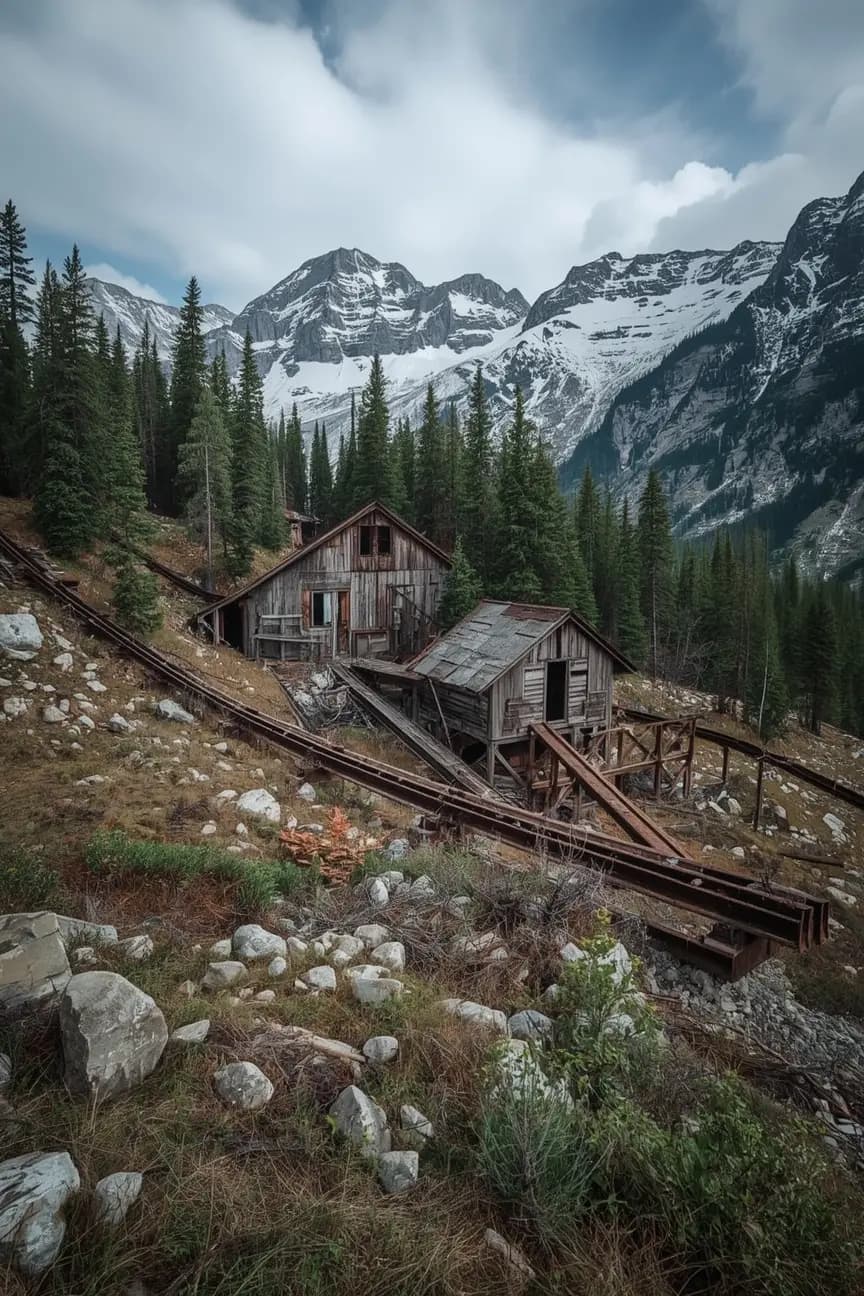
What are the best places for urbex in Canada?
The best urbex in Canada includes industrial landmarks in Ontario, historic abandoned districts in Montreal and Quebec, mining remains in eastern and northern regions, and remote ghost towns in British Columbia, Newfoundland, and Yukon. For most explorers, the strongest mix of variety and research value is found in Quebec and Ontario, but legal access always depends on ownership, closure status, and safety conditions.
Quick summary
- Canada is especially strong for industrial, rail, mining, military, and ghost-town exploration.
- Urbex Montreal and urbex Quebec stand out because site density is high and the architecture is older.
- Ontario has some of the country's most recognizable power and silo landmarks.
- Western and northern Canada offer remote ghost towns and mining relics rather than dense city exploration.
- Many well-known sites are sealed, repurposed, demolished, or actively monitored.
- Use curated research tools instead of social-media coordinate drops; Browse all urbex maps is a safer starting point.
Quick facts
- Best-known urbex provinces: Quebec, Ontario, British Columbia, Newfoundland and Labrador
- Strongest site types: factories, silos, rail yards, hospitals, mines, forts, ghost towns
- Best planning season: late spring to early autumn
- Main risks: unstable floors, asbestos, water damage, winter ice, wildlife, private security
- Legal baseline: permission matters; abandonment does not cancel ownership
- Best next reading: Urbex in Canada: Rules to Know Before You Explore
Why is urbex Canada so varied?
Urbex Canada is varied because the country combines several different abandonment histories. Heavy industry shaped Ontario and Quebec. Mining reshaped Quebec, British Columbia, Yukon, and Atlantic regions. Rail and shipping infrastructure left large ruins near ports and corridors. Rural depopulation created ghost towns, outports, and empty service settlements.
That variety matters for planning. An abandoned power plant in Toronto is not researched the same way as a remote mining camp in Yukon. Canadian urbex often requires balancing legal checks, weather, travel distance, and seasonal access.
Why do Montreal and Quebec matter so much for urbex Canada?
Montreal and Quebec matter because they contain one of Canada's deepest layers of industrial and institutional heritage. Old mills, warehouses, transport infrastructure, hospitals, and religious or educational complexes have left an unusually rich exploration landscape.
For many people searching for urbex Montreal or urbex Quebec, the real appeal is concentration. You can study multiple site types within a smaller radius than in most other parts of Canada. The downside is that many high-profile places are now fenced, reused, or watched closely, so research quality is crucial.
Which 10 abandoned places stand out most in Canada?
The strongest top 10 urbex Canada list mixes famous landmark sites with regional clusters that are consistently researched by explorers. Exact access changes often, so the list below focuses on significance, visual character, and planning value rather than on promising entry.
| Rank | Place or area | Province | Why it stands out | Status note |
|---|---|---|---|---|
| 1 | Hearn Generating Station | Ontario | Massive power-station scale and iconic industrial interiors | Restricted site; do not enter without authorization |
| 2 | Canada Malting Silos | Ontario | Famous waterfront ruin with strong photographic identity | Highly restricted and hazardous |
| 3 | Eastern Montreal industrial remnants | Quebec | Dense mix of mills, warehouses, rail, and port heritage | Many properties are private or repurposed |
| 4 | Institutional sites in southern Quebec | Quebec | Hospitals, schools, sanatoriums, and civic ruins | Access varies widely; many are sealed |
| 5 | Murdochville mining remains | Quebec | Mining landscape with strong regional history | Conditions change; confirm local status |
| 6 | Thetford Mines and Val-des-Sources relics | Quebec | Industrial heritage tied to extraction history | Not all remains are accessible or safe |
| 7 | Anyox ghost town remains | British Columbia | Remote company-town ruins in dramatic coastal terrain | Very remote; logistics and safety are major issues |
| 8 | Prairie grain elevator corridor | Saskatchewan and Manitoba | Classic rural abandonment and rail-era architecture | Many sites are on private land |
| 9 | Resettled outports | Newfoundland and Labrador | Coastal abandonment shaped by relocation history | Weather, remoteness, and land status vary |
| 10 | Klondike mining relic zones | Yukon | Northern mining remains and machinery landscapes | Remote access and environmental risks |
1. Why is Hearn Generating Station still one of the best-known urbex Canada sites?
Hearn Generating Station remains iconic because its scale is hard to match in Canada. It represents the oversized industrial heritage that many explorers associate with classic urban exploration.
It is also a clear reminder that fame does not equal legality. The site is widely recognized, but access is controlled, conditions are hazardous, and responsible exploration starts with permission rather than with trying to bypass barriers.
2. Why do the Canada Malting Silos keep appearing on top 10 lists?
The silos are visually famous because they combine a waterfront setting, monumental concrete form, and a long industrial afterlife in Toronto's visual memory. For photographers and researchers, they are one of the clearest abandoned-place symbols in the country.
They are also a good example of why best does not mean easy. Exposure, water, restricted zones, and structural risk make this a site to study carefully, not casually.
3. Why are eastern Montreal's industrial remnants so important?
Eastern Montreal is important because it condenses several layers of Canadian industrial history into one urban zone. Old factories, service buildings, transport corridors, and storage infrastructure create the kind of density that defines urbex Montreal.
The area also changes quickly. Some buildings disappear, others are redeveloped, and some survive only as fragments. That is why curated mapping and recent verification are far more useful than old forum posts.
4. Why do abandoned institutional sites in southern Quebec attract so much attention?
Institutional ruins draw attention because they mix architecture, social history, and atmosphere. Former hospitals, schools, care facilities, and religious buildings often preserve details that industrial sites do not.
For urbex Quebec research, these places are important but sensitive. Many are monitored, some hold heritage value, and others contain materials or layouts that make them especially dangerous. Respect and discretion matter more here than spectacle.
5. What makes Murdochville a notable abandoned place in Canada?
Murdochville stands out because it represents resource-boom history on a large landscape scale. Even when specific structures change, the mining story remains visible in the terrain, supporting infrastructure, and regional identity.
It is better understood as a historical zone than as a single easy site. Travel distance, local conditions, and changing property status all affect what can be legally observed.
6. Why do Thetford Mines and Val-des-Sources matter for urbex Quebec?
These areas matter because they embody Quebec's extraction history. Open industrial scars, related buildings, and mining infrastructure create a different kind of abandoned environment from city factories or hospitals.
They also require caution. Terrain instability, contamination concerns, and changing redevelopment plans mean that visual interest should never override safety or law.
7. Why is Anyox one of the most striking remote urbex destinations in Canada?
Anyox is striking because it combines ghost-town atmosphere with remote coastal scenery and major industrial history. It is the kind of place that expands the meaning of urbex beyond city ruins.
That same remoteness makes it difficult. Travel logistics, weather, communications, and emergency response are all serious planning factors. In Canada, remoteness is often the biggest risk.
8. Why are prairie grain elevators essential to a top 10 urbex Canada list?
Prairie elevators matter because they are among the most recognizable rural abandoned structures in Canada. They connect rail heritage, agriculture, and the slow decline of older service towns.
Most are on private land, and many are structurally weak. They are visually important, but they should be approached as heritage landscapes, not as casual climbable objects.
9. What makes Newfoundland's resettled outports different from other abandoned places in Canada?
These outports are different because abandonment happened through relocation policy and economic change rather than through one factory closure. The result is a coastal landscape where houses, docks, and community traces tell a broader settlement story.
They are also highly variable. Some places are accessible by water only, some are seasonally exposed, and some sit within sensitive local contexts. Good urbex research includes community awareness.
10. Why do Klondike mining relic zones remain so compelling?
Klondike relic zones remain compelling because they hold the machinery, scars, and atmosphere of northern extraction history. They offer scale and isolation that are rare elsewhere.
They also demand respect. Remote access, wildlife, terrain, and weather can turn a simple visit into a serious risk if the trip is poorly planned.
How should you plan a legal and responsible urbex trip in Canada?
Plan Canadian urbex by separating inspiration from access. A site can be visually famous and still be off-limits, unsafe, or gone. Start with recent status checks, ownership research, seasonal conditions, and a backup plan.
A practical route is to combine broad reading with updated map research. Urbex Canada: Best Abandoned Places and Exploration Guide gives a wider overview, while Top 10 Abandoned Places in Canada for Urbex in 2026 helps compare the country's best-known options.
MapUrbex follows a preservation-first approach. That means no forced access, no public coordinate dumping, no vandalism, and no behavior that increases closures for everyone.
FAQ
Is urbex legal in Canada?
Urbex is not automatically legal in Canada. If a property is abandoned, it can still be privately owned, restricted, or protected. Permission and local rules matter.
What is the best city for urbex in Canada?
Montreal is often the best starting city because it offers strong density, industrial history, and varied architecture. Toronto is close behind for landmark industrial sites. Quebec as a province offers the broadest mix.
Are abandoned places in Montreal and Quebec easy to access?
No. Many famous sites in Montreal and Quebec are fenced, converted, demolished, or monitored. Easy visibility does not mean lawful entry.
What is the best season for urbex in Canada?
Late spring through early autumn is usually best. Snow, ice, flooding, and extreme cold make winter exploration more complicated and more dangerous.
Should you share exact coordinates of abandoned places in Canada?
Usually no. Public coordinate sharing often increases vandalism, theft, and rapid closure. Responsible explorers protect fragile sites and share selectively.
Conclusion
Urbex Canada is best understood as a mix of landmark ruins, regional industrial history, and remote abandoned landscapes. Montreal and Quebec are central because they offer density and variety, but Ontario, the Prairies, Atlantic Canada, British Columbia, and Yukon each add distinct site types.
The most useful approach is not chasing viral locations. It is building a reliable shortlist, checking current status, and using preservation-first tools that help you explore responsibly.
Access the free urbex map
