 MapUrbex
A practical guide to urbex in Bordeaux, with clear advice on finding abandoned bunkers, factories, and verified locations safely and responsibly.
Urbex Bordeaux: Where to Find Bunkers and Abandoned Factories
Bordeaux is better known for its historic center than for classic industrial decay. Yet urbex Bordeaux research still reveals two recurring categories: abandoned factories on the metropolitan edge and scattered military remains linked to older defensive infrastructure.
The key point is simple. If you are looking for bunkers abandonned Bordeaux queries often promise more than the city itself can deliver. Inside Bordeaux proper, industrial sites are usually easier to identify than bunkers. In practice, the best results come from verified maps, careful filtering, and up-to-date access checks.
If you want a broader starting point, you can Browse all urbex maps or read Urbex in Bordeaux: the best abandoned places in and around Bordeaux.
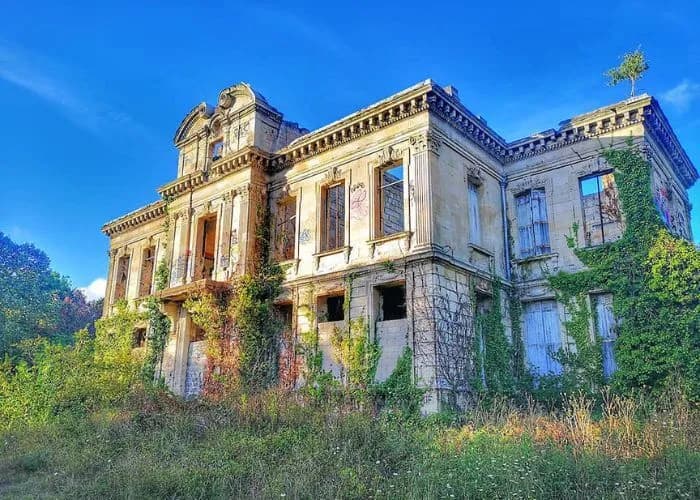
Where can you find bunkers and abandoned factories for urbex in Bordeaux?
In Bordeaux, abandoned factories are generally easier to find than bunkers. Most reliable urbex leads come from former industrial, rail, logistics, and riverside work areas around Bordeaux Métropole, while abandoned bunkers are rarer inside the city and more often tied to older military infrastructure on the outskirts. Verified maps help filter outdated, demolished, or legally sensitive sites.
Quick summary
- Abandoned factories in Bordeaux are usually more visible than bunkers.
- The historic center is not the main zone for productive urbex research.
- Former industrial belts, warehouses, rail-adjacent land, and port activity areas are the most relevant categories.
- Bunkers abandoned in Bordeaux are less common in the city core and more likely in peripheral military contexts.
- A verified map saves time by removing duplicate pins, false leads, and recently sealed locations.
- Responsible urbex means no forced entry, no trespassing, and no public sharing of fragile coordinates.
Quick facts
| Item | What to know |
|---|---|
| Primary urbex target in Bordeaux | Former factories, depots, warehouses, technical buildings |
| Harder category to find | Abandoned bunkers inside Bordeaux proper |
| Best research method | Verified maps plus satellite and recent field status |
| Main risk | Demolition, sealing, surveillance, structural instability |
| Best planning mindset | Preservation-first, legality-first, low-impact exploration |
| Useful starting resources | Access the free urbex map and Free Urbex Map 2026: The Complete Guide to Verified Abandoned Places Maps |
Why are abandoned factories easier to find than bunkers in Bordeaux?
Abandoned factories are easier to find because industrial buildings leave a stronger spatial footprint. Large roofs, loading areas, sidings, yards, and utility structures remain identifiable on satellite imagery and old cadastral layers even after operations stop.
Bunkers are different. They are smaller, more dispersed, often reused, buried, hidden by vegetation, or located in defensive lines outside the urban core. That makes the keyword abandoned bunkers Bordeaux attractive for search, but less productive on the ground unless the data is curated.
For most people, the fastest route is not random map scanning. It is a filtered dataset of places already checked for existence, category, and current status.
Which parts of Bordeaux are most relevant for industrial urbex research?
The most relevant parts are not the postcard districts. They are the former work landscapes around the metropolitan edge: old warehouse corridors, port-linked land, rail-side service areas, industrial estates in transition, and utility zones affected by redevelopment.
That does not mean every peripheral zone contains an accessible abandoned site. It means these land uses historically generate the kinds of places urbex researchers seek: machine halls, depots, workshops, administrative shells, and support buildings.
A practical way to think about lieux urbex Bordeaux is by land-use history rather than by neighborhood name:
- former logistics and storage areas
- rail and freight infrastructure belts
- riverside industrial plots
- utility or technical compounds
- decommissioned commercial or municipal service buildings
If you want a method rather than guesswork, read How to Find Abandoned Places Near You.
How should you search for abandoned bunkers in Bordeaux without wasting time?
You should search by historical function first, not by dramatic photos. In and around Bordeaux, bunker research works best when you cross-reference military history, aerial imagery, terrain patterns, and recent access reports.
Use this sequence:
- Start with a verified source to avoid fake or demolished listings.
- Separate city-center leads from outskirts and wider defensive remnants.
- Check whether the structure is truly abandoned, reused, sealed, or on restricted land.
- Review recent imagery and local reports for vegetation cover, flooding, and closure signs.
- Skip any site that would require forced access or crossing active barriers.
This is also why transactional searches often convert best on curated map products. People searching for urbex Bordeaux usually do not need romantic stories. They need fewer dead ends.
What makes a Bordeaux urbex location worth checking before you travel?
A Bordeaux urbex location is worth checking only if three things are clear: the site still exists, the status is current, and the visit can be planned without unsafe or illegal behavior.
The fastest screening criteria are:
- Existence: the building appears on recent imagery and has not been demolished.
- Category: the site actually matches your goal, such as factory, depot, bunker, or institutional ruin.
- Status: the place is abandoned rather than occupied, repurposed, or actively secured.
- Risk level: there are no obvious collapse hazards, toxic exposure signs, or flood issues.
- Discretion value: the site is not so exposed that a quick check becomes a disturbance to neighbors or workers.
For Bordeaux in particular, redevelopment risk matters. Metropolitan sites change fast. A location that looked open last year may now be sealed, fenced, demolished, or converted.
Safety reminder: MapUrbex supports responsible exploration only. Never force entry, bypass locks, damage property, or enter unstable structures.
How can you explore urbex in Bordeaux responsibly and legally?
You can explore urbex in Bordeaux responsibly by treating verification, legality, and preservation as more important than access at any cost. If a place is fenced, occupied, or clearly restricted, do not enter.
Responsible urbex in Bordeaux means:
- using curated and verified location data
- respecting private property and local rules
- avoiding public coordinate drops for fragile sites
- leaving objects exactly where they are
- not climbing unsafe roofs, silos, or damaged floors
- prioritizing daylight reconnaissance over risky improvisation
This preservation-first approach is also the most efficient. It reduces wasted trips and helps keep viable sites from being damaged or rapidly sealed.
How does a verified urbex map help for Bordeaux trips?
A verified urbex map helps because Bordeaux has many false positives: demolished industrial shells, reused warehouses, business parks that look abandoned from above, and rumors around supposed bunkers that do not translate into real exploration options.
A curated map is useful when it does the following:
- removes duplicate and outdated listings
- labels site type clearly
- distinguishes city leads from greater-area leads
- flags sensitive or restricted places
- supports route planning by density and category
For planning, the most useful starting resources are Browse all urbex maps, Access the free urbex map, and Free Urbex Map 2026: The Complete Guide to Verified Abandoned Places Maps.
FAQ
Are there really many abandoned bunkers in Bordeaux?
Not inside Bordeaux proper. Industrial and service buildings are generally easier to identify in the city area. Bunker research becomes more plausible on the outskirts or in the wider regional military context.
Are abandoned factories in Bordeaux usually still accessible?
Not necessarily. Many are fenced, monitored, repurposed, or awaiting demolition. A visible ruin is not the same thing as a viable or lawful urbex site.
Is a free urbex map enough for planning a Bordeaux trip?
It is a good starting point, especially for filtering obvious dead ends. For serious planning, you should still verify recency, site status, and legal conditions before going.
What is the best time to research urbex places in Bordeaux?
The best time to research is before the trip, not at the gate. Daylight route planning, recent imagery checks, and current reports are more useful than spontaneous searching.
Should you share exact coordinates of fragile places publicly?
No. Publicly exposing vulnerable abandoned places often accelerates vandalism, theft, and closure. Responsible urbex favors selective sharing and preservation.
Conclusion
For most people searching urbex Bordeaux, the practical answer is clear: focus first on abandoned factories and industrial remnants, then treat bunker research as a narrower category that usually requires better historical filtering and wider-area context. Bordeaux can be rewarding, but only when your data is current.
The shortest path to useful results is a verified, preservation-first map rather than random pins or outdated forum posts.
Access the free urbex map
