 MapUrbex
Discover 8 abandoned hotel and restaurant profiles popular in urbex, plus clear advice on access, safety, legality, and responsible location research.
Urbex Abandoned Hotels and Restaurants: 8 Places Worth Exploring
Abandoned hotels and restaurants are among the most visually distinctive urbex places. They combine public rooms, back-of-house service areas, furniture traces, signage, and architecture designed for movement and spectacle.
They are also more complex than many first-time explorers expect. A former hotel can include lifts, basements, plant rooms, laundry zones, roofs, and partially reused wings. A former restaurant can hide kitchen hazards, cold rooms, and unstable dining areas.
This guide explains which types of abandoned hospitality sites are most interesting, what makes them photogenic, and how to assess them responsibly. MapUrbex always recommends preservation-first research, lawful access, and verified location data.
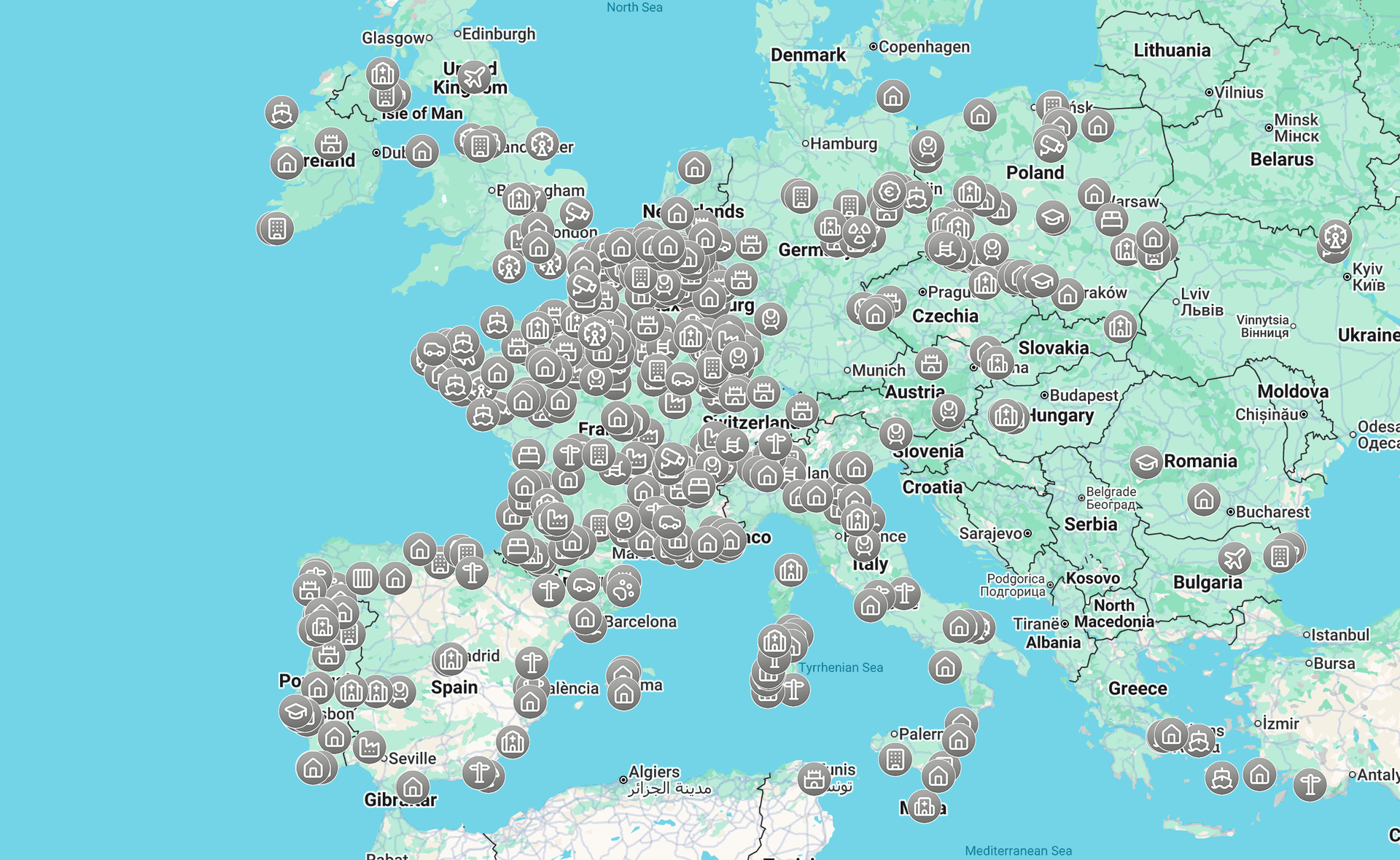
What are the most interesting urbex abandoned hotels and restaurants?
The most interesting urbex abandoned hotels and restaurants are usually places where the original guest experience is still readable: grand hotels, seaside resorts, spa hotels, mountain lodges, roadside motels with diners, banquet venues, railway hotels, and panoramic restaurants. They offer strong visual storytelling, but they also require legal checks, structural caution, and preservation-first behavior.
Quick summary
- Abandoned hospitality sites are popular because they mix architecture, interiors, signage, and human traces.
- The strongest profiles usually include grand hotels, resorts, motels, banquet halls, and station-side restaurants.
- Kitchens, roofs, basements, lifts, and cold rooms often create the highest safety risk.
- Ownership status is often unclear, and some sites are monitored, partly active, or under redevelopment.
- Responsible urbex means no forced entry, no vandalism, no theft, and no disclosure that puts a site at risk.
- Curated maps and recent reports are more reliable than random coordinates found on social media.
Quick facts
| Aspect | What to know | Why it matters |
|---|---|---|
| Best visual appeal | Lobbies, dining rooms, bars, reception desks, staircases | These areas preserve the strongest atmosphere |
| Highest risk zones | Kitchens, cellars, roofs, service corridors, lift shafts | Most injuries happen in technical or unstable areas |
| Best research signals | Recent reports, ownership data, exterior condition, current fencing | They help you avoid closed or reactivated sites |
| Legal status | Varies by country and owner | Abandonment does not mean public access |
| Best approach | Daylight scouting and permission where possible | It reduces risk and protects locations |
Why do abandoned hotels and restaurants attract urban explorers?
Abandoned hotels and restaurants attract urban explorers because they show both front-stage and back-stage life in the same building. You can read how guests moved through the lobby, where meals were prepared, and how staff operated behind the scenes.
That layered layout creates strong photographic narratives. A ballroom, a reception desk, a row of room keys, a bar back, or a dining room with surviving table settings can tell a story immediately.
These sites also decay in a distinctive way. Textiles, wallpaper, mirrors, wood panels, menus, guest signage, and kitchen equipment age differently from industrial machinery. The result is often more atmospheric than a warehouse and more structured than a house.
Which urbex abandoned hotels and restaurants are worth researching first?
The best urbex abandoned hotels and restaurants to research first are the profiles that combine readable layout, architectural character, and manageable risk from public viewpoints or lawful access. The eight categories below are the most consistently interesting worldwide, but none should be entered without permission or safe conditions.
-
Grand city hotels These sites often keep their reception halls, staircases, chandeliers, bars, and long corridors. They are ideal for understanding how hospitality architecture directed status and movement. Their main risks are security presence, redevelopment activity, and unstable upper floors.
-
Seaside resort hotels Coastal hotels often pair dramatic façades with dining terraces and sea-facing lounges. Salt air accelerates decay, which can make them visually striking but structurally worse than they look. Balconies, railings, and concrete edges deserve extra caution.
-
Spa and thermal hotels Former spa hotels are interesting because they combine guest rooms with treatment areas, pools, tiled corridors, and wellness infrastructure. Moisture damage is common. Slippery surfaces, hidden voids, and contaminated water systems are frequent problems.
-
Mountain lodges and chalet restaurants These places can preserve warm interiors, panoramic dining rooms, and layered service spaces. Weather exposure is often severe, especially after snow load or freeze-thaw cycles. Access roads may also be hazardous long before the building itself comes into view.
-
Roadside motels with diners This is one of the clearest abandoned restaurant and hotel combinations. The motel rooms, parking layout, signage, and diner counter often remain easy to read from the outside. The main hazards are broken glass, collapse in lightweight extensions, and active ownership even when the property looks empty.
-
Banquet halls and wedding restaurants Large event venues often keep stages, dance floors, decorative ceilings, and kitchen service routes. They work well for wide interior compositions. They can also contain heavy water damage, failing suspended ceilings, and difficult emergency exits.
-
Railway hotels and station restaurants These buildings are valuable because they connect hospitality with transport history. They may preserve ticket-era dining rooms, waiting spaces, or upper-floor accommodation. The major concern is that many sit near active infrastructure, which raises both legal and physical risk.
-
Panoramic restaurants and rooftop venues Hilltop and rooftop dining spaces can produce memorable views and strong geometry. They are also among the worst places for wind exposure, roof failure, and edge hazards. Even experienced explorers should treat them cautiously.
How can you evaluate an abandoned hotel or restaurant before visiting?
You should evaluate an abandoned hotel or restaurant by confirming legal status, checking whether the site is still active in part, reviewing recent condition reports, and identifying major hazards before you travel. Good research usually prevents more problems than gear does.
Use this checklist:
- Confirm whether the building is private property, sealed, monitored, or awaiting demolition.
- Check if part of the site is still in use, especially annexes, parking areas, or ground-floor businesses.
- Compare old photos with recent reports. Hospitality sites change quickly when redevelopment starts.
- Prefer exterior scouting in daylight before considering any lawful interior access.
- Look for signs of fire damage, roof failure, water ingress, or vandalism.
- Avoid sites that require forced entry, climbing unstable elements, or bypassing obvious closures.
Always respect property law, local regulations, and active safety barriers. Abandonment is not permission.
If you want a curated starting point, you can Browse all urbex maps or Access the free urbex map. Verified map data is usually more useful than random posts with missing context.
What hazards are common in abandoned hospitality sites?
The most common hazards in abandoned hotels and restaurants are unstable floors, concealed service voids, fire damage, mold, contaminated water systems, broken glazing, and technical spaces that were never meant for casual access. Hospitality buildings often look elegant long after they have become unsafe.
Typical danger areas include:
- Commercial kitchens: grease residue, sharp metal, gas infrastructure, and chemicals
- Cold rooms and cellars: poor air, darkness, water pooling, and confined spaces
- Lift shafts and stairwells: missing barriers and serious fall risk
- Laundry and plant rooms: exposed services, damp surfaces, and machinery remains
- Roofs and terraces: hidden weak spots and edge hazards
- Guest room floors: localized collapse, soaked carpets, and rotten subfloors
A site that looks calm in photographs may be very different on the ground. Weather, vandalism, and scavenging can change conditions in days.
How does MapUrbex help you find these places responsibly?
MapUrbex helps by organizing verified locations, map-based discovery, and preservation-first research habits. The goal is not to push risky entry. The goal is to help users identify worthwhile places, understand context, and avoid unreliable or harmful location sharing.
That approach is especially useful for abandoned hotels and abandoned restaurants because these sites are often misreported. A place can appear empty online while still being owned, monitored, or partially active.
For broader research, start with Browse all urbex maps. If you want a lighter first step, Access the free urbex map gives you a practical overview. You can also read related city guides such as Urbex Strasbourg: 10 Abandoned Places to Know in Strasbourg and Nearby, Urbex Toulouse: Best Abandoned Places In and Around Toulouse, and Urbex Brussels: guide to abandoned places in and around Brussels.
FAQ
Are abandoned hotels better for urbex than factories?
Not necessarily. Abandoned hotels usually offer stronger interior storytelling and more decorative detail, while factories often offer larger scale and industrial history. The better choice depends on your interest, legal access, and risk tolerance.
Why are abandoned restaurants often more dangerous than they look?
Abandoned restaurants can look simple from the dining room, but their service areas are complex. Kitchens, storage zones, extraction systems, basements, and damaged ceilings create hazards that are not obvious in photos.
Can you photograph abandoned hotel interiors legally?
Yes, but only when you have lawful access. That may mean owner permission, an organized visit, a heritage event, or a site visible from public space. Illegal entry remains illegal even if the building is derelict.
What should you never do in an abandoned restaurant or hotel?
Never force entry, move unstable objects, break barriers, take souvenirs, publish sensitive access details, or enter obviously unsafe areas. Responsible urbex is based on preservation, discretion, and respect for the law.
Do these places usually still contain furniture and tableware?
Sometimes, but not reliably. Hospitality sites may retain chairs, room signs, menus, bars, or kitchen equipment longer than other buildings, yet many are stripped quickly once a closure becomes known.
Conclusion
Urbex abandoned hotels and restaurants stand out because they preserve atmosphere, circulation, and social history in one place. The most memorable sites are not always the most remote ones. They are the ones you research carefully, approach legally, and leave exactly as you found them.
If you want to find verified locations more efficiently, start with MapUrbex and keep the preservation-first mindset at every step.
Access the free urbex map
