 MapUrbex
A responsible global guide to the best urbex locations, from industrial regions to haikyo areas, with practical criteria for finding verified abandoned places safely.
Best Urbex Locations: Where the Best Abandoned Places Are Found Worldwide
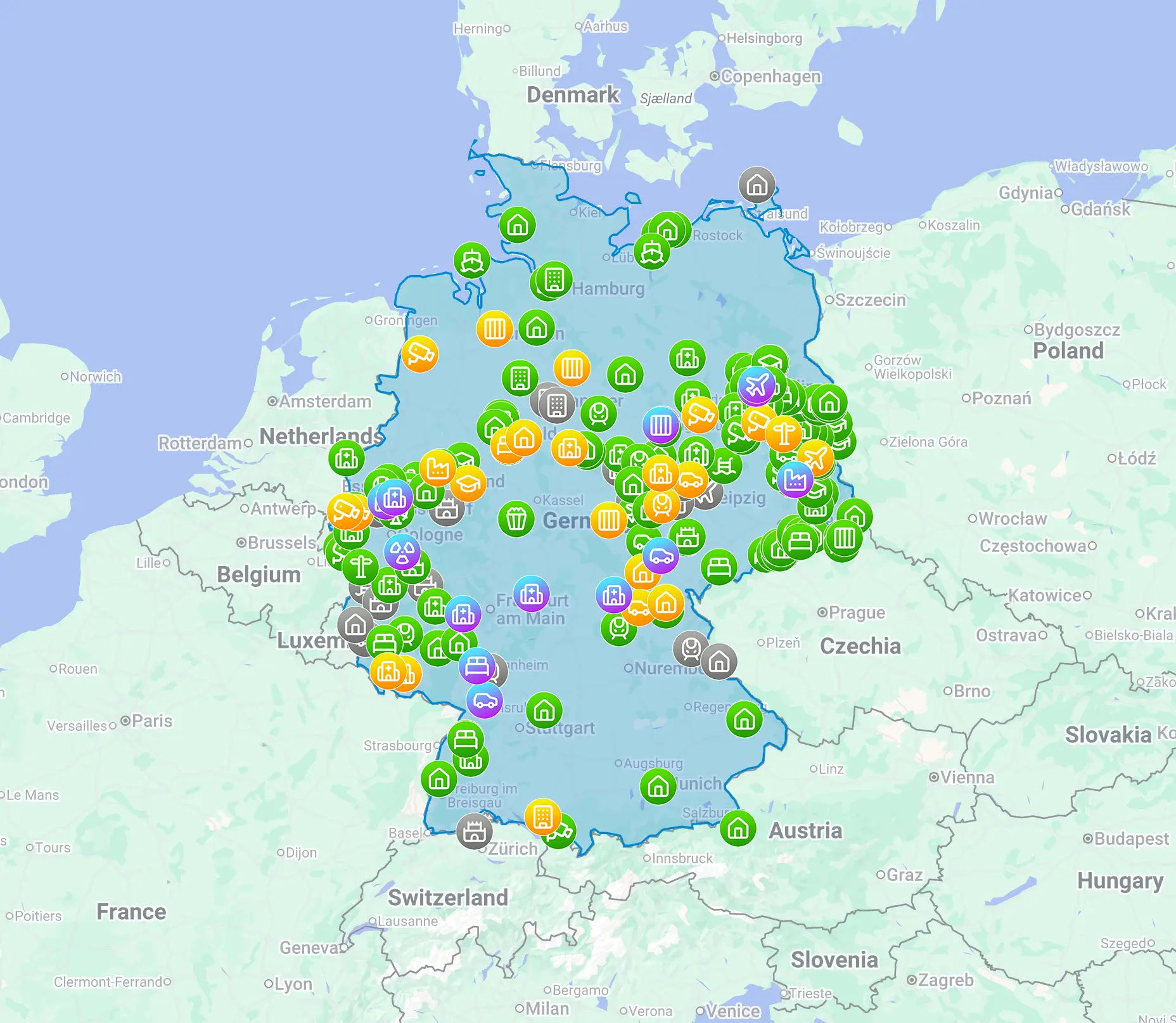
The best urbex locations are not just isolated buildings. They are usually whole regions where industrial decline, military history, demographic change, or tourism collapse left behind clusters of abandoned places.
That matters because the best spots for urbex are rarely found by chasing one viral address. They are found by understanding patterns, local laws, and site types.
This guide explains where the strongest urbex regions are worldwide, what makes them valuable, and how to explore abandoned places responsibly with a preservation-first mindset.
What are the best urbex locations?
The best urbex locations are regions with a high density of abandoned factories, hospitals, schools, military sites, or villages, combined with strong historical value and realistic legal access conditions. In practice, standout areas include industrial belts in Germany and the US, military landscapes in Belgium and Eastern Europe, and haikyo regions in Japan. The best location is always one you can document responsibly and legally.
Quick summary
- The best urbex locations are usually regional clusters, not one famous building.
- Germany, Belgium, Japan, the US Midwest and Northeast, Italy, Spain, and parts of Eastern Europe are consistently strong for urbex.
- Industrial zones, former military areas, abandoned resorts, and depopulated villages produce the most varied abandoned places.
- Legal access changes by country, owner, and site condition, so verification matters more than hype.
- Responsible urbex means no forced entry, no trespassing, no vandalism, and no public sharing of sensitive access details.
- Curated and verified maps are the safest way to find reliable spots without guessing.
Quick facts
- Primary keyword: best urbex locations
- Search intent: informational
- Geographic scope: global
- Best site categories: factories, hospitals, sanatoriums, forts, bases, schools, villages, resorts
- Main risk factors: unstable floors, exposure, asbestos, private security, unclear ownership
- Best research method: verified maps, historical context, current access checks, local law review
Why do some regions produce the best urbex spots?
The best urbex locations tend to form where many closures happened over time. That includes former industrial corridors, shrinking mining districts, coastal resort zones, and military frontiers.
A single abandoned building can be visually striking. A strong urbex region is better because it offers variety, context, and a higher chance of finding locations that are documented properly.
Three factors matter most:
- Density of sites. A region with many abandoned places is more useful than one famous ruin.
- Historical depth. Sites are more interesting when they reflect industry, war, migration, or economic collapse.
- Verifiability. The best spots for urbex are places you can research accurately instead of relying on rumors.
If you want a broader overview of location databases, read Best Urbex Maps in the World: Where to Find Verified Locations.
Which global regions stand out for industrial urbex?
Industrial regions are often the most reliable answer to the question of where the best abandoned places are. They usually combine scale, architecture, machinery, and strong photographic atmosphere.
The most notable industrial urbex regions include:
- Germany, especially former heavy industry zones. Large plants, warehouses, rail infrastructure, and workers' districts create layered exploration landscapes.
- The US Midwest and Northeast. Former mills, hospitals, manufacturing campuses, and transport infrastructure remain central to global urbex culture.
- Belgium and northern France. Dense post-industrial territory, old military overlap, and short travel distances make these areas especially popular.
- Parts of the UK and Central Europe. Former mines, power infrastructure, and institutional sites continue to attract researchers and photographers.
Industrial sites are often visually impressive, but they are also among the most hazardous. Roof failures, contamination, open shafts, and unstable metal staircases are common. Responsible urbex starts with saying no when a site is too risky.
Where are the best urbex spots for military, Cold War, and defense history?
For military urbex, the strongest regions are usually borderlands, former occupation zones, and countries with dense fortification history. These places offer bunkers, forts, radar stations, depots, barracks, and training grounds.
Belgium is well known for forts and military remnants. Parts of France and Eastern Europe also stand out because Cold War and twentieth-century military infrastructure was built at large scale.
These sites attract many explorers because they combine architecture with historical narrative. However, they also carry unusual risks:
- sealed rooms and poor air quality
- hidden drops and vertical shafts
- old ammunition areas or restricted land
- stronger legal sensitivity than ordinary abandoned buildings
That is why military sites should be approached with extra caution, and never through forced access.
Which places are strongest for villages, hospitals, resorts, and institutional urbex?
Some of the best urbex locations are not industrial at all. They come from depopulation, changing healthcare systems, or failed tourism economies.
Japan is globally important for haikyo, especially abandoned schools, resorts, and rural settlements. If that topic interests you, see Urbex Tokyo: A Responsible Guide to Haikyo and Abandoned Places in Japan.
Italy and Spain are often associated with abandoned villages, sanatoriums, mountain structures, and rural institutional sites. In the United States and parts of Europe, hospitals and psychiatric institutions remain some of the most researched abandoned places because they combine history, scale, and preserved interiors.
These site types are often emotionally charged. A preservation-first approach is essential. Take photographs, not objects. Leave records intact. Avoid publishing precise details that could accelerate theft or damage.
Which regions are best for different urbex goals?
The best destination depends on what you actually want to document. This table gives a practical comparison.
| Region | Best for | Common site types | Main advantage | Main caution |
|---|---|---|---|---|
| Germany | Industrial urbex | Factories, rail yards, plants | High variety and strong infrastructure history | Access changes quickly |
| Belgium and northern France | Military and industrial mixes | Forts, depots, factories | Dense concentration of sites | Legal status varies site by site |
| Japan | Haikyo and rural abandonment | Schools, resorts, houses | Distinct atmosphere and preservation | Cultural sensitivity and legality matter greatly |
| US Midwest and Northeast | Large-scale abandonment | Mills, hospitals, campuses | Scale and photographic range | Security and structural risk can be high |
| Italy and Spain | Villages and mountain sites | Hamlets, sanatoriums, mines | Landscape context and unique architecture | Remote access increases safety risk |
| Eastern Europe | Cold War and institutional sites | Bases, barracks, industrial complexes | Strong historical depth | Regulations and ownership can be unclear |
How should you choose the right urbex location for your skill level?
The best urbex spots are not the biggest ones. They are the ones that match your research level, safety margin, and purpose.
Beginners should prioritize:
- sites with clear legal status
- daylight documentation only
- low-complexity layouts
- dry ground and stable floors
- short exit routes
More advanced photographers often look for scale or atmosphere, but complexity raises risk quickly. Large hospitals, factories, and military compounds demand better planning, backup lighting, route discipline, and a willingness to leave immediately if the building feels unsafe.
A good rule is simple: if you cannot explain why a location is safe enough, verified enough, and legal enough, it is not one of the best places for you.
How can you find abandoned places responsibly?
The most reliable method is to use verified sources, current checks, and local context instead of social media guesses. Good research protects both the explorer and the site.
A responsible process looks like this:
- Start with a curated database or map.
- Confirm whether the location is still standing and still abandoned.
- Review legal restrictions and visible ownership information.
- Study the site type and likely hazards.
- Avoid sharing sensitive entry details publicly.
For a step-by-step method, read How to Find Abandoned Places Responsibly. You can also Browse all urbex maps if you want a broader verified overview.
FAQ
What makes a place one of the best urbex locations?
A top urbex location combines historical value, visual interest, density of nearby sites, and a realistic ability to verify current conditions. The best locations are not just dramatic. They are researchable.
Are the best abandoned places always in big cities?
No. Many of the best abandoned places are in former industrial belts, military corridors, mountain areas, or shrinking rural regions. Urban density helps, but regional history matters more.
Which countries are most often mentioned for the best urbex spots?
Germany, Belgium, Japan, the United States, Italy, Spain, and parts of Eastern Europe are often cited because they offer strong concentrations of industrial, military, rural, and institutional sites.
Is it legal to explore abandoned places?
Legality depends on ownership, local law, fencing, signage, and current use. Abandonment does not mean public access. Never trespass, force entry, or ignore posted restrictions.
Why are verified maps better than random online lists?
Verified maps reduce wasted travel, false leads, and accidental exposure to unsafe or active properties. They also support a more responsible and preservation-first exploration culture.
Conclusion
The best urbex locations in the world are usually regions shaped by industry, defense history, depopulation, or tourism decline. Germany, Belgium, Japan, the US, Italy, Spain, and Eastern Europe all stand out, but for different reasons.
The main lesson is simple: the best spots for urbex are not just visually impressive. They are places you can understand, verify, and approach responsibly.
If you want reliable location research rather than guesswork, start with curated tools and up-to-date information.
Access the free urbex map
