 MapUrbex
Learn why abandoned shopping centers become dead malls, how mall decline happens, and how to research these sites responsibly with MapUrbex.
Abandoned Shopping Centers: Understanding the Rise of Dead Malls
Abandoned shopping centers are a visible result of retail oversupply, suburban change, and shifting consumer habits. What looks like one empty mall usually reflects decades of economic and urban decisions.
For urbex researchers, photographers, and place historians, these sites matter because they preserve the rise and decline of late-20th-century consumer landscapes. For practical exploration, the key issue is not hype but verified information, legal access, and a preservation-first approach.
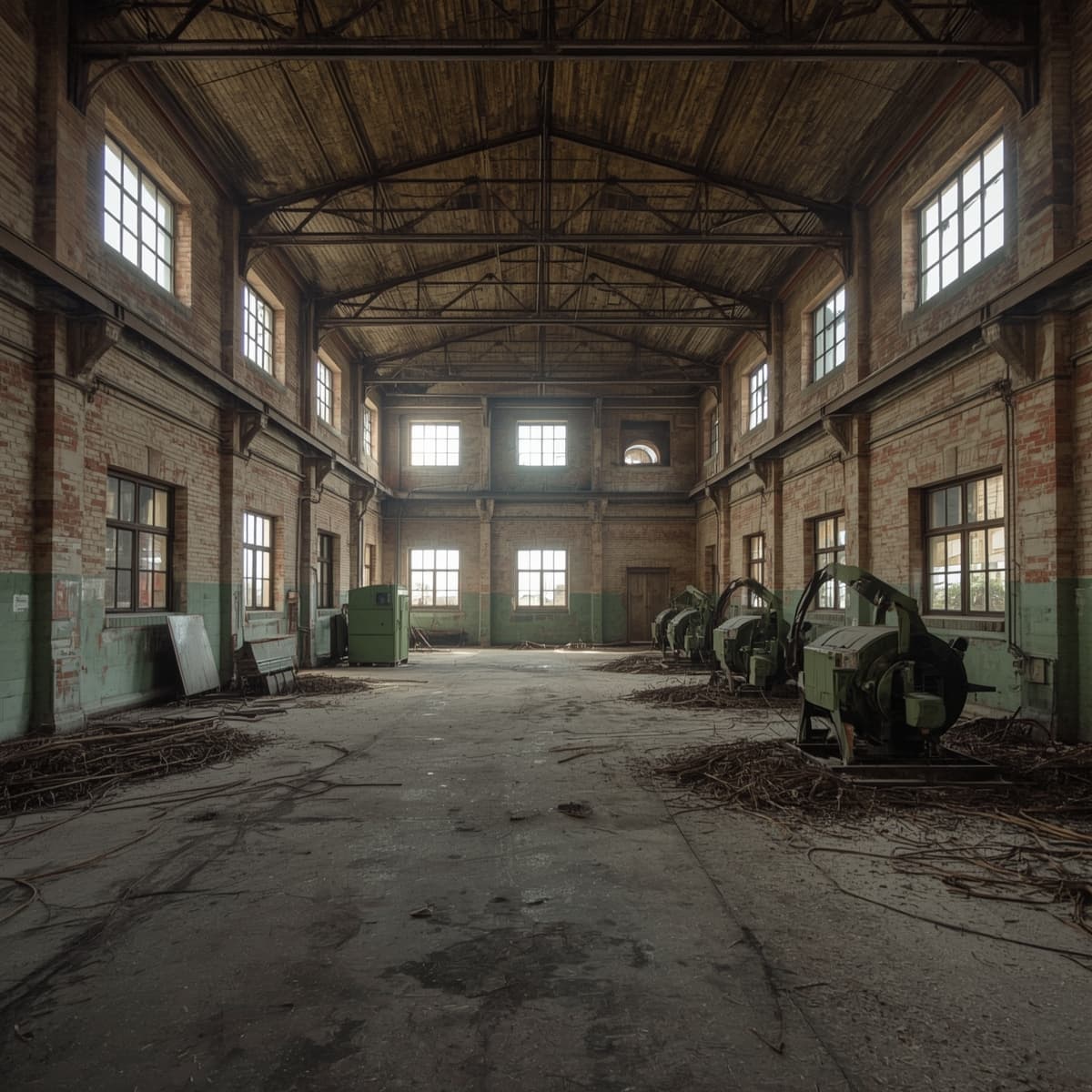
What are abandoned shopping centers?
Abandoned shopping centers are retail complexes that have lost most or all of their commercial function and no longer operate as normal shopping destinations. Some are fully closed, while others survive in a half-empty state with a few remaining tenants. In urban history and urbex culture, these sites are often described as dead malls.
Quick summary
- Abandoned shopping centers usually decline over years, not overnight.
- The main causes are overbuilding, anchor store closures, e-commerce pressure, debt, and demographic change.
- The history of abandoned shopping centers is closely tied to suburban expansion after the mid-20th century.
- Many deserted shopping centers pass through a long phase of partial reuse before demolition or redevelopment.
- Responsible urbex means no trespassing, no forced entry, and no damage.
- MapUrbex focuses on verified locations and curated research rather than recycled fake lists.
Quick facts
- Peak growth era: roughly the 1950s to the 1990s, depending on country
- Common end states: long vacancy, partial reuse, demolition, or mixed-use redevelopment
- Typical hazards: unstable ceilings, mold, asbestos, exposed wiring, broken glass, and private security presence
- Research value: architecture, retail history, urban planning, and suburban decline
- Legal reminder: seeing a site from public space does not create permission to enter it
Why did shopping centers become abandoned?
Shopping centers became abandoned because the business model that built many of them stopped matching local reality. Too many malls were often developed in similar catchment areas, then later lost traffic to newer retail formats, e-commerce, and changing mobility patterns.
Anchor tenants mattered most. When a department store closed, smaller tenants often lost foot traffic and left as well. Debt-heavy ownership structures, delayed maintenance, and failed renovations accelerated the collapse. In many regions, the decline of shopping malls was not caused by one factor but by several reinforcing pressures at once.
How did the history of abandoned shopping centers create the dead mall phenomenon?
The history of abandoned shopping centers begins with the postwar promise of the enclosed mall: climate-controlled shopping, large parking lots, and suburban convenience. For decades, malls served as commercial, social, and symbolic centers of suburban life.
The dead mall phenomenon appeared when that model aged faster than owners could adapt it. New bypass roads changed traffic, households moved, retail chains consolidated, and newer lifestyle centers pulled away higher-income customers. What remained was a large building designed for constant activity but increasingly unable to generate it.
Which warning signs show that a mall is in decline?
A mall in decline usually shows vacancy before it shows ruin. The earliest signs are often economic rather than dramatic: empty units, short-term tenants, reduced maintenance, dark corridors, and falling foot traffic.
The table below summarizes the usual progression.
| Stage | What happens | Common visible signs |
|---|---|---|
| Stable mall | Anchors and small shops still attract regular traffic | Active signage, maintained interiors, full parking areas |
| Early decline | Traffic weakens and vacancies begin to rise | Closed storefronts, temporary leasing banners, shorter opening hours |
| Advanced decline | Key tenants leave and maintenance slips | Dark wings, broken signage, sealed entrances, unused food courts |
| Dead mall | The site no longer works as a retail destination | Large empty zones, stripped interiors, water damage, silence |
| Reuse or redevelopment | Ownership seeks a new function | Offices, clinics, storage, demolition, or mixed-use conversion |
For urbex researchers, this progression matters because many so-called abandoned shopping centers are not fully abandoned. Some still contain active units, municipal services, or warehouse functions. That changes both the legal status and the safety profile of the site.
Why do abandoned shopping centers attract photographers, historians, and urbex explorers?
Abandoned shopping centers attract attention because they condense architecture, memory, and economic change in one place. A dead mall can preserve original branding, obsolete escalators, themed interiors, and traces of past consumer culture that are rarely kept elsewhere.
They also scale differently from smaller ruins. A mall records circulation patterns, tenant hierarchies, suburban planning, and the decline of a full commercial ecosystem. That is why these sites interest not only photographers but also geographers, retail historians, and preservation-minded explorers.
If you want verified research rather than copy-paste lists, start with Browse all urbex maps and read Why Most Urbex Lists Are Fake, and How to Find Real Places.
How can you explore abandoned shopping centers responsibly?
Responsible exploration starts by assuming that a closed mall is still controlled property unless it is clearly and lawfully accessible. The safest rule is simple: never trespass, never force access, and never treat internet rumors as proof.
A preservation-first method is more useful than a reckless one:
- verify whether the site is actually abandoned, partly reused, or actively monitored
- research ownership changes and redevelopment plans
- observe only from lawful public access points unless you have explicit permission
- avoid solo visits to unstable structures
- leave objects exactly where they are
- do not publish details that could encourage theft or vandalism
MapUrbex is built around curated, verified location data and responsible urbex practice. If you want a broader starting point, Access the free urbex map or compare regions through Top 10 Abandoned Places in Île-de-France for Responsible Urbex.
FAQ
Are all abandoned shopping centers safe to visit?
No. Many abandoned shopping centers contain structural hazards, water damage, exposed electrical systems, contaminated dust, and blocked emergency exits. A visually intact mall can still be dangerous.
Why are some dead malls only partially abandoned?
Because closure is often gradual. A mall may lose most retail tenants while keeping a supermarket, a gym, public offices, or storage functions. That makes the site economically weak but not fully abandoned.
Can abandoned shopping centers be reused successfully?
Yes. Common reuse models include medical facilities, educational space, logistics, self-storage, mixed-use redevelopment, and demolition followed by housing or public projects. Success depends on local demand, transport, and building condition.
How do you find real dead mall locations without fake lists?
Use verified mapping tools, cross-check recent evidence, and prefer sources that distinguish between fully abandoned sites and partially active properties. Generic listicles often repeat outdated or invented claims.
Conclusion
Abandoned shopping centers did not appear by accident. They are the product of retail overexpansion, changing demographics, new consumer behavior, and the slow decline of aging commercial formats.
For urbex, they are valuable as documents of urban change, not as playgrounds. The best approach is careful research, lawful access, and preservation of the site itself.
Access the free urbex map
