 MapUrbex
Discover the main types of abandoned places in Italy, the regions worth researching, and how to use a verified urbex map of Italy responsibly.
Abandoned Places in Italy: A Responsible Guide to Urbex Italy
Italy is one of Europe's richest countries for abandoned architecture. From industrial ruins in the north to forgotten villages, villas, and institutional sites in the center and south, the range is unusually broad.
That variety also creates a problem: open web results are often outdated, unsafe, or legally unclear. For anyone researching urbex Italy, a preservation-first approach matters more than speed.
This guide explains what kinds of abandoned places in Italy exist, where they are most commonly found, and how to plan research with verified information rather than guesswork.
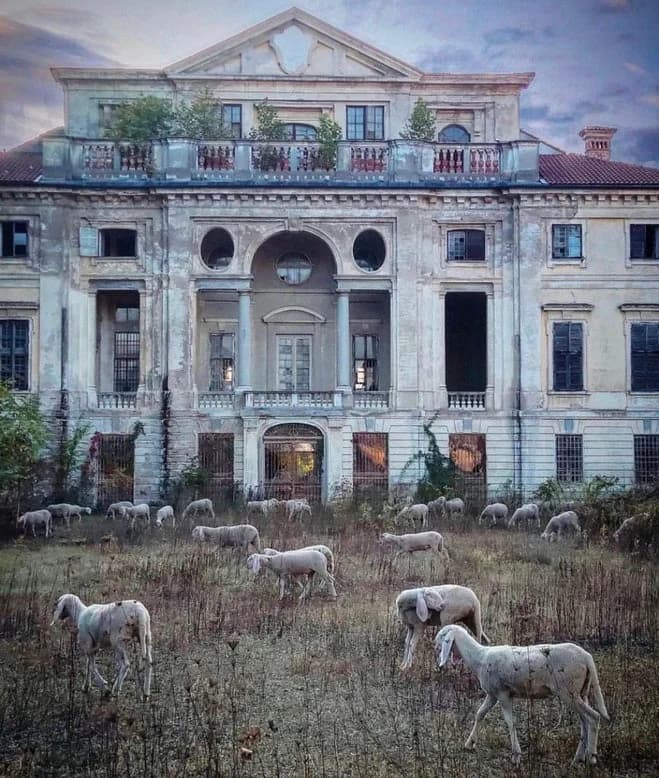
What are the best abandoned places in Italy for urbex research?
The best abandoned places in Italy for urbex research are usually former industrial sites in northern regions, abandoned villas and hospitals in central Italy, and ghost villages or coastal structures in the south and islands. The safest method is not chasing viral addresses. It is using a verified urbex map of Italy, checking legal access, and avoiding locations that would encourage trespassing or damage.
Quick summary
- Italy has a high density of abandoned factories, villas, hospitals, villages, farms, and military remains.
- Northern Italy is strongest for industrial urbex, while central and southern Italy often offer rural, institutional, and coastal sites.
- Search quality matters because many public lists are outdated, duplicated, or missing access context.
- A good carte urbex Italie equivalent is a curated urbex map of Italy with verification and preservation filters.
- Responsible urbex means no forced entry, no trespassing, no vandalism, and no publication of sensitive details.
- MapUrbex focuses on verified locations, responsible exploration, and preservation-first trip planning.
Quick facts
- Country scope: Italy
- Primary keyword: abandoned places in Italy
- Related searches: urbex Italy, abandoned places Italy, urbex map Italy
- Best-known site families: industrial ruins, manor houses, hospitals, monasteries, villages, military remains
- Research challenge: many online coordinates are stale or misleading
- Best planning tool: curated maps with legal and practical context
Why does Italy attract so much interest for abandoned places?
Italy attracts strong urbex interest because the country combines long history, uneven regional development, depopulated rural zones, and a large stock of older buildings. That mix creates a wide spectrum of abandoned places within a relatively compact geography.
In practical terms, Italy offers more than one visual style of abandonment. A single trip can include disused rail infrastructure, silent factories, mountain hamlets, religious buildings, decaying villas, and coastal defense structures.
For researchers, that diversity is useful. It means urbex Italy is not limited to one niche. It also means context matters: the access rules, ownership patterns, and preservation risks are very different from one type of site to another.
Which regions have the highest concentration of abandoned places in Italy?
The highest concentration of abandoned places in Italy is generally found across Lombardy, Piedmont, Veneto, Tuscany, Lazio, Campania, Sicily, and parts of the Apennine interior. Each region tends to specialize in different site types, so regional planning is more effective than searching randomly at national level.
Large industrial belts in the north often produce factory and warehouse sites. Central Italy mixes villas, hospitals, agricultural estates, and smaller institutional buildings. Southern regions and islands are especially interesting for abandoned villages, coastal remains, and isolated complexes.
| Region or area | Typical abandoned places | Why it stands out |
|---|---|---|
| Lombardy | factories, mills, hospitals, villas | dense urban and industrial history |
| Piedmont | industrial ruins, estates, military traces | strong manufacturing legacy |
| Veneto | warehouses, villas, rural compounds | mix of industry and countryside |
| Tuscany | villas, farm estates, monasteries, villages | historic building stock and rural depopulation |
| Lazio | institutional sites, military remains, outskirts ruins | proximity to large urban zones |
| Campania | hospitals, coastal sites, rural compounds | layered urban history and uneven reuse |
| Sicily and Sardinia | villages, mining remains, coastal structures | remoteness and landscape diversity |
What types of abandoned places can you expect to find in Italy?
Italy offers several recurring categories of abandoned places, and each category requires different expectations for legality, access visibility, and structural risk.
- Industrial sites: mills, foundries, textile plants, workshops, depots, and warehouses. These are common in the north.
- Residential heritage: abandoned manors, villas, farmhouses, and apartment blocks. These often attract attention because interiors may survive longer.
- Institutional sites: hospitals, clinics, schools, sanatoriums, and administrative buildings. These can be highly sensitive from both legal and safety perspectives.
- Religious and monastic buildings: convents, chapels, and monasteries. These sites require extra respect because of their heritage value.
- Ghost villages: small settlements affected by earthquakes, economic decline, migration, or environmental risk.
- Military and coastal sites: bunkers, batteries, barracks, and observation points, especially near coastlines and borders.
The main takeaway is simple: there is no single "Italian urbex style." A map-based approach works better than assuming every region offers the same kind of location.
How should you plan an urbex trip across Italy responsibly?
A responsible urbex trip across Italy starts with verified research, legal awareness, realistic travel timing, and a clear rule against forced access. The goal is to document and understand abandoned places, not to break into them.
Start with broad regional planning instead of chasing single addresses from social media. A curated national overview is more useful than a viral pin because it lets you compare clusters, travel distances, and site types. You can start with Browse all urbex maps and then compare route ideas with How to Plan an Urbex Road Trip in Europe.
A practical plan usually includes:
- choosing one or two regions instead of crossing the entire country
- checking whether a site is visible from public space or requires permission
- avoiding fragile roofs, basements, shafts, and fenced compounds
- carrying lighting, backup navigation, water, and a charged phone
- leaving no trace and never removing objects
MapUrbex is built around verified locations, curated data, and preservation-first research. That is especially valuable in a country where abandoned places can be historic, unstable, or still actively monitored.
Access the free urbex map
Is an urbex map of Italy better than open search results?
Yes. An urbex map of Italy is usually better than open search results because open lists often recycle the same famous places without verification, access context, or recent status updates. A curated map reduces wasted travel and lowers the risk of arriving at sealed, demolished, occupied, or dangerous sites.
This matters in Italy because many abandoned places change status quickly. Some are restored. Some are fenced. Some become legally sensitive after vandalism or increased attention. A map that prioritizes verification is more useful than a click-driven directory.
If you want city-focused reading before planning, see Urbex Italy: Guide to Abandoned Places in Rome, Milan, and Naples.
What should you know about safety, law, and preservation in Italy?
You should assume that most abandoned places in Italy are not automatically legal to enter. Ownership still exists, and visible abandonment does not equal permission. Responsible urbex always starts with legality and safety.
Key reminders:
- Do not trespass. If access is prohibited, do not enter.
- Do not force doors, windows, gates, or fences.
- Do not publish sensitive directions for fragile or easily damaged heritage sites.
- Do not go alone in unstable structures.
- Do not touch asbestos, chemicals, medical waste, or unknown machinery.
- Do not take artifacts. Preservation includes leaving objects in place.
For MapUrbex, preservation comes before novelty. A lesser-known site stays valuable only if it is not damaged by exposure or careless behavior.
FAQ
Is urbex legal in Italy?
Urbex is not automatically legal in Italy. The legal situation depends on ownership, local restrictions, and whether you have permission. If a property is private or access is forbidden, entry can amount to trespassing.
What are the best cities for abandoned places in Italy?
Rome, Milan, and Naples are the most searched cities, but the best research often happens at regional scale rather than city scale. Metropolitan outskirts, old industrial belts, and rural corridors usually offer more variety than city centers.
Are abandoned villages common in Italy?
Yes. Abandoned villages are a significant part of Italy's landscape, especially in mountainous areas, seismic zones, and regions affected by depopulation. They are visually important but often fragile and highly sensitive.
How do I find verified locations without relying on risky forums?
Use curated mapping tools, recent status checks, and region-based planning. Verified resources help you avoid demolished, occupied, or overexposed sites and support more responsible decisions.
When is the best season to research abandoned places in Italy?
Spring and autumn are usually the most practical seasons. Temperatures are more manageable, vegetation is less extreme than in peak summer, and travel conditions are often better than in winter mountain areas.
Conclusion
Italy is one of the strongest countries in Europe for abandoned-place research because it combines industrial heritage, historic architecture, rural decline, and major regional variety. That is the opportunity.
The responsibility is equally clear. The best approach to abandoned places in Italy is verified, legal, and preservation-first. Good research protects both your trip and the sites themselves.
Ready to research urbex Italy with better data?
Use a curated map to compare regions, reduce guesswork, and plan more responsibly.
Access the free urbex map
