 MapUrbex
A curated list of 20 abandoned places near New York City, with legal access notes, safety reminders, and responsible urbex planning tips.
20 Abandoned Places Near New York City
New York City is surrounded by former hospitals, military forts, industrial sites, and island ruins. Some are inside the five boroughs. Others are realistic day trips in the Hudson Valley, Long Island, or northern New Jersey.
The main point is simple: many of the most famous abandoned places near New York are not open for free entry. Some are visible only from public paths, some require guided tours, and some should be treated as exterior-only historical sites.
MapUrbex focuses on verified locations, responsible urbex, and preservation-first research. That matters in a region where closures, redevelopment, and enforcement change quickly.
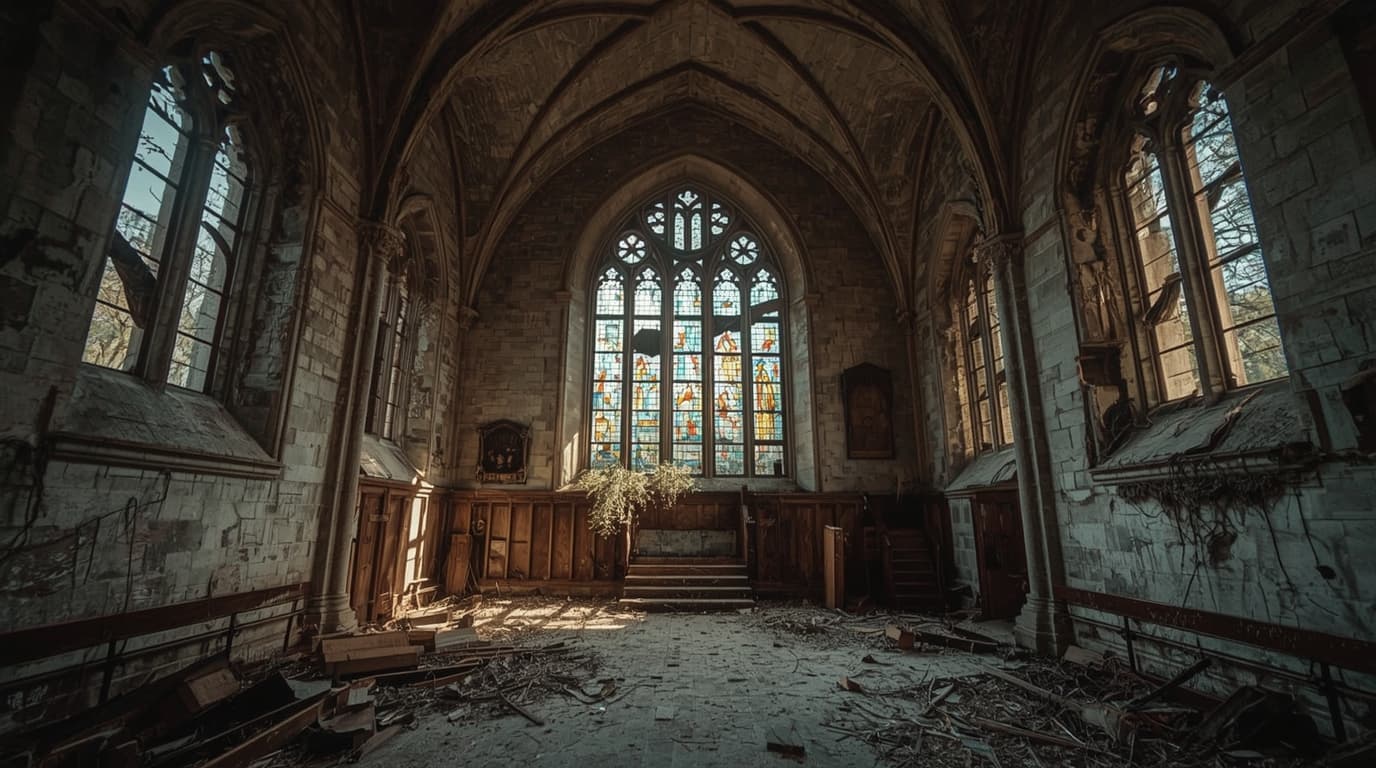
What are the best 20 abandoned places near New York City?
The best-known abandoned places near New York City include North Brother Island, the Smallpox Hospital ruin on Roosevelt Island, Ellis Island Hospital, Bannerman Castle, Fort Tilden, Kings Park Psychiatric Center, Letchworth Village, and Camp Hero. The right choice depends on whether you want legal public ruins, guided access, exterior architecture, or a day-trip site that can be researched and viewed responsibly.
| Place | Area | Why it stands out | Access note |
|---|---|---|---|
| North Brother Island | East River, Bronx | Quarantine island ruins | Restricted; no casual access |
| Renwick Smallpox Hospital | Roosevelt Island | Gothic hospital ruin | Exterior views from public promenade |
| Ellis Island Hospital Complex | New York Harbor | Immigration hospital buildings | Guided tours when offered |
| Dead Horse Bay | Brooklyn | Shoreline debris and remains | Follow closures and cleanup advisories |
| Fort Tilden Batteries | Queens | Coastal defenses and bunkers | Public park areas only |
| Fort Totten | Queens | Fort and battery structures | Open historic grounds and exterior views |
| Floyd Bennett Field | Brooklyn | Aviation hangars and decommissioned infrastructure | Public recreation area; respect closures |
| Battery Weed and Fort Tompkins | Staten Island | Massive brick fortifications | Public viewpoints; follow site rules |
| Seaview Hospital and Farm Colony | Staten Island | Institutional ruins and campus remains | Many areas restricted or reused |
| Red Hook Grain Terminal | Brooklyn | Landmark industrial relic | Private/restricted; exterior context only |
| Bannerman Castle | Hudson Valley | Arsenal ruin on an island | Authorized tour access |
| Kings Park Psychiatric Center | Long Island | Vast asylum campus | Restricted; exterior only where legal |
| Pilgrim State Hospital Remnants | Long Island | Former psychiatric complex | Mixed active/redeveloped property |
| Central Islip State Hospital Remnants | Long Island | Institutional remains | Stay off closed property |
| Letchworth Village | Rockland County | Former institution campus | Public roads nearby; no trespassing |
| Hudson River State Hospital | Poughkeepsie | Kirkbride architecture | Private/redeveloped; exterior only |
| Van Slyke Castle | Ramapo Mountains | Hilltop stone ruins | Hike in on open trails |
| Deserted Village of Feltville | New Jersey | Preserved village ruins | Legal public historic site |
| Fort Hancock | Sandy Hook, New Jersey | Coastal fort buildings | National Park Service rules apply |
| Camp Hero | Montauk | Cold War military ruins | State park; stay in open areas |
Quick summary
- New York City has real abandoned and ruin sites, but many are restricted or view-only.
- The safest beginner-friendly options are public ruins, park sites, and guided historical locations.
- Hospital and asylum complexes near NYC are famous, but they usually require strict legal caution.
- Military ruins around the city offer some of the best architecture and landscape photography.
- A verified map matters because closures, fences, patrols, and redevelopment change often.
- Responsible urbex means no forced entry, no trespassing, and no damage.
Quick facts
- Best for public viewing: Roosevelt Island, Fort Tilden, Fort Totten, Feltville, Fort Hancock
- Best for guided access: Bannerman Castle, Ellis Island Hospital when tours operate
- Best for institutional history: North Brother Island, Seaview, Kings Park, Letchworth Village
- Typical day-trip range from Manhattan: same-day to about 3 hours
- Best seasons for visibility: fall, winter, and early spring
- MapUrbex approach: verified locations, curated research, preservation first
Which abandoned places in New York are easiest to view legally?
The easiest abandoned places to view legally near New York are the ones tied to parks, public promenades, or official tours. These sites give you architecture, atmosphere, and history without requiring risky decisions.
- Renwick Smallpox Hospital: One of the most iconic abandoned places in New York. You can view the ruin from public areas on Roosevelt Island.
- Fort Tilden Batteries: A strong option for urbex near New York if you prefer open-air military remains inside a public park setting.
- Fort Totten: Useful for people who want defensive structures, old masonry, and legal exterior photography.
- Floyd Bennett Field: More decommissioned than fully abandoned, but still valuable for aviation and infrastructure history.
- Battery Weed and Fort Tompkins: Best approached as historic fortifications with public viewpoints rather than free exploration targets.
- Deserted Village of Feltville: One of the most accessible ruined village environments near NYC.
- Fort Hancock: A classic Sandy Hook stop with vacant historic buildings under clear federal park rules.
- Camp Hero: A day-trip site where the setting matters as much as the ruins.
For beginners, these places are usually better than fenced hospital campuses or restricted islands. They offer context without pushing you into trespassing.
Which sites near NYC are best for hospital and institutional ruins?
The strongest hospital and institutional ruins near New York are North Brother Island, Ellis Island Hospital, Seaview, Kings Park, Pilgrim State, Central Islip, Letchworth Village, and Hudson River State Hospital. These locations are central to the region's urbex history, but most should be treated as restricted, exterior-only, or tour-based sites.
- North Brother Island: Probably the most legendary abandoned site linked to New York City. It is restricted and environmentally sensitive, so it belongs in research, not casual entry plans.
- Ellis Island Hospital Complex: One of the most historically important medical ruins in the region. Guided access, when available, is the correct route.
- Seaview Hospital and Farm Colony: A major Staten Island ruin complex with a layered public health history. Access varies, so legal boundaries matter.
- Kings Park Psychiatric Center: Famous in urban exploration New York discussions, but widely restricted and heavily monitored in different periods.
- Pilgrim State Hospital remnants: Important for scale and institutional history, though much of the area is active, altered, or redeveloped.
- Central Islip State Hospital remnants: Similar to Pilgrim in that the remaining structures require careful legal awareness.
- Letchworth Village: Often cited in lists of abandoned spots near NYC. The history is significant, but many buildings are secured, demolished, or off-limits.
- Hudson River State Hospital: Architecturally striking, especially for people interested in Kirkbride design. Today it should mainly be understood through exterior context and redevelopment research.
These sites are part of why abandoned places near New York attract so much interest. They are also the clearest example of why verification matters more than rumors.
Which places are strongest for military and industrial urbex near New York?
For military and industrial urbex near New York, the strongest names are Fort Tilden, Fort Totten, Battery Weed and Fort Tompkins, Red Hook Grain Terminal, Bannerman Castle, Fort Hancock, Floyd Bennett Field, and Camp Hero. They combine large-scale structures, strong visual lines, and easier historical framing than many sealed hospital sites.
- Dead Horse Bay: More shoreline ruin landscape than traditional building exploration. It is visually famous, but safety and cleanup conditions should come first.
- Fort Tilden Batteries: Strong for bunker forms, weathered concrete, and coastal atmosphere.
- Fort Totten: A good mix of military history and manageable legal viewing.
- Battery Weed and Fort Tompkins: Some of the most impressive fortification massing in the New York area.
- Red Hook Grain Terminal: A powerful industrial landmark, but not a place to test access boundaries.
- Bannerman Castle: A rare combination of ruin aesthetics and authorized visitation.
- Fort Hancock: Broad military landscape with multiple structures and documented historical context.
- Camp Hero: Important if you want Cold War atmosphere rather than classic city ruin density.
If your interest is photography, scale, and history, military and industrial sites often give better legal outcomes than sealed interiors.
How should you plan urbex near New York City responsibly?
Responsible urbex near New York City starts with legal status, not with coordinates. In this region, a good plan means checking whether a place is public, restricted, privately owned, redeveloped, environmentally sensitive, or open only through a tour.
Use this checklist:
- Verify current status before you go.
- Prefer public viewpoints, park routes, and official tours.
- Never force entry, cut fences, or bypass locks.
- Do not remove objects, break glass, or disturb interiors.
- Treat shoreline debris, unstable floors, and exposed materials as real hazards.
- Respect wildlife protections, especially on island and marsh sites.
- Go in daylight if you are only documenting exteriors.
- Leave immediately if signage, staff, or enforcement indicates closure.
This is the preservation-first standard MapUrbex supports. It protects sites, people, and the long-term future of responsible exploration.
Why use a curated urbex map instead of random coordinates?
A curated urbex map is better than random coordinates because abandoned places in New York change fast. A site that was visible last year may now be fenced, demolished, under construction, or actively patrolled.
Curated research helps you sort places into useful categories: public ruin, guided site, exterior-only landmark, or restricted property. That saves time and reduces risk.
If you want a broader overview, Browse all urbex maps. For a starting reference, see Free Urbex Map 2026.
FAQ
Are there real abandoned places inside New York City itself?
Yes. Roosevelt Island, Staten Island, Brooklyn, Queens, and the East River area all have notable ruins, decommissioned structures, or restricted abandoned sites. The important distinction is that many are legal to view but not legal to enter.
Can you legally enter abandoned buildings near NYC?
Sometimes, but only when a site is officially open, part of a guided program, or clearly accessible under park or ownership rules. In most cases, forced access or trespassing is not legal and should be avoided.
What is the best abandoned place near New York for beginners?
For most beginners, the best choices are Roosevelt Island's Smallpox Hospital exterior, Fort Tilden, Fort Totten, Feltville, or Fort Hancock. They provide history and atmosphere without depending on unlawful entry.
Are famous sites like North Brother Island or Dead Horse Bay open for urbex?
North Brother Island is generally restricted and should not be treated as a casual exploration target. Dead Horse Bay is better approached as a shoreline history site, and visitors should always respect closures, cleanup rules, and environmental warnings.
What should you bring for a legal exterior exploration day?
Bring water, a charged phone, sturdy shoes, weather-appropriate layers, and a camera if allowed. For coastal sites, add sun protection and check tides. For all sites, prioritize documentation from legal public ground.
Conclusion
The best abandoned places near New York City are not all the same. Some are public ruins, some are guided heritage sites, and some are best understood from outside because access is restricted.
That is exactly why a verified, preservation-first approach matters. If you want reliable urbex research instead of random guesses, start with curated information and legal access notes.
Access the free urbex map
