 MapUrbex
A responsible Top 10 guide to abandoned places in Tokyo, from Nakagin Capsule Tower to Hachijojima hotel ruins, with legal and safety context.
Top 10 Abandoned Places in Tokyo: Haikyo Sites, Hotels, and Ruins
Tokyo is not an easy city for abandoned-place research. In the 23 wards, land is expensive, redevelopment is fast, and empty buildings rarely stay untouched for long.
That is why the most discussed abandoned places in Tokyo are often outside the dense center, in western Tokyo or on the islands administered by Tokyo Metropolis. For broader context, read Urbex Tokyo: A Responsible Guide to Haikyo and Abandoned Places in Japan.
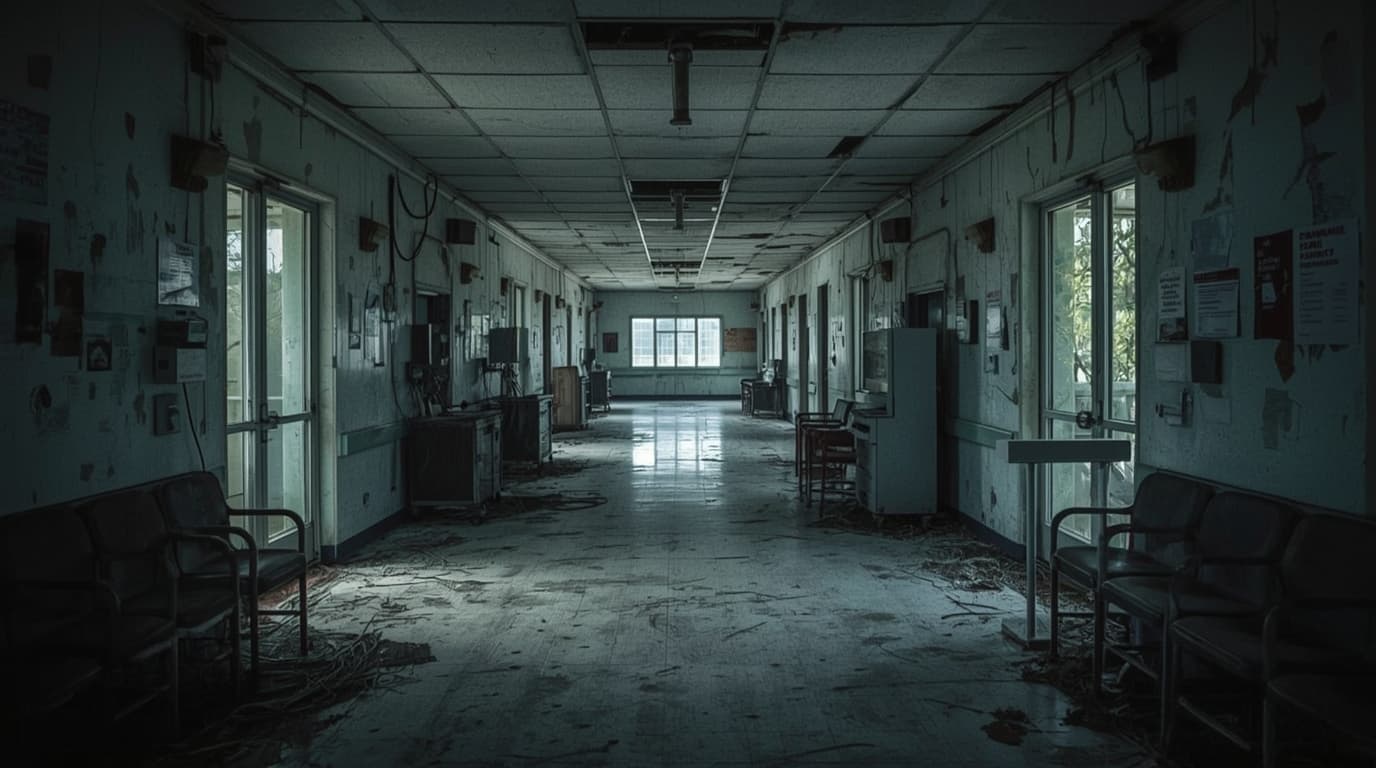
What are the best abandoned places in Tokyo?
The most notable abandoned places in Tokyo are the former Nakagin Capsule Tower, the Okutama Ropeway, Hachijo Royal Hotel, Hachijo Oriental Resort, and the evacuation ruins on Tokyo's volcanic islands. In practice, central Tokyo has few stable haikyo sites, so the best-known examples are usually found in mountain areas or remote islands rather than downtown wards.
Quick summary
- Central Tokyo has very few long-lasting abandoned buildings.
- Tokyo's best-known haikyo sites are in Okutama, Hachijojima, Miyakejima, Izu Oshima, and Ogasawara.
- Nakagin Capsule Tower is historically important, but it was dismantled in 2022.
- Hachijo Royal Hotel is probably the most famous abandoned hotel in Tokyo Metropolis.
- Many Tokyo island ruins are linked to eruptions, depopulation, wartime history, or tourism decline.
- Responsible urbex in Japan means permission, no forced entry, and no sharing of sensitive access details.
Quick facts
- Scope used in this guide: Tokyo Metropolis, including the 23 wards, western Tokyo, and Tokyo's islands.
- Local term: haikyo is a common Japanese word for ruins or abandoned places.
- Best-known lost site: Nakagin Capsule Tower in central Tokyo.
- Best-known infrastructure ruin: Okutama Ropeway near Lake Okutama.
- Best-known hotel ruins: Hachijo Royal Hotel and Hachijo Oriental Resort on Hachijojima.
- Legal note: fenced, sealed, or posted properties are not open for exploration without permission.
Why are abandoned buildings rare in central Tokyo?
Abandoned buildings are rare in central Tokyo because land values are high, property is tightly managed, and redevelopment happens quickly. A structure that sits empty for years in another city may be renovated, demolished, or replaced much faster in Tokyo.
This is why many searches for abandoned buildings in Tokyo lead to historical cases, short-lived closures, or sites outside the core wards. If you want a realistic view of urbex Tokyo, it is better to think in metropolitan terms rather than only in terms of central-city rooftops and towers.
Which abandoned places in Tokyo are the most notable?
The most notable abandoned places in Tokyo today are a mix of surviving ruins, historical reference sites, and wider ruin zones on Tokyo's islands. The table below gives a fast overview before the detailed Top 10 list.
| Place | Area | Type | Current status | Why it matters |
|---|---|---|---|---|
| Nakagin Capsule Tower | Central Tokyo | Capsule tower | Dismantled | Icon of abandoned modern architecture |
| Okutama Ropeway | Okutama | Ropeway infrastructure | Standing, restricted | Classic Tokyo haikyo image |
| Hachijo Royal Hotel | Hachijojima | Resort hotel | Standing, restricted | Most famous hotel ruin in Tokyo |
| Hachijo Oriental Resort | Hachijojima | Resort hotel | Standing, restricted | Tropical resort decay |
| Miyakejima evacuation ruins | Miyakejima | Houses and public buildings | Variable | Disaster-related abandonment |
| Izu Oshima eruption-related ruins | Izu Oshima | Lodgings and local structures | Variable | Volcanic history |
| Chichijima wartime ruins | Ogasawara | Military tunnels and batteries | Restricted | WWII remains |
| Hahajima wartime ruins | Ogasawara | Military remains | Restricted | Remote island heritage |
| Closed schools on Tokyo islands | Multiple islands | School buildings | Variable | Depopulation story |
| Okutama mountain leisure ruins | Western Tokyo | Inns and leisure facilities | Variable | Tourism decline |
1. Nakagin Capsule Tower
The former Nakagin Capsule Tower is the best-known historical abandoned building associated with central Tokyo. Designed by Kisho Kurokawa and completed in 1972, it became a global symbol of Metabolist architecture before long-term maintenance problems, vacancy, and preservation disputes pushed it toward dismantling in 2022.
It is not a current urbex site. It still belongs on this list because many searches for abandoned places in Tokyo are really searches for its legacy, and because it proves how quickly even famous empty buildings can disappear in the city center.
2. Okutama Ropeway
The Okutama Ropeway is one of Tokyo's classic infrastructure ruins. The disused ropeway above Lake Okutama is much closer to the popular image of haikyo than most inner-city sites, which is why it appears so often in discussions about urbex Tokyo.
Its importance is also geographic. It shows that Tokyo's most persistent abandoned places are often in mountain zones that are harder to redevelop, not in the commercial core. Access remains restricted, and the site should be treated as unsafe and off-limits unless official permission exists.
3. Hachijo Royal Hotel
Hachijo Royal Hotel is probably the most famous abandoned hotel in Tokyo Metropolis. The giant resort on Hachijojima combines tropical vegetation with an elaborate European-inspired facade, which is why it is frequently cited in books, documentaries, and photo essays about haikyo in Japan.
The hotel matters because it reflects a broader economic story. Island tourism boomed, demand shifted, and oversized resort properties became difficult to sustain. It is best understood as a landmark of resort decline, not as a place for trespass photography.
4. Hachijo Oriental Resort
Hachijo Oriental Resort is another major hotel ruin on Hachijojima. Compared with the theatrical scale of Hachijo Royal Hotel, it represents a more straightforward resort-abandonment pattern: a once-appealing island hospitality site overtaken by changing travel habits and long-term disuse.
For researchers, the value of this site is comparative. Looking at both Hachijojima hotel ruins together helps explain why Tokyo's most memorable abandoned buildings are often outside the mainland city. They are also heavily photographed online, which makes verification especially important.
5. Miyakejima evacuation ruins
Miyakejima offers the clearest disaster-driven abandonment story in Tokyo. After the 2000 eruption of Mount Oyama and prolonged volcanic gas emissions, residents were evacuated for years, and some homes, shops, and public buildings remained unused for long periods.
Not every disused structure on the island is a stable ruin today, and conditions continue to change. That uncertainty is exactly why Miyakejima matters in any guide to abandoned places in Japan: here, abandonment is shaped by geology and safety policy, not only by economics.
6. Izu Oshima eruption-related ruins
Izu Oshima is another Tokyo island where volcanic history explains part of the abandonment pattern. Eruptions and evacuation periods altered local life and tourism, leaving some structures disused or only partially reactivated over time.
This makes Izu Oshima useful for understanding Tokyo beyond the postcard cityscape. It shows that abandoned places in Tokyo can emerge from disaster cycles and settlement change, not just from urban decline. As always, changing conditions mean that legal access and safety must come first.
7. Chichijima wartime tunnels and batteries
Chichijima contains abandoned military structures rather than conventional urban dereliction. Tunnels, defensive positions, and wartime remains survive as part of the Ogasawara archipelago's military history and are often discussed by ruin researchers for their historical weight.
These remains are important, but they are not playgrounds. Many areas are protected, environmentally sensitive, or structurally unsafe, and cultural heritage concerns matter more than getting a dramatic photograph.
8. Hahajima wartime ruins
Hahajima, also in the Ogasawara chain, preserves another layer of remote abandoned military history. The ruins are less famous than some mainland Japanese sites, but they are significant because they show how Tokyo Metropolis includes landscapes that feel completely different from the capital's urban image.
For responsible explorers, Hahajima is a reminder that remoteness does not equal openness. Restrictions, preservation rules, and conservation concerns are part of the site context, and they should be respected at all times.
9. Closed schools on Tokyo's remote islands
Closed schools and dormitories on Tokyo's remote islands are a quieter form of abandonment. They usually reflect depopulation, administrative consolidation, and changing community needs rather than sudden economic collapse or disaster.
This category matters because it broadens the meaning of urban exploration in Tokyo. Not every notable site is a dramatic hotel or factory. Some of the most revealing abandoned buildings in Tokyo are ordinary civic spaces that document long-term demographic change.
10. Closed mountain inns and leisure ruins around Okutama
Western Tokyo has a scattered landscape of closed inns, camps, and leisure facilities, especially along older tourism corridors. These sites are less famous than the big island hotels, but they fit the search for abandoned buildings in Tokyo more accurately than many viral downtown myths.
They also explain why verification matters. Some are already demolished, some are still privately managed, and some are repeatedly misidentified online. MapUrbex focuses on curated information for exactly this reason.
How should you approach urbex in Tokyo responsibly?
Responsible urbex in Tokyo starts with permission, legal awareness, and a preservation-first mindset. If a site is fenced, occupied, monitored, or clearly closed, do not enter. Start with Is Urbex Legal? A Clear Guide to Urban Exploration Laws and Urbex Ethics: Rules for Responsible Urban Exploration.
Tokyo also requires realistic expectations. Many famous places are gone, sealed, or located in environmentally sensitive areas. That is why curated resources such as Browse all urbex maps are more useful than viral pins, rumor threads, or break-in style location sharing.
Browse all urbex maps
FAQ
Are there many abandoned buildings in central Tokyo?
No, not compared with many post-industrial cities. Central Tokyo redevelops quickly, and valuable land rarely stays idle for long. Most stable haikyo cases connected with Tokyo are found in western mountain districts or on Tokyo's islands.
Is urbex legal in Tokyo and Japan?
Urban exploration is not a special legal exception. Permission from the owner or manager still matters, and trespass, damage, theft, and forced entry remain unlawful. A safe rule is simple: if you do not have permission, do not go in.
What does haikyo mean in Japan?
Haikyo is a Japanese term commonly used for ruins or abandoned places. In practice, it can include hotels, schools, factories, military remains, and disaster sites. It does not mean that a place is public, legal to enter, or safe.
What is the best-known abandoned hotel in Tokyo?
Hachijo Royal Hotel is usually the most cited answer. It stands out because of its scale, its unusual facade, and its location on Hachijojima in Tokyo Metropolis. Hachijo Oriental Resort is another major hotel ruin often mentioned alongside it.
Why are Tokyo's islands so important in abandoned-place research?
Tokyo's islands preserve forms of abandonment that central districts usually do not. Volcanoes, evacuations, military history, tourism decline, and depopulation all created longer abandonment cycles there. That makes the islands essential for understanding abandoned places in Tokyo as a whole.
Conclusion
The main fact about abandoned places in Tokyo is simple: the city center is not where most long-lasting ruins survive. The most important cases are historical landmarks such as Nakagin Capsule Tower, mountain infrastructure such as the Okutama Ropeway, and island sites shaped by tourism decline, depopulation, and volcanic risk.
If you want reliable data, use curated sources and stay within legal boundaries. MapUrbex is built around verified locations, responsible urbex, and preservation-first mapping rather than viral trespass culture.
Access the free urbex map
