 MapUrbex
A practical guide to finding abandoned places in Germany legally and safely, with research methods, legal reminders, and responsible urbex planning.
Urbex in Germany: How to Find Abandoned Places Legally and Safely
Germany has a large stock of industrial, military, medical, and transport heritage. That makes urbex in Germany especially interesting, but it also makes legal and safety mistakes easy to make.
The key point is simple: abandoned does not mean open for entry. In Germany, the safest and most responsible approach is to research sites carefully, verify ownership and current use, and document only from public space unless you have explicit permission.
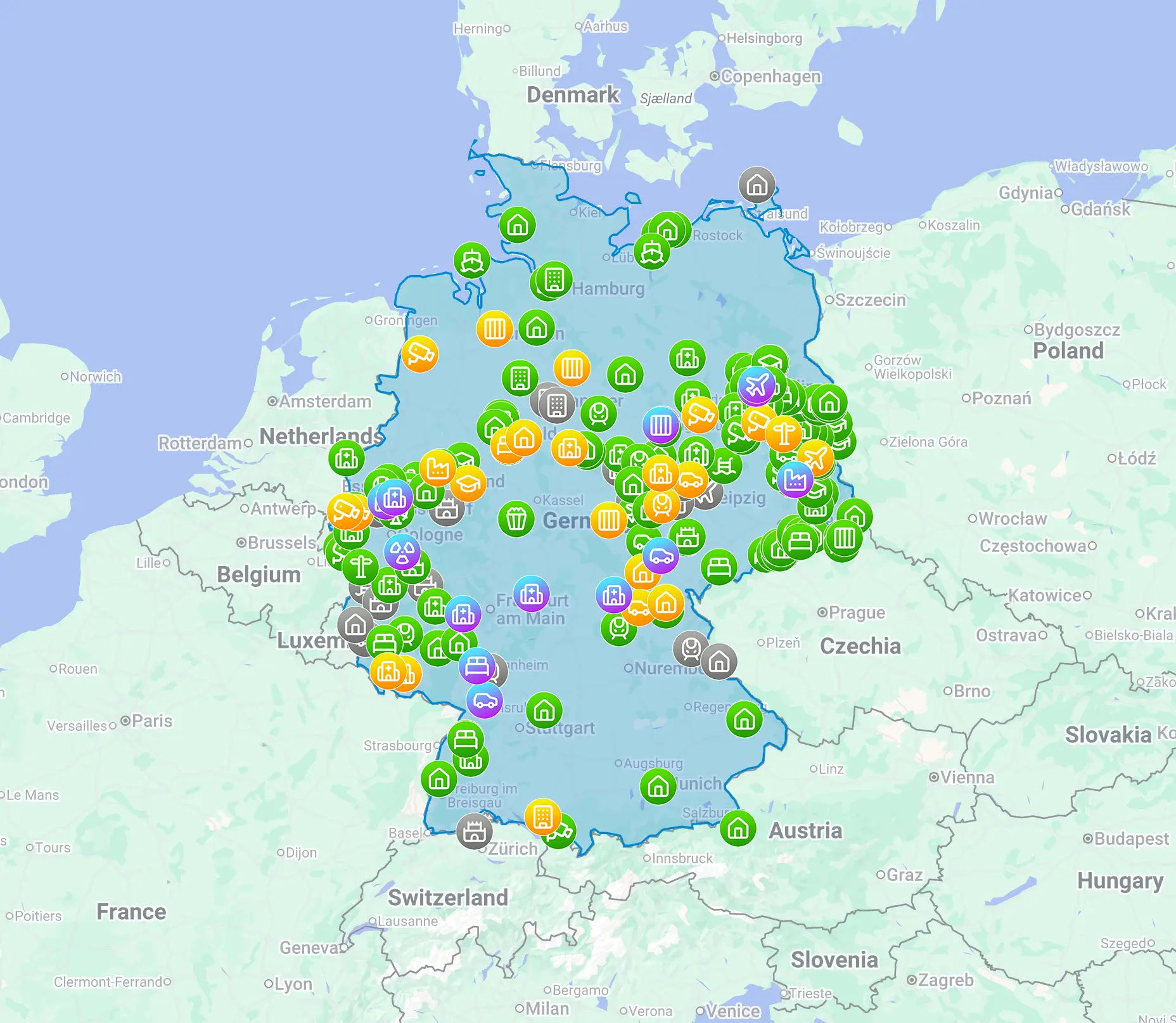
How can you do urbex in Germany legally and safely?
You can do urbex in Germany legally and safely by researching abandoned sites through public records, local history, verified map tools, and on-the-ground observation from public space, then confirming ownership and access rules before any visit. Legal urbex in Germany usually means exterior photography from public land unless you have clear permission to enter.
Quick summary
- Germany has many abandoned-looking sites, but many are still private, monitored, or partially reused.
- There is no general right to enter abandoned property in Germany.
- The safest method is to verify a site first and assume no entry without authorization.
- Industrial zones, former barracks, rail assets, and hospitals often require extra caution because of hazards and security.
- Responsible explorers use verified research, daylight planning, and preservation-first behavior.
- New explorers should start with public viewpoints, legal tours, or permission-based sites.
Quick facts
- Country: Germany
- Primary focus: Finding abandoned places in Germany legally and safely
- Common site types: Factories, barracks, hospitals, hotels, warehouses, rail infrastructure
- Legal baseline: Abandoned appearance does not create a right of entry
- Best practice: Stay in public space unless you have explicit authorization
- Main risks: Structural collapse, asbestos, broken floors, hidden reuse, security response
Why is urbex in Germany legally sensitive?
Urbex in Germany is legally sensitive because an abandoned building is still usually private property, controlled property, or protected property. A site can look empty and still be owned, fenced, monitored, awaiting redevelopment, or used in part.
Germany does not have a general exception for urban exploration. If you cross barriers, ignore signage, or enter without authorization, you may face removal, police contact, or legal complaints. For that reason, responsible exploration in Germany starts with research, not with entry.
This is also why preservation-first behavior matters. The goal is documentation and historical understanding, not access at any cost.
How can you find abandoned places in Germany without crossing legal lines?
You can find abandoned places in Germany without crossing legal lines by combining historical research, property clues, public-space observation, and verified mapping rather than relying on random coordinates shared online. The safest workflow is to confirm that a site is genuinely disused and then decide whether it can only be photographed from outside or whether legal access exists.
A curated resource helps reduce guesswork. You can Browse all urbex maps to compare regions and research options before planning a trip.
| Research method | What it helps verify | Legal advantage | Main limitation |
|---|---|---|---|
| Public-road observation | Current condition, fencing, signs, visible reuse | No entry required | You only see the exterior |
| Historical archives and local history | Former use, closure date, heritage context | Good for background and chronology | Does not confirm current access |
| Real-estate and auction listings | Ownership changes, redevelopment, sale status | Useful for current context | Listings can be outdated |
| Monument and heritage databases | Protected status, historical value | Helps avoid damage to sensitive sites | Not every site is listed |
| Verified urbex map tools | Regional overview and research efficiency | Better screening before travel | Still requires legal verification |
Random social posts are the weakest source. They are often old, imprecise, or shared without legal context. A place that was empty two years ago may now be active, secured, or demolished.
What are the five most reliable ways to identify abandoned sites in Germany?
The five most reliable ways are historical research, industrial and military context analysis, ownership verification, heritage-status checks, and public-space scouting. Used together, these methods are far more reliable than chasing leaked pins.
1. Start with industrial heritage and decommissioned infrastructure
Former industrial regions are one of the best starting points for finding abandoned places in Germany. Old factories, warehouses, power-related buildings, and freight facilities often leave a visible trace in the landscape even after closure.
This does not mean they are legal to enter. It means they are easier to identify through maps, local history, and municipal context. Regions with long industrial histories often have a clearer paper trail than isolated rural ruins.
2. Use local history before you use coordinates
Local archives, town history groups, museum materials, and old news coverage often reveal far more than a dropped pin ever will. They can show when a hospital closed, when a barracks site was vacated, or whether a hotel was repurposed rather than abandoned.
This research also improves safety. If you know a site was a chemical facility, clinic, or railway property, you immediately understand that contamination, hidden service areas, or active infrastructure may still be present.
3. Confirm ownership and current use
Ownership and current use matter more than appearance. A roofless building may still be part of an active industrial parcel, a redevelopment package, or a security-managed complex.
Before visiting, look for current business activity, construction notices, fencing, lighting, cameras, parked vehicles, and recent maintenance. If those signs exist, treat the site as active. For legal urbex in Germany, the default assumption should be no entry without permission.
4. Check whether the site is protected, monitored, or partially open to the public
Some famous abandoned-looking places in Germany are not free-access ruins at all. They are heritage sites, managed attractions, or areas with limited guided access.
That model is often the safest option. Managed sites can provide legal photography, clear paths, and controlled risk. It is also a better preservation outcome than uncontrolled visitation. Medical sites deserve particular caution, and our guide to Abandoned Hospitals in Europe: Responsible Urbex Guide explains why these places require extra care.
5. Prefer exterior documentation and permission-based access
The most sustainable way to explore is to separate discovery from entry. You can research a site, observe it from lawful public space, and document its context without crossing a fence or forcing a door.
When access is possible, permission-based entry is the responsible standard. That may mean an organized tour, an owner-approved visit, or a heritage event. It protects you legally and reduces harm to the site.
Which types of abandoned places are most common in Germany?
The most common abandoned place categories in Germany are former industrial sites, military properties, transport infrastructure, medical buildings, hotels, and rural commercial buildings. Their legal status varies widely, and many are only safely documented from outside.
- Industrial sites: Former factories, depots, workshops, and storage halls, especially in long-industrial regions.
- Military remnants: Barracks, bunkers, support buildings, and training-area structures, often with strong legal and safety sensitivities.
- Medical buildings: Closed clinics, sanatoriums, and care facilities, which may contain serious hazards and strong public interest.
- Transport sites: Rail-related buildings, stations, signal structures, and freight remnants. These need extra caution because railway areas can still be active.
- Hospitality sites: Empty hotels, restaurants, and resorts, often in transition rather than truly abandoned.
- Agricultural and rural properties: Barns, mills, workshops, and small commercial ruins with highly variable ownership and condition.
For beginners, medical sites and rail sites are usually poor choices. They combine higher safety risks with stronger legal ambiguity. If you are new, read How to Start Urbex: A Beginner's Guide to Urban Exploration before planning a first trip.
How should you assess safety before any Germany urbex visit?
You should assess safety before any Germany urbex visit by assuming structural risk first and visual interest second. If the site cannot be evaluated safely from lawful public access, it is not a good candidate for exploration.
Use this basic pre-visit safety checklist:
- Go in daylight. Low light hides holes, unstable stairs, and broken flooring.
- Check for obvious instability. Leaning walls, collapsed roofs, fire damage, and water-damaged floors are strong stop signals.
- Assume hazardous materials may exist. Older industrial and medical sites may contain asbestos, insulation fibers, sharp debris, and chemical residue.
- Do not explore alone. If you remain in public space for exterior documentation, tell someone your route and timing.
- Avoid active infrastructure. Rail corridors, utility compounds, and water-management areas can remain operational even if nearby buildings look abandoned.
- Leave immediately if challenged. If security, staff, police, or local residents question your presence, stay calm, be polite, and do not argue.
Responsible urbex is not about pushing deeper. It is about knowing when a site is not worth the risk.
What does a responsible urbex plan for Germany look like?
A responsible urbex plan for Germany starts with region selection, legal verification, daylight logistics, and a clear no-entry default unless authorization exists. Good planning reduces both legal exposure and bad decisions on site.
A practical workflow looks like this:
- Choose a region, not a secret pin. Start broad, then narrow down with historical and public-space research.
- Screen for legal context. Look for signs of reuse, ownership, security, heritage management, or redevelopment.
- Prepare an exterior-first route. Build a plan that still works even if you never enter anything.
- Use responsible references. Our guide on How to Plan an Urbex Road Trip in Europe is useful if you are exploring multiple German regions.
- Document carefully. Do not move objects, break barriers, or publish sensitive details that could accelerate damage.
- Review afterward. Keep notes on legal status, hazards, and whether the site should be avoided in future.
If you want a better starting point for research, use curated tools rather than random forum scraps.
Browse all urbex maps
FAQ
Is urbex legal in Germany?
Urbex is not automatically legal in Germany. Observing and photographing from public space is usually the safest baseline. Entering a site without authorization can create legal problems even if the building looks abandoned.
Can you enter an abandoned building in Germany if the door is open?
No. An open door is not permission. In Germany, you should treat access as unauthorized unless the owner or operator has clearly allowed entry.
How do you verify whether a place is truly abandoned?
You verify it by combining public observation, local history, recent redevelopment information, and signs of current activity. Fencing, cameras, fresh maintenance, vehicles, lights, or partial occupancy all matter. If the status is unclear, treat the site as active.
Are abandoned hospitals in Germany good beginner locations?
Usually not. Closed medical sites often combine unstable interiors, contamination concerns, and stronger security attention. Beginners are better served by public viewpoints, managed heritage sites, or permission-based visits.
What should you do if security or police speak to you?
Stay calm, remain polite, and comply with instructions. Do not argue that the place looked abandoned. Leave promptly if asked, and do not try to re-enter by another route.
Conclusion
Urbex in Germany is possible, but responsible practice matters more than ever. The best way to find abandoned places in Germany is to use research, public-space observation, and verified tools, then treat permission as the dividing line between lawful documentation and risky behavior.
MapUrbex is built around curated maps, verified context, and preservation-first exploration. That approach protects sites, reduces legal mistakes, and gives you a better long-term way to explore.
Access the free urbex map
