 MapUrbex
Explore a Grand Est urbex map with 8 notable abandoned place types near Strasbourg and Metz, plus safety, legal, and planning tips for responsible exploration.
Grand Est Urbex Map: 8 Abandoned Places Near Strasbourg and Metz
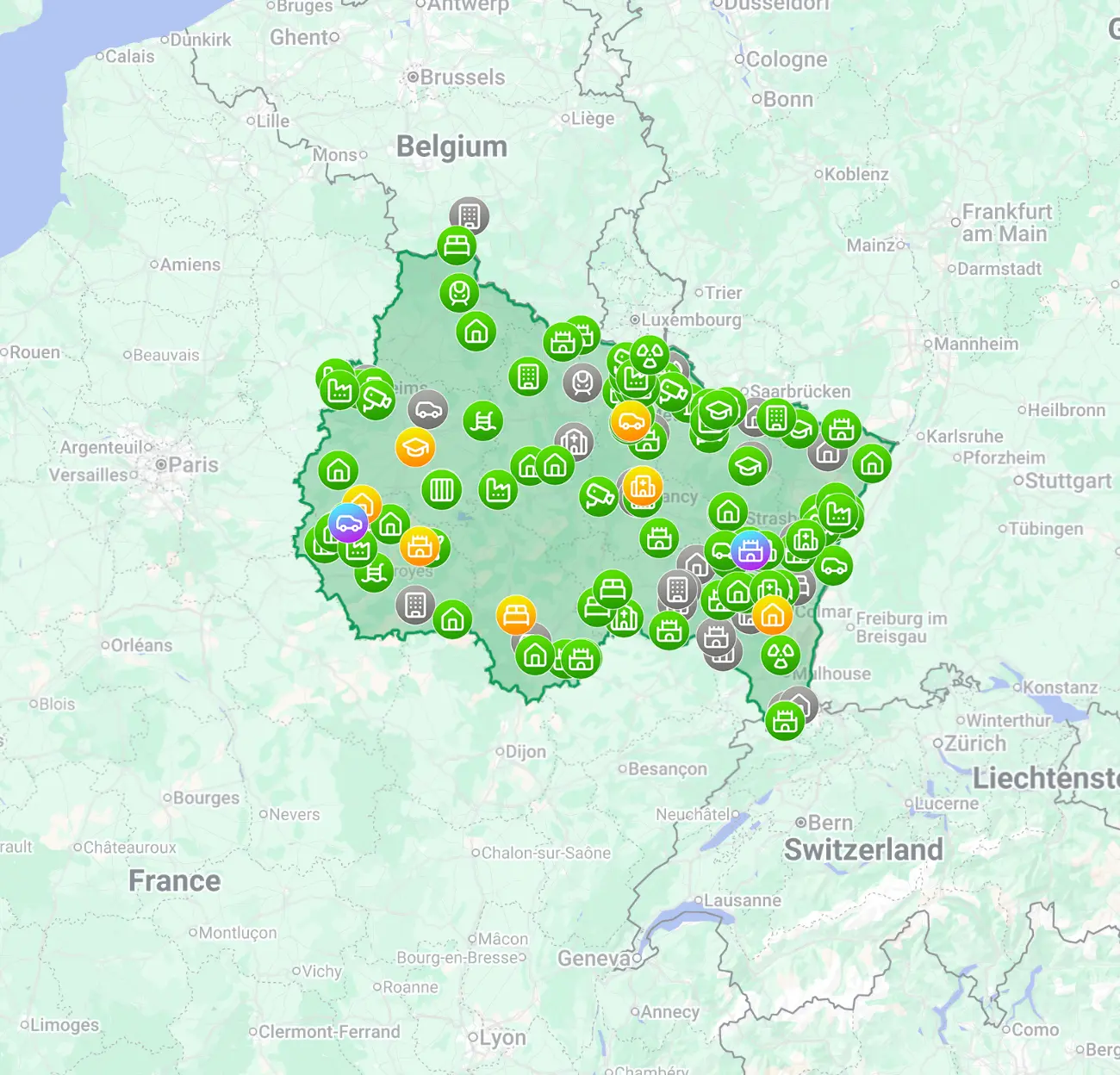
A Grand Est urbex map helps you understand where the main abandoned-place clusters are in eastern France, especially around Strasbourg and Metz. For most explorers, the goal is not just to find a pin on a map. It is to identify places that are still standing, visually interesting, and realistic to document responsibly.
That is where a curated map is useful. Instead of relying on random forum posts or outdated coordinates, MapUrbex focuses on verified locations, preservation-first habits, and practical filtering for route planning.
What does a Grand Est urbex map include?
A Grand Est urbex map is a curated overview of abandoned places across eastern France, with a strong focus on the Strasbourg and Metz areas. It usually includes former industrial sites, railway remains, military structures, villas, farms, and institutional buildings, while avoiding reckless access instructions and emphasizing location status, context, and responsible exploration.
Quick summary
- The Grand Est region is one of the richest urbex areas in France because it combines industry, rail history, borderland military heritage, and rural decline.
- Strasbourg and Metz are the two main gateways for planning short trips to abandoned places in Grand Est.
- The most common site types are factories, depots, military works, villas, farms, and disused public buildings.
- A curated map of abandoned places saves time by filtering dead leads and outdated posts.
- Responsible urbex means no forced entry, no vandalism, and no publication of sensitive access details.
- MapUrbex is designed for verified locations and preservation-first discovery.
Quick facts
| Fact | Detail |
|---|---|
| Region covered | Grand Est, eastern France |
| Main urban bases | Strasbourg and Metz |
| Typical site categories | Industrial, rail, military, residential, agricultural, institutional |
| Terrain mix | Urban fringe, peri-urban belts, river valleys, rural villages |
| Best use of a map | Planning routes, comparing clusters, checking status |
| Main safety issue | Structural instability and legal access limits |
Why use a curated map of abandoned places in Grand Est?
A curated map of abandoned places in Grand Est is useful because the region changes quickly. Sites are sealed, demolished, repurposed, or monitored more often than older blog posts suggest.
This matters around Strasbourg and Metz, where urban redevelopment can remove a location in months. A strong map reduces wasted trips and helps you focus on places that still exist.
It also gives context. A factory shell, a disused depot, and a former hospital wing may all look similar in a search result, but they require different expectations for scale, lighting, and safety.
If you want a broader view before narrowing to this region, start with Browse all urbex maps. If you want a general entry point, you can also Access the free urbex map.
Which 8 abandoned places near Strasbourg and Metz are worth noting?
The most useful way to approach a Grand Est urbex map is by site type, not by hype. Around Strasbourg and Metz, eight recurring categories stand out because they are visually distinctive, geographically common, and often easier to compare on a curated map than in scattered social posts.
-
Former textile or light-industry factories These are common in older industrial corridors. They often offer large window grids, machine halls, loading bays, and layered decay.
-
Disused railway depots and sidings Grand Est has deep rail history. Near both cities, railway remains are among the most searched abandoned places because they combine architecture, infrastructure, and open spatial layouts.
-
Old military structures The region's border history makes military remnants especially relevant. Some are monumental, others modest, but many are historically important and legally sensitive.
-
Abandoned villas and manor houses These sites attract photographers for staircases, wallpapers, fireplaces, and domestic traces. They also tend to be fragile and easy to damage.
-
Empty farm complexes Rural decline and agricultural restructuring have left barns, courtyards, and outbuildings across the wider Grand Est area.
-
Closed warehouses and logistics buildings Near ring roads and industrial belts, these places are often visually stark rather than ornate, but they can be excellent for scale and geometry.
-
Disused schools or institutional wings Former boarding schools, training centers, or annex buildings sometimes appear on abandoned-place maps. Their appeal is often in repetitive corridors and intact room layouts.
-
Small hospitals, clinics, or care facilities These are among the most sensitive categories. They can be visually striking, but they demand extra caution, discretion, and respect.
MapUrbex does not publish reckless entry guidance in public articles. The value of the map is in verified location management, not in promoting trespass or damage.
How do urbex Strasbourg and urbex Metz differ?
Urbex Strasbourg and urbex Metz differ mainly in urban form, historical layers, and nearby site distribution. Strasbourg often connects better to industrial belts, borderland infrastructure, and Alsatian village settings, while Metz often leads more directly toward military remains, Lorraine industry, and wider post-industrial landscapes.
Around Strasbourg, many explorers look for mixed routes that combine city-edge industry with rural houses or farm compounds. Around Metz, the appeal often comes from larger-scale industrial history and fortified heritage.
For a regional overview, see Grand Est Urbex Map: Best Urbex Locations in Eastern France. If you are still learning the search process, How to Find Secret Urbex Locations: Real Methods That Work explains how to evaluate leads more reliably.
How can you explore abandoned places in Grand Est responsibly and legally?
Responsible exploration starts with one rule: never force access and never enter where you do not have lawful permission. A map is a planning tool, not a justification for trespassing.
Keep these principles in mind:
- Check whether a site is on private land or an active redevelopment plot.
- Do not break locks, fences, boards, or windows.
- Leave interiors exactly as found.
- Avoid publishing sensitive access details or hidden entry points.
- Wear basic safety gear and assume floors, roofs, and stairs may be unstable.
- If a place is clearly occupied, monitored, or recently secured, leave.
This preservation-first approach protects locations and the wider urbex community. If you want general search ideas beyond this region, Abandoned Places Near Me: How to Find Urbex Spots Easily is a useful starting point.
What should you look for on a map of abandoned places before planning a trip?
Before driving to a pin, look for context rather than excitement. The best map of abandoned places helps you compare categories, route density, nearby alternatives, and likely condition.
Useful filters include:
- Distance from Strasbourg or Metz
- Building type
- Recent verification status
- Urban or rural setting
- Photo interest
- Safety notes
This is especially important in Grand Est because distances can be deceptive. Two sites may look close on a regional view but require very different travel times or access conditions.
FAQ
What is the best area for urbex in Grand Est?
The best area depends on the type of site you want. Strasbourg is strong for mixed industrial and rural routes, while Metz is often better for military and heavy post-industrial landscapes.
Are there many abandoned places near Strasbourg?
Yes. The Strasbourg area has a steady mix of industrial leftovers, peripheral warehouses, rural properties, and transport-related sites. Exact availability changes over time, which is why a verified map matters.
Are there many abandoned places near Metz?
Yes. The Metz area is especially relevant for explorers interested in Lorraine industry, fortifications, and large-scale derelict infrastructure.
Is it legal to visit abandoned places in Grand Est?
Not automatically. Many abandoned places are on private land or protected sites. You should never assume that abandonment means legal access.
Why use MapUrbex instead of random coordinates online?
Because random coordinates are often outdated, duplicated, or unsafe. MapUrbex focuses on verified locations, curated mapping, and preservation-first use.
Conclusion
A Grand Est urbex map is most useful when it helps you plan intelligently, not just collect pins. Near Strasbourg and Metz, the region offers a strong mix of industrial, military, railway, residential, and rural abandoned places.
The key is to use verified information, stay legal, and avoid harmful exposure of fragile sites. That is exactly where a curated MapUrbex approach makes the difference.
Access the free urbex map
